Showing posts with label Hist Fic Challenge. Show all posts

Wednesday, 1 January 2014

Reading challenge wrapup 2013 - Historical Fiction Reading Challenge

I read a LOT of historical fiction in one genre or another, so the Historical Fiction Reading Challenge, hosted by Historical Tapestry was absolutely something I had to sign up for, pretty much because I'd be reading the books anyway, I might as well get some extra credit and a few more readers to my blog by linking my reviews on their site. The highest level they had was Ancient History, which meant reading more than 25 books. As they are very generous about letting all sorts of genres count, be it romance, young adult, fantasy, mystery, Steampunk and so forth, I was able to read more than twice that. Of the challenges I joined in 2013, it was the least challenging of the lot.

My books were as follows:

  1. In Bed with a Highlander - Maya Banks
  2. Firelight - Kristen Callihan
  3. Crown of Embers - Rae Carson
  4. Warbreaker - Brandon Sanderson
  5. Cinderella's Secret Diary: Lost by Ron Vitale
  6. The Snow Queen - Mercedes Lackey
  7. One Good Earl Deserves a Lover - Sarah MacLean
  8. That Scandalous Summer - Meredith Duran
  9. The Dust of 100 Dogs - A.S. King
  10. The Assassins prequels - Sarah J. Maas
  11. Throne of Glass - Sarah J. Maas
  12. One Night in London - Caroline Linden
  13. Blame It on Bath - Caroline Linden
  14. The Way to a Duke's Heart - Caroline Linden
  15. Out Stealing Horses - Per Petterson
  16. Luck in the Shadows - Lynn Flewelling
  17. The Mislaid Magician - Patricia C. Wrede/Caroline Stevermer
  18. Eleanor & Park - Rainbow Rowell
  19. The Handbook to Handling His Lordship - Suzanne Enoch
  20. Seduce Me at Sunrise - Lisa Kleypas
  21. Tempt Me at Twilight - Lisa Kleypas
  22. Married by Morning - Lisa Kleypas
  23. Love in the Afternoon - Lisa Kleypas
  24. The Figwort Family - Lars Saabye Christensen
  25. The Shadow in the North - Philip Pullman
  26. Briar Rose - Jane Yolen
  27. Snow White and Rose Red - Patricia C. Wrede
  28. Lord of Wicked Intentions - Lorraine Heath
  29. Across the Nightingale Floor - Lian Hearn
  30. Any Duchess Will Do - Tessa Dare
  31. Anna Karenina - Leo Tolstoy
  32. Once Upon a Tower - Eloisa James
  33. The Light Between Oceans - M.L Stedman
  34. Fly by Night - Frances Hardinge
  35. Ella Enchanted - Gail Carson Levine
  36. It Happened One Midnight - Julie Anne Long
  37. Rose Under Fire - Elizabeth Wein
  38. Little House in the Big Woods - Laura Ingalls Wilder
  39. Little House on the Prairie - Laura Ingalls Wilder
  40. Farmer Boy - Laura Ingalls Wilder
  41. On the Banks of Plum Creek - Laura Ingalls Wilder
  42. By the Shores of Silver Lake - Laura Ingalls Wilder
  43. The Long Winter - Laura Ingalls Wilder
  44. Little Town on the Prairie - Laura Ingalls Wilder
  45. These Happy Golden Years - Laura Ingalls Wilder
  46. The First Four Years - Laura Ingalls Wilder
  47. The Heiress Effect - Courtney Milan
  48. Beauty and the Spy - Julie Anne Long
  49. The Broken Kingdoms - N.K. Jemisin
  50. Flowers From the Storm - Laura Kinsale
  51. Drums of Autumn - Diana Gabaldon
  52. Scoundrel's Kiss - Carrie Lofty
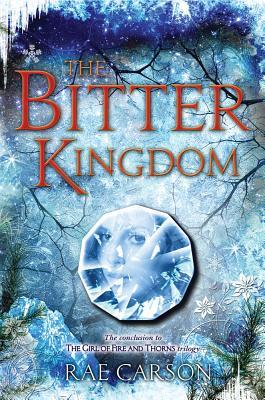
  53. The Bitter Kingdom - Rae Carson
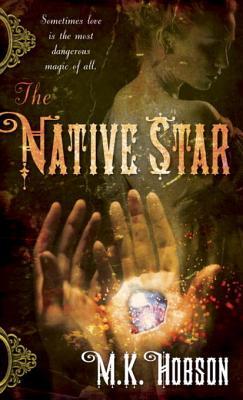
  54. The Native Star - M.K. Hobson
  55. A Study in Silks - Emma Jane Holloway
  56. Love and Other Scandals - Caroline Linden
  57. The Sum of All Kisses - Julia Quinn
  58. North and South - Elizabeth Gaskell
  59. The Luckiest Lady in London - Sherry Thomas
  60. Private Arrangements - Sherry Thomas
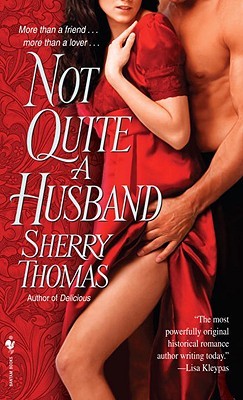
  61. Not Quite a Husband - Sherry Thomas
  62. The Lies of Locke Lamora - Scott Lynch
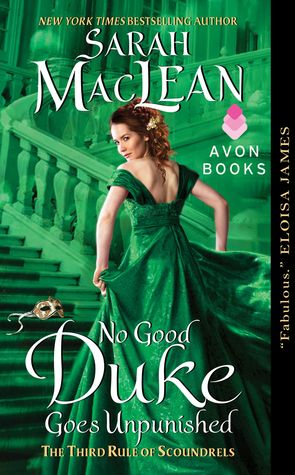
  63. No Good Duke Goes Unpunished - Sarah MacLean
  64. Knaves' Wager - Loretta Chase
  65. The Countess Conspiracy - Courtney Milan
  66. Zel - Donna Jo Napoli
  67. Vampire Science - Jonathan Blum/Kate Orman

Tuesday, 31 December 2013

#CBR5 Book 150. "Zel" by Donna Jo Napoli

Page count: 227 pages
Rating: 3 stars

Zel lives in a remote cottage in the mountains with Mother. The only time she sees other people is twice a year, when they go to Market in the nearest town, quite some distance away. While Zel finds the people, bustle and excitement of town life exhilarating, Mother insists that they have everything that they need in their little home, and warns her daughter away from strangers. Yet Zel dreams of a different life, of some day having a husband and children and a home of her own. Just before her thirteenth birthday, she meets a beautiful young man with a spirited horse, and she can't seem to get him out of her mind.

Konrad, the young count, is also unable to forget the young girl he met in the marketplace, and who seemed to almost magically calm his horse. Even when his parents try to arrange suitable marriages for him with lovely young maidens, he refuses, riding around the countryside trying to find out where the mysterious Zel can be found.

Mother grows anxious and worried when Zel mentions the pretty young man, and claims that there are bad people out there who want to harm them. She takes Zel to an abandoned tower, a fair distance from even their remote cottage, and before Zel realises entirely what is going on, she is trapped high above ground, with no way of escaping, with Mother on the ground, saying she will keep the bad people away. Zel's hair starts growing at a furious rate, until she can pull Mother in and out of the tower with it. Lonely and distressed, the young girl dreams about the young man, and tries to while away the months and years of her imprisonment. She's fairly sure she's gone entirely mad, when one day there is a call for her to let down her hair, and count Konrad climbs in instead of Mother.

This is a short read, and an interesting retelling of the story of Rapunzel. Some of the chapters are narrated in third person, and show Zel and Konrad's point of views. The ones from Mother's POV are in first person, making her account the most personal of the three, and making the reader empathise more with her, even as she's the nominal villain of the story. The witch who forced a young couple to give away their child in return for the Rapunzel salad they had stolen from her garden, who locks the girl in a tall tower to keep her away from all others - Mother is more than this here. A frustrated and intelligent woman given a tempting choice, incredible power over all growing things in return for a soul she might not even believe she has, who finds herself barren and alone, willing to do anything to gain a child, and who loves that child so much that she's determined to do anything to keep her, even if it means making the girl possibly hate her. Mother can't bear to lose her beloved daughter, but when it becomes clear that she may have caused her more harm than good, she makes the ultimate sacrifice to ensure her daughter's eventual happiness.

#CBR5 Book 148. "The Countess Conspiracy" by Courtney Milan

Page count: 295 pages
Rating: 5 stars

Sebastian Malheur has been scandalising polite society for years with his scientific lectures on the passing on of genetic traits, to the point where riots are now likely to break out when he presents any new findings. The truth, however, is that the discoveries he presents as his own, are actually those of his best friend, Violet Waterfield, the widowed Countess of Cambury. Violet is as proper and respectable as Sebastian is scandalous and reviled. But now Sebastian refuses to be Violet's decoy any longer.

Violet's marriage was not a happy one, and she sought refuge in her scientific discoveries. The daughter of a woman who wrote the ultimate guide to proper ladies' behaviour, Violet is all that is respectable, decorous and decent. Yet Violet and her sister learned early, after their father committed suicide, that there were unwritten shadow rules as well as the written official rules, and most of them amounted to a lady doing anything in her power to keep scandal from her family's door, using any method at her disposal. If the truth were to come out, that the shocking discoveries that Sebastian has been presenting, were actually all the work of a woman, the scandal would be immense and instantaneous.

Sebastian has loved Violet for nearly half his life, and agreed to put his name on Violet's first scientific paper when it had been rejected several times with her own name on it. As her discoveries, hidden behind his name, continued to amaze the academic society and shock and appal pretty much everyone else, he had no choice but to go along with it. Now his brother is sick with a heart condition, though, and Sebastian is determined to prove himself respectable and responsible enough to be appointed his young nephew's guardian, should something happen to his older brother. He can't be the most reviled academic in England, even for Violet's sake.

Sebastian and Violet have been supporting characters in the other Brothers Sinister books, and it was actually revealed at the end of The Heiress Effect that Violet was the mastermind behind Sebastian's scientific discoveries. Because Oliver, the hero of that book, proved to be such a disappointment, I was terrified that this book was going to let me down in some way as well. Courtney Milan is by far my favourite romance novelist writing at the moment, and my expectations for this book just continued to build as the months wore on, and Milan teasingly posted little teaser snippets on her Facebook page.

The book was not a disappointment, although it turned out to be something completely different from what I was expecting. While the series may be called The Brothers Sinister, with the heroes having been the focus of the two previous books, this book belongs primarily to Violet, who broke my heart. A deeply insecure and unhappy woman, Violet is such a fiercely brilliant but horribly damaged woman. She has never felt good enough, desperately seeking the approval and approbation of her cold mother and needy, selfish sister. While she grew up with Sebastian and his cousin Robert, as a woman, she could never truly belong to their little fellowship either. Despite making absolutely amazing genetic discoveries, she believes herself to be worthless and unlovable, and she distrusts any overtures of affection or friendship. I just wanted to hug her so hard, even if she probably would have hated such a gesture.

Sebastian may be a legendary rake, but his heart has belonged to Violet since before she got married, and he's been her most faithful friend in thick and thin, never revealing his true feelings for her, because he knows how closed off she is. She can barely stand anyone touching her, let alone admitting love for her. Even when he does admit the truth about his feelings towards her, their friendship and her feelings come first, and he does nothing to pressure her, waiting with infinite patience for her to make up her mind about what she wants and feels. Violet may have broken my heart, but Sebastian patched it back up again.

The romance between Violet and Sebastian isn't actually the most important part of this story - the changes Violet has to go through to accept and love herself, and realise that she's a person worthy of friendship and can have a worthwhile relationship with someone, are so much more vital here. The emotional wounds that Violet need Sebastian's help to heal are immense, and upsetting. It's not an easy book to read, but it's oh so satisfying in the end. Milan has admitted that this is the book she's been working towards through the whole series and that made her want to write the books in the first place, and it's inspired in part by several great real life women, whose contributions to science went wholly or partially unrewarded. One of the things I love is how unafraid Milan is to show the less glamorous sides of history in her novel. This book is in my top ten of 2013, just as I hoped it would be.

#CBR5 Book 147. "Knaves' Wager" by Loretta Chase

Page count: 240 pages
Rating: 4 stars

Thanks to Mrs. Julien for her awesome romance review template!


Knaves’ Wager is a romance of the you are everything I never knew I always wanted AND opposites attract variety: Boy meets girl. He is the reprobate former best friend of her now-dead husband. She hates him because she believes he drove her husband to his early death, and is left owing him crippling gambling debts. He agrees to a foolish wager to seduce her against all odds. Boy and girl move forward together secure in their love and commitment.

A historical romance set in the Regency era just around the end of the Napoleonic wars and written by Loretta Chase, Knaves’ Wager is my fourteenth book by this author. I generally find her work at least enjoyable, and at its best, spectacular and infinitely re-readable. Chase is, most famously, the author of Lord of Scoundrels, the book All About Romance’s readers have voted as the number one in their top 100 for more than a decade. Personally, I prefer The Last Hellion, but what do I know? I found Knaves’ Wager, one of her early romances diverting, enjoyable and romantic. This book is a clean (lacking in any sex scenes, graphic or otherwise) romance, and I’ve seen it compared to the writing of Georgette Heyer. However, none of the Heyer books I’ve read contain the palpable sexual tension present in this novel, or kisses half so scorching as some of the ones in this book, so be aware that it’s not entirely chaste. I have several of Chase’s early romances still on my TBR List and will continue to seek them out because this one really was very enjoyable indeed and I would absolutely recommend it to others.

The main plot of Knaves’ Wager focuses on the reformation of a rake. Lord Julian Wyndhurst, Marquess of Brandon is that rake. He is stinking rich, handsome as sin and has a reputation for gambling and vice. He’s also been on the Continent for seven years since his involvement in a particularly scandalous duel, working closely to bring down Napoleon, and is exasperated to be brought home only to sort out his young cousin, Lord Robert Downs’s scandalous betrothal. Lilith Davenant is a widow and a victim of circumstance. She is formidable, all that is proper, decorous and virtuous, and a caring and affectionate aunt, willing to sacrifice even the last remains of her fortune to secure happier futures for her nieces and nephews than she herself found in her unfortunate marriage. Due to her husband’s gambling debts to Lord Brandon, she is forced to accept the proposal of an old friend to secure her future. Brandon agrees to seduce Lilith in order to get Robert’s mercenary mistress to release Robert from the betrothal. Julian and Lilith start out as antagonists, at least in Lilith’s eyes, yet they cannot deny the attraction they feel towards each other. Over time, they come to discover that despite any challenges they face, they make an excellent team.

The subplot in Knaves’ Wager revolves around Robert, Brandon’s young, somewhat dim cousin and Lilith’s clever niece Miss Cecily Glenwood, who is in London for her first season. The seemingly guileless country miss sets about not only getting her chosen husband, but making sure her aunt doesn’t end up in a stuffy marriage of convenience either. It was an excellent addition which nicely complemented the main plot. 

While an early effort of Chase’s, written in the early 1990s, this novel still has great characterisations, an excellent eye for detail and wonderfully witty banter. Brandon really has his work cut out for him, wooing and charming the icy Lilith, and it’s glorious to see the calculating libertine gradually fall head over heels for the irreproachable widow. As some of Chase’s most recent novels have been rather mediocre and a bit of a disappointment, it was delightful to discover that I have more of her good work to look forward to. For anyone wanting a gateway into romance reading, you would be strongly recommended to check out Loretta Chase, but avoid her Dressmaker series, pretty much everything else she’s written is better.

© 2013 Mrs. Julien Presents

Tuesday, 10 December 2013

#CBR5 Book 142. "No Good Duke Goes Unpunished" by Sarah Maclean

Page count: 384 pages
Rating: 4 stars

This is the third book in a series, and while romance novels are normally fine to read out of sequence, some of the really awesome developments in this book lose a lot if you haven't read the rest of the series. These books are top notch romance, so just do yourself a favour and start at the beginning with A Rogue by Any Other Name. And yes, I know the titles are spectacularly cheesy. I recently discovered in a podcast that these are MacLean's own puns, not anything imposed on her by the publishers. I don't know whether to be impressed or slightly worried about her.

The great hulking brute known as Temple also goes The Killer Duke. He is one of four disgraced members of the aristocracy who own luxury gambling club The Fallen Angel. When the rich and foolish have lost too much, and have no other recourse, they can fight Temple in the Angel's boxing ring. Should they win, all their losses will be restored. Not that anyone ever has, but it never stops them from trying. William Harrow, the Duke of Lamont, shunned by most of polite society because he is suspected of having killed his father's fiancee, is more than happy to take every beating coming, because he's honestly not entirely sure he doesn't deserve his moniker.

Twelve years earlier, he awoke with only the haziest memories of the night before, to discover that the bewitching beauty who'd invited him up to her room was Miss Mara Lowe, his father's sixteen-year-old child bride and soon to be the Duke's third wife. There was no sign of the bride, only him, naked in sheets soaked in blood. Never convicted as there wasn't a body, Temple was nonetheless driven from polite society, and survived in the less prosperous parts of town because of his boxing prowess. After a while, he teamed up with Michael Lawler, the Marquess of Bourne (hero of book one) to run dice games, until the two were nearly killed by street thugs not too happy with their business venture. They were saved by Chase, the mysterious founder of the Fallen Angel, and became part-owners in the club.

Now Christopher Lowe, Mara's brother keeps challenging Temple, wanting to fight him for the chance to reclaim his squandered fortunes. Temple keeps refusing, not wanting anything to do with anyone named Lowe. Walking home one evening, he is approached by a woman revealing herself to be Mara Lowe, who, desperate to escape her wedding, did an incredibly foolish thing twelve years ago, and has been in hiding ever since. She promises to come forward and tell the world that Temple is innocent, as long as he restores her brother's funds. Temple has been tormented for over a decade, because Mara made everyone believe he killed her. He's not going to be satisfied with mere absolution, he wants revenge.

Sarah MacLean keeps amazing me, with each new book, she does something new and exciting. Mara genuinely ruined Temple's life. For twelve years, she hid under an assumed name and let everyone keep on believing that the Marquess of Chapin, later Duke of Lamont, had brutally killed her and disposed of the body. Because she drugged him to carry out her disappearance, Temple has never really had a clear recollection of the evening in question himself, and with his brute strength and capacity for anger, occasionally doubted his own innocence. So he's quite righteously furious when she returns, not even particularly remorseful, trying to negotiate with him. Temple doesn't just want her to clear his name, he wants to humiliate her and make her suffer, as much as possible. We're entirely on Temple's side. Mara is clearly the villain of the piece here.

So how in the world do these two find their happy ending. There was clearly attraction between them, that fateful night twelve years ago, when Mara set her foolish escape plan in motion. Even through the anger Temple feels, he can't help but feel drawn towards her. It's also made clear, over the course of the story, that while Mara doesn't feel like she had a choice, and initially seems quite unconcerned for the immense suffering she's caused, she changes her mind the more time she spends with Temple. The fact that she was sixteen, inexperienced and desperate, and completely unaware of Temple's real identity when she set her plan in motion is also made obvious. In what may seem like a terrible cliche, she now runs an orphanage for young by-blows of the aristocracy, and the reason she needs her brother's debts cleared is because she gave her brother the orphanage's funds to manage, and he carelessly lost them too. If she can't get the money back, the young boys in her care will starve. She can't tell Temple the truth as he makes it very clear that nothing she says or does will sway him from his plan to see her utterly humiliated in the eyes of society.

Temple's business partners and their wives do make cameo appearances in the book, and while they are also deeply furious with Mara to begin with, they start changing their attitudes towards her when they realise that she seems to actually care for Temple, and wants to atone for her past actions. It's more common in romance that the hero is the dislikable scoundrel who needs to win the forgiveness of the heroine and her circle. Here it's the other way around, and it's a brave choice by MacLean. Mara has clearly been sticking her head in the sand, desperately trying not to think about the consequences her actions had. Temple is still a Duke after all, and wealthy beyond his wildest dreams. She's been constantly looking over her shoulder, terrified that someone would find her and unravel her secrets. She has to face ugly facts about herself, and her actions, and show herself to be a worthy partner to Temple. Over the course of the book, she's also able to make him see that while his reputation is not what it used to be, he has a lot of good things in his new life to be thankful for, and maybe polite society isn't all that great to be a welcome part of, after all.

Courtney Milan still has the edge, but Sarah MacLean is now neck and neck with her for the title of best historical romance writer out there right now. It's a well-known tradition that in series of romances, the most interesting character is saved for last. Here it's the founder of the Fallen Angel, Chase, who is left until the end, and after the final two pages of this book (which made my jaw figuratively fall to the floor and swear out loud into an empty living room, I was so blown away), I can honestly say that I will be on tenter-hook. It doesn't look like it'll be out until August of next year, but if the first three books in this series are anything to go by, Courtney Milan may have to kiss her crown good-bye.

#CBR5 Book 141. "The Lies of Locke Lamora" by Scott Lynch

Page count: 544 pages
Rating: 5 stars

In the city state of Camorr, a small group known as the Gentlemen Bastards work and plot and scheme to lure the valuables from gullible nobles. Their cons are always elaborate and intricate, and done in such a way that their victims are too embarrassed to tell anyone about it. Yet most of their peers in the criminal underworld of Camorr believe the Bastards to be petty thieves and pickpockets, nothing remarkable, but loyal and dependable in a fight.

Unfortunately for Locke Lamora, the leader of the little band, and his friends, their current victims start being suspicious of some of the stories they are told, and soon, the head of the secret police is preparing to finally catch the legendary bandit. As if that wasn't bad enough, someone else has discovered that Locke and his Gentlemen are much more successful criminals than they let on, and use this information to force Locke to help with an attempted power play against the current crime lord of Camorr, Capa Barsavi.

I first read The Lies of Locke Lamora over Easter in 2007, and was absolutely blown away by it. It was such a different take on what I believed epic fantasy must be like. Locke and his compatriots were such unashamed scoundrels, and had so much fun with their schemes. I've seen a lot of comparisons being made to Ocean's Eleven, and it's not difficult to see why. This is a heist book, and the gang believe themselves to be so much more clever than everyone around them. It makes it even more thrilling when it turns out that they are wrong, and someone may have outsmarted them. They may be in a whole heap of trouble, in fact. I read fast, with bated breath, to see how the story would be resolved.

Because it's been more than six years since I read the book, I'd forgotten a LOT of the intricate plotting. I'd forgotten the way Scott Lynch has with words and his wonderful world building. The descriptions of the city of Camorr, both its underworld and the wealthy areas. I remembered the camaraderie between Locke and his friends, and that their plans went a bit pear-shaped, but I hadn't remembered much of the details, and that made this re-read extra enjoyable. It's such a fun book, with twists and turns and genuine shocking moments. Some of it made me cry, some of it made me cheer, and bits made me almost queasy (Lynch doesn't shy away from his graphic description on occasion). The story of how Locke became a Gentleman Bastard and met his gang of thieves is told in flash back, in between the chapters with the main narrative. Yet Lynch has a way of showing how the early experiences made by our hero and his friends became useful learning for their present troubles, which means that both narratives are connected, and you never feel too annoyed at being taken away from something tense and dramatic in the present to read about things that happened long ago. I'm not doing a very good job of selling why this is an awesome book. If you like epic fantasy, just read it.

Monday, 9 December 2013

#CBR5 Book 139. "Not Quite a Husband" by Sherry Thomas

Page count: 341 pages
Rating: 4 stars

Briony Asquith and Leo Marsden grew up on neighbouring estates. Leo loved Briony long before she was even aware of him as anything but the baby Marsden, youngest of four brothers. So when the brilliant, yet socially awkward lady physician proposed to outgoing, talented renaissance man Leo, he was elated, but no one else in society thought it would last. And it didn't. Growing increasingly more distant and cold from their wedding day, Briony starts to actually recoil from Leo's touch, and no matter how he tries to get her to open up, physically and emotionally, their marriage seems doomed. When Briony wakes up one morning with a stark white stripe through her dark hair, she files for an annulment.

Three years later, Leo shows up at Briony's medical clinic in a remote corner of India. Briony's sister has been writing both of them for years with melodramatic stories trying to push the two back together, but this time he's fairly certain she's not lying about Briony's father's health being in danger. Much of India is at the the brink of rebellion, and he feels it's his duty to get Briony back to England safely. Leo doesn't know exactly why their marriage failed, but he's convinced it must have been his fault, that he failed or mistreated her in some way.

Briony is not convinced her sister isn't lying once again, but she also knows that she would never forgive herself if her father dies and she did not try to return to his bedside. She reluctantly goes with Leo, uncomfortable in his presence, but with no other choice of escort. As the couple make their way through the rough Indian countryside, dealing with first Leo's malaria, then a violent and bloody native rebellion as they seek refuge in a nearby fort, they find that the three years apart may have allowed both of them to heal some of their hurts, and open up lines of communication to the other. Can they finally talk about all the things that made their all too brief marriage so miserable, and maybe begin to forgive each other and themselves?

Romances are mostly all about escapism, and the process of falling in love, and we rarely see past the HEA, or Happy For Now. Because of a shocking discovery, Briony was completely unable to trust Leo and started drawing away from him, beginning on the day of their marriage. They never got to Happily Ever After, their marriage just went from bad to worse to impossible to continue. Clearly always an intensely private and introverted person, Briony has difficulties forming attachments, even within her own family. Leo accepted her marriage proposal happily, but didn't really know the woman he married, just the idealised idea he'd made of her. As is the case in a lot of romances, there is a marked lack of clear communication between the heroine and hero, but in Not Quite a Husband it would never have been possible for Briony and Leo to have the honest conversations they needed to have to resolve their marital difficulties at the point where their marriage fell apart. Unlike in some books, where you just want to shake the protagonists and make them have a single conversation that would resolve everything, here there is no such easy fix.

Three years have given both of them time, to change and grow as people and while they may not have wanted to, to consider and gain some perspective of why they never managed to make their brief marriage successful. Both have travelled the world, hearing fanciful stories about what the other was up to from Briony's younger sister. Leo just wants to atone for whatever he must have done wrong to make Briony hate him so much in the past. Spending days in his presence, some of it nursing him back to health, Briony realises that the discovery she made shortly before she married him, no longer hurts her, and she no longer recoils from his touch. In fact, she craves it. The danger they find themselves in force them to finally be honest with one another, and they find a new and unaccustomed closeness, that should have been their when they wed.

This book is so good because it takes so many of the romance conventions and twists them. As in many of Thomas' other books, there is so much bitterness and pain between the couple. They have such enormous power to hurt the one they love, and frequently do. It's not an easy book to read, but as Leo and Briony start to actually open up to each other, instead of lashing out, and work to heal the damage they've previously done to one another, it feels more emotionally powerful than that of a lot of frothy romances with meet-cutes and humorous banter and a shiny fantasy version of what life really is. Most romance couples don't actually have to struggle with marital difficulties and really work to save their relationships. Yet when Briony and Leo finally do solve their troubles, they've truly earned their happiness, and it's probably more real because of their hardships.

Sunday, 17 November 2013

#CBR5 Book 137. "The Luckiest Lady in London" by Sherry Thomas

Page count: 304 pages
Rating: 4.5 stars

Felix Rivendale, the Marquess of Wrenworth is known in society as "the Ideal Gentleman". He is handsome, wealthy, charming, generous and famous for his lavish hospitality. Men want to be him, or at least his good friend, and it goes without saying that he's the most eligible bachelor on the market. He's clearly not a virgin, but there is not a whiff of scandal surrounding him, either. Few, if any, suspect that his cheerful and impeccable demeanour is a clearly constructed facade. Having been used as a pawn in the emotional warfare his parents conducted against each other, he's become deeply distrustful of strong emotions, and a master at manipulating those around them so subtly that they believe his suggestions are their own.

Miss Louisa Cantwell is the daughter of a country baron and and one of five sisters, none of whom are likely to snag the wealthy husband needed to secure the family's fortunes. She is neither particularly financially or physically desirable as a bride, but is also fully aware of it, and has worked tirelessly for the last eight years to plan her perfect season. Using every trick in the book, including bust improvers to make it look as if nature gave her a generous bosom, she's determined to find a husband by the end of the season, preferably not one who's too disagreeable. She's found two likely candidates, and uses every chance she gets to cultivate them and their relatives. She wouldn't dream of setting her sights on Lord Wrenworth, and is rather appalled with herself when they finally meet and she's both overwhelmed with lust for him, while at the same time convinced that he's a scoundrel, who can see right through all her. She's wondering why no one else suspects that he's not entirely as he seems.

Because she has absolutely no illusions about securing Wrenworth's affections, Louisa proceeds to be completely honest with him about her attraction. Felix finds it both intriguing and novel that this young woman clearly isn't taken in by "the Ideal Gentleman", and seems to actually dislike him, yet also confesses to erotic dreams about him. Since she sees what no one else sees, he can be shockingly forthright with her, and proposes to make her his mistress. Louisa somewhat reluctantly dismisses him, knowing full well that as a nobleman's lover she will never have the security she craves. Of course, not one to take no for an answer, Felix goes about eliminating her potential suitors, hoping that if she has no marriage prospects, she'll relent by the end of the season. Once he realises she's rather marry a butcher than become his mistress, he has to reevaluate his plans, and makes her his wife instead.

Louisa is a sensible and pragmatic young lady. She's considered all her other sisters, one is a recluse, one appears to be a lesbian, one is an epileptic and the last is "of completely the wrong temperament for the wooing of gentlemen". Their family are not exactly poor, their mother has a pension as long as she lives, but once she dies, the sisters are entirely on their own. She's deeply ambivalent about her feelings for Felix. On the one hand, she's infatuated with him and clearly desires him, on the other, she doesn't trust him for a second, and is uncertain about his motives for actually marrying her, rather than just holding out until she said yes to becoming his mistress. She has no illusions about the marriages of the upper classes, but figures that as long as she's enthusiastic and open for most things in the marriage bed, she might prevent her husband from straying, but she has no expectations of his love.

Felix is scared by the passionate desire he feels for his new wife. In his experience, love makes you weak and vulnerable and he tries to keep himself away from her as much as possible after their wedding night. He can't bear to hurt her for too long though, and soon her continued distrust starts to upset him. He knows that he manipulated her into marriage, and becomes terrified that he will lose her, or that his own marriage will become like that of his parents. "The Ideal Gentleman", who had no time for love needs to win the trust, love and devotion of his own wife.

Sherry Thomas' romances don't work for everyone. While a lot of the genre is frothy, light and diverting, perfect for cheering you up and giving you a much needed escape from your everyday cares, Thomas tends to focus on emotionally messed up protagonists who are often deeply unhappy, with themselves and each other, before they work through their angsty difficulties and start moving towards a happier future. The narratives of her books are frequently non-linear, moving back and forth between the past and the present. The Luckiest Lady in London is about intelligent, distrustful people who end up married to each other, gradually falling in love. There are no flashbacks, the story is chronological, with Felix' unhappy childhood revealed in the prologue.

Thomas has admitted that this novel is inspired by Loretta Chase's Lord of Scoundrels, which is so popular it's been number one on All About Romance's Top 100 Romances for at least the last 13 years (in 1998, the first poll listed, it was in shared fifth place). In it, the Marquess of Dain have parents in an unhappy marriage, his mother abandons him and his father is emotionally cold, so he tries his best to be as provoking as possible. He decides to become the most shocking and provoking hellion around, until formidable spinster Jessica (in my top five heroines ever) comes along and changes his life. Wrenworth (who actually appears or is mentioned in every single preceding Thomas romance, so this is sort of a prequel to them) has the same miserable childhood. His mother was pressured into marrying his father, who adored her. She loved another, and tortured Felix' father by strongly implying that his son was illegitimate. She doted on Felix, but only when someone could see it, otherwise both his parents had no time or affection for him. Learning quickly to distrust love, and managing without it, Felix decides to go in a different direction from Dain. He becomes "the Ideal Gentleman", universally irreproachable, adored by everyone. While Dain thrives on the shock and disgust of the ton, Wrenworth needs their adulation, while pretending to scorn it.

It's obvious that Felix becomes a victim of his own success. He clearly wishes that someone see through his perfectly crafted persona, and call him on his machinations, but until Louisa comes along, no one does. The fact that she not only sees the person he's trying to hide, but seems to like him, even when he's a scoundrel. His parents' loveless marriage convinced him that he was better without love, but when his own marriage is in danger of becoming as cold and barren, he realises he has to change before it's too late.

While parts of this novel has some of the trademark Thomas angst and upheaval, it's a lot more fun and light-hearted than her previous books. There's some amazing banter between Felix and Louisa, and he's such an awful, unapologetic schemer that you can't help but like him, even as you can't wait to see him brought to his knees. It's also incredibly refreshing to have a heroine, though a properly brought up virgin when she marries, is unashamed of her desires and curiosity about sex, even before she marries. All of these things make this my new favourite of her novels (AND I rate it higher than Lord of Scoundrels - gasp!)

Sunday, 10 November 2013

#CBR5 Book 133. "The Sum of All Kisses" by Julia Quinn

Page count: 384 pages
Rating: 4 stars

Having drunkenly challenged his friend Daniel Smythe-Smith to a duel after a round of cards, Hugh Prentice ends up shot in the leg, and crippled for life. He's lucky enough to recover enough that he can walk, but has to use a cane, and will never be able-bodied again. After several years of Daniel Smythe-Smith being on the run from assassins hired by Hugh's father, Hugh has had more than enough of the whole business and tells his father that if anything untoward happens to Daniel, Hugh will kill himself. As his father seems to count on Hugh to marry and provide an heir, he calls off his hired killers, and Daniel can return safely to England, which he does and promptly falls in love with his sisters' governess, in A Night Like This.

Daniel and Hugh forgive each other, but Hugh has never been able to forgive himself. The only person who hates Hugh more than he does himself, is probably Lady Sarah Pleinsworth, who feels that he destroyed not only Daniel's life with the disastrous duel, but ruined her chances at an advantageous marriage. Sarah was supposed to have her debut along with Daniel's sister, Lady Honoria, when Daniel had to flee the country. The scandal meant they had to wait, and Sarah is convinced that one of the fourteen eligible gentlemen who proposed to someone else during that season could now have been her husband. So when Lady Honoria is getting married to Marcus Holroyd (see Just Like Heaven), and Sarah is asked to not only sit next to Hugh, but take special care of him, and make him feel like a welcome guest during the wedding festivities, she's not exactly thrilled.

Hugh thinks Sarah is a melodramatic harpy, and has never forgotten that the first time they met, Sarah unleashed a torrent of vitriolic ranting at him for all the damage she felt he had done to Daniel, Honoria, herself and her younger sisters. He has no choice but to attend Lady Honoria's wedding to show how well things are patched up with the Smythe-Smiths, but he wishes he could spend more time with the younger Pleinsworth sisters rather than Lady Sarah. Despite the personal feelings of Sarah and Hugh, though, it soon seems like several members of the Pleinsworth and Smythe-Smith families are determined to throw the two together as much as possible, and when Sarah injures her ankle and is temporarily just as crippled as Hugh, they discover that their initial dislike for each other may be turning into something else.

This is the third novel in the Smythe-Smith quartet (I suspect the fourth and final book in the series will be about Iris, another lady of marriageable age), and so far the one I've liked the most. Because of Hugh and Sarah's initial antipathy towards each other, they have some truly snarky banter, and it's fun to see a couple turning gradually from dislike to attraction. Hugh is a much more troubled hero than Marcus Holroyd or Daniel Smythe-Smith, never able to forget his foolishly impulsive challenge, and living with the painful (both physical and emotional) after-effects every day. He didn't hesitate to threaten his father with his own death if Daniel couldn't return home safely, as he really feels that his life is worth more to his loathsome father than it is to himself. All he has is his brilliant mind, he can no longer dance, or hunt, or properly woo a lady, so he's quite convinced he's going to die alone and unloved.

Sarah may seem shallow, overly dramatic and obsessed with finding a husband, but as long as she is unmarried, she's forced to participate in the annual Smythe-Smith musicales, being humiliated when she and her tone-deaf cousins are forced to perform for friends and family. When she's actually forced to spend some time with Hugh, she realises that long term, the duel had more disastrous results for him than for any of the Smythe-Smiths or their cousins, and starts softening towards him.

My main complaint with this novel was the complications caused by Hugh's father, who is a moustache-twirling maniac villain of the worst order, with no clear motivations other than being evil and erratic and wanting to control his sons' lives. I wish something else had been used as the issue that needed resolving before the couple's happy ending, but the first three quarters of the book, with the cameo appearances of the previous two books couples, and a number of fun supporting characters, like the younger Pleinsworth sisters, were strong and fun enough that I can rate this four stars.

Saturday, 12 October 2013

#CBR5 Book 127. "A Study in Silks" by Emma Jane Holloway

Page count: 560 pages
Rating: 3.5 stars

Disclaimer! I was given an ARC of this book from Random House via NetGalley in exchange for a fair and impartial review. A Study in Silks is out now. The sequel comes out at the end of this month, and the concluding volume in the trilogy will be out in December.

Evelina Cooper is the niece of Sherlock and Mycroft Holmes. Her mother ran off with a circus performer, and Evelina grew up in said circus. Her mother got sick and died, and eventually Evelina's grandmama Holmes tracked her down, fetched her home from the circus, did her best to gentrify Evelina, and sent her to a posh boarding school. There Evelina befriended Imogen Roth, daughter of Lord Bancroft, and although he doesn't really approve of his daughter's boon companion, the two girls are set to start their first Season together. Evelina just has to keep secret her interest in mechanics, as that's unladylike, and that she can do magic, as magic users are persecuted and arrested. Best case scenario after arrest is death, but they may also be sent to Her Majesty's laboratories, where very nefarious things might happen.

With me so far? Evelina is in love with Imogen's brother Tobias, Lord Bancroft's heir, but knows full well that he is far above her station. Also he's a total rake. Unexpectedly, her childhood sweetheart Nick shows up in her room. He still works at the circus, and has magic abilities of his own. Magic that when he and Evelina get close to each other spark so strongly that it would be impossible for them to ever hide it. Hence they are doomed as a couple too. A servant girl is murdered, and Evelina tries to investigate, hoping that the case might be solved before scandal befalls her friend's family. Lord Bancroft orders Tobias to seduce Evelina to keep her from investigating, but he refuses, because he genuinely likes her, and won't ruin her reputation.

This is not regular Victorian England, but a steam-punky version with unusual mechanical innovations, where the whole country is divided into regions controlled by the Steam Barons, who decide who's allowed steam, coal and gas and discourage any unauthorised mechanical development or independent inventions. Magic exists, but is feared and magic users are persecuted.

There is a lot of potential in this book. I'm just not sure that this book needed the protagonist to be Sherlock Holmes' niece. I get that he's the most famous Victorian detective, and currently extremely fashionable, with the films, directed by Guy Richie, starring Robert Downey Jr. and Jude Law, the excellent modern takes in BBC's Sherlock, and (in my opinion, the not as brilliant but still very enjoyable) American Elementary. It still feels to me that if you're going to all the trouble of creating an alternate Victorian England, with very interesting magics and Steampunk and the power struggle between lords of industry and the actual nobles, you don't really need ties to other fiction. Couldn't Evelina just have been the niece of some fictional great detective?

Still, as I said, there is a lot to like. In the beginning, I found the book a bit hard going, because there is a vast gallery of characters, and many of them get a point of view in the book. There is a whole load of info dumping, while very well done, to make us realise that this isn't just regular Victorian England, and there's the murder mystery, and another complicated scheme involving one of the steam barons, and a stolen Greek artifact and it all seemed a bit overwhelming at first.

Once I got about a third of the way in, and everything was set in motion, though, I really enjoyed the book. The world building is very creative, and excellently done. Holloway has clearly done her historical research very well, and her cast of characters, while sizable, is nuanced and interesting. There is a strong and genuine friendship between Evelina and Imogen, and while I am normally wary of love triangles, both Tobias and Nick are undoubtedly very attractive young men, and it's understandable why Evelina would be drawn to both of them, yet distressed because neither of them, due to societal expectations, and her own forbidden magical powers, are a realistic option for her. I'm very much looking forward to how the story plays out in the rest of the trilogy.

Sunday, 6 October 2013

#CBR5 Book 125. "The Native Star" by M.K. Hobson

Page count: 346 pages
Rating. 4 stars

In an alternate Civil War America where magic not only exists, but is changing the world. Warlocks train as elite enforcers for the government, and there are all manner of glorious new inventions helped along by magic. Miss Emily Edwards is a witch living in rural Sierra Nevada, trying to compete against the shiny promises of mail order patent magics. Her adopted father, who taught her everything she knows, is now blind, and they're facing starvation and possibly worse unless Emily comes up with something clever soon. In her desperation, she casts a love spell on the most prosperous settler in town, but it backfires badly, and when she finds herself with a magical stone embedded in her hand, she's forced to leave town quickly before she's driven out.

Reluctantly accepting the aid of the pompous and and condescending college-trained New York warlock Dreadnought Stanton (who was sent to Emily's little town for unknown reasons), Emily finds herself pursued by several different factions of warlocks, all wanting the magical artifact she carries. They travel from San Francisco across the country, with their straits becoming more and more dire and their enemies more ruthless the closer they get to New York.

September's alt pick in Vaginal Fantasy Hangout turned out to be a very enjoyable book, if somewhat less raunchy than some of the books selected in the book club. While the book is set in an alternate universe, which isn't so much Steampunk as Magic-punk, and in America, rather than in Victorian England, which is so often the case, there is a lot to enjoy for a reader of inventive historical fiction. Emily makes some questionable choices at the beginning of the book, but it's clear that she does so out of sheer desperation, and she certainly has a whammy of karmic backlash because of her rash actions. Of unknown parentage, she ended up in the tiny village of Lost Pine when her dying mother, fleeing from some unknown threat, left her there as a child. Adopted by the local warlock, she's not particularly worldly, and not at all bothered with all the points of propriety and etiquette a young unmarried woman should probably consider. Having grown up in a tiny mountain community, she's also rather ignorant and sheltered about the ways of others. When they encounter a tribe of native Americans, she's both fearful and downright racist at first.

She obviously shouldn't travel alone and unchaperoned with a near stranger, but needs must. The amazingly named Dreadnought Stanton is not exactly the travel companion she may have wished for, but he knows that the stone mysteriously lodged in her hand is important, and offers her money enough to help her father if she accompanies him to his mentor, so they can investigate the artifact further. Stanton starts the book as judgemental, supercilious, arrogant and condescending. He believes his own modern magical ways far superior to those of backwoods practitioners like Emily and Mr. Edwards. Despite his stuffiness and reserve, he clearly grows very protective of Emily, and determines to get her to New York safely, no matter what the cost.

For a debut novel, this has a very elaborate and well-plotted story, and the various magic systems featured over the course of the book were great. Neither branch of magic is presented as intrinsically worse than the others, although the evil warlocks seem to favour sinister blood magic and aren't afraid to kill to get what they want. I liked a post Civil War world where technology is being developed with the help of magic as well as science, and that there were factions within the book who equate magic with the Devil and want nothing to do with it. This is the first book in a series, so there are a number of mysteries, such as that of Emily's true parentage, set up. Not all of these things are resolved, but I'm assuming they will be later in the series.

Emily and Stanton travel across country, facing a great number of challenges, and obviously grow closer over the course of their journey. There is an underlying romantic subplot, but it's very gradually and so subtly developed, until the unresolved sexual tension is intense. It seems absolutely impossible at the start of the book that either main character would have any romantic interest in the other, but by the end of the book, it's quite obvious that they're a great match. I'd never heard of M.K. Hobson or her books before this, but will absolutely check out more books in the series, to find out what happens next.

Saturday, 5 October 2013

#CBR5 Book 123. "The Bitter Kingdom" by Rae Carson

Page count: 448 pages
Rating: 4 stars

This is the third and final book in the Fire and Thorns trilogy, and as such, it's not where you want to start reading the series. The first book, The Girl of Fire and Thorns is the place to begin. This review will inevitably contain spoilers for the previous two books in the series, and will also, in part, be my review of the series as a whole.

The Bitter Kingdom starts where The Crown of Embers ended, with young queen regent Elisa's kingdom on the brink of civil war, and her Captain of the Guard (and the man she'd finally admitted that she loved and decided to marry) taken hostage by soldiers from neighbouring Invierno, who want the Godstone in her belly and are using Hector as bait to get her to follow them into their country. Accompanied by only a former freedom fighter/assassin, her lady in waiting and a failed Invierno sorcerer, Elisa needs to catch up with the soldiers, rescue Hector, figure out what is actually going on with the Invierno sorcerers, and find a way to defeat the rebellious nobles who are trying to destabilise her country and usurp her throne.

When the trilogy starts, Elisa is sixteen, chubby, innocent, naive, pampered and has lived an extremely sheltered life. In one year she is married off to ensure a political alliance, kidnapped by rebels, becomes a guerrilla freedom fighter, falls in love, sees her beloved killed in front of her, is widowed, becomes Queen Regent for her young stepson, has to fight off hordes of pesky suitors, has to try to stem the civil unrest in her country, go on a quest to a possibly mythical, magic location, locate said location, and deal with the betrayal of a long-time family retainer. Then she decides to mount an invasion and rescue mission aided by only three others, all the while knowing that she may be losing her throne to a deceitful member of her Royal Council.

She's come a very long way, and changed a huge amount over the course of the year the books are set over. Because everyone around her tried to keep her ignorant and sheltered, she's become fiercely determined not to be kept in the dark, and does all she can to educate herself about her unusual situation. While completely inexperienced at ruling at first, she develops into a good scholar, skilled tactician, brave fighter, affectionate stepmother, beloved regent, shrewd negotiator and loyal and steadfast friend. Above all, over the course of the trilogy, we see these things happen gradually. Elisa is by no means a Mary Sue who starts out perfect and talented and beloved by all. She goes though a number of hardships and is tempered by them, emerging stronger with each new challenge. She's a good role model for young readers, both male and female. She doesn't wait around for others to solve her problems, or rescue her. She saves herself and those she loves, willing to risk her own life for others.

The supporting cast is well fleshed out, with a number of entertaining individuals with strong personalities and lives of their own. The world building is also done well, with the aspects of each new society slowly revealed with a number of nuances, so that even the initially evil and ruthless-seeming Invierno being shown as just another different culture with good motivations for their hostile actions. The various religious beliefs and the accompanying magic systems are also really fascinating. The Bitter Kingdom is a good and satisfying ending to the trilogy, and I can't wait to go back and re-read all three books as a completed whole.

Thursday, 3 October 2013

#CBR5 Book 122. "Scoundrel's Kiss" by Carrie Lofty

Page count: 342 pages
Rating: 3 stars

Gavriel de Marqueda is trying to put his old life as enforcer, thug and hired killer for his ungrateful family. He's sought refuge with a monastic order, swearing vows of chastity, obedience and non-violence. He only needs to succeed in one last task to be accepted as a full member of the order. However, the test he is set might prove to make him break every one of his new vows.

Ada of Keyworth is far away from her English home. She's risking her position as translator to an influential Spanish noblewoman because of her all-consuming craving for opium. When Ada is about to be sold into slavery because of her debts, her young friend begs Gavriel and the other monastic brothers to save her. Gavriel's final task will be to wean Ada off her addiction. Ada resents him immensely, and is determined to escape his care. She also determines to ruin any chance he has of becoming a monk.

Set in 13th Century Spain during the Reconquista (the re-conquering of Spain from the Muslims), Scoundrel's Kiss has a vastly different setting from most romances out there on the market. Instead of Regency ballrooms during the Season, this book takes place mostly in the countryside and small towns of  Medieaval Spain. The heroine has a genuine and debilitating addiction which she's willing to do almost anything to feed, not caring whether it affects her work, her reputation or what it does to her friends. Any time she goes without for any period of time, she has horrible nightmares and suffers dreadful withdrawal. It's a weakness and a character flaw, but Lofty makes you see that there was little she could do to avoid the addiction, having started to take the opium for pain after being held captive and tortured. It also makes her determination never to be held against her will more understandable.

Unfortunately, while the above things were good and different, I didn't really emotionally engage with the book all that much. While Ada's character was somewhat unusual, and fairly well drawn, most of the supporting characters, to a certain extent Gavriel as well, remained more like ciphers. The villains, especially, were rather cartoonish, and both their motivations and their plotting towards the end of the book caused more confusion than tension. I also thought the romance developed in a rather haphazard way. Obviously, in the beginning Gavriel fights very hard to resist Ada, who in return is determined to tempt him into sin, first out of spite and later out of genuine attraction. His decision to abandon his sworn vows comes very suddenly, and seems a bit arbitrary, frankly. So despite the interesting premise and attempts at doing something different in the genre, this book really didn't work for me, and will probably be quickly forgotten.

Tuesday, 10 September 2013

#CBR5 Book 115. "Flowers from the Storm" by Laura Kinsale

Page count: 560 pages
Rating: 5 stars

This is considered one of the great examples of romance literature, and it's been in the top 10 of the top 100 romance novels polls on All About Romance since 2000 (in 1998, it was rated 15th). When romance reviewers are asked to name their favourite books, it keeps being mentioned, and raved about, and I just never seemed to find the time to read it. Written in 1992, it's considered one of the works that really changed the genre (away from the frequently No means Yes rapey/forced consent romances into closer to what it is today). It's also a wonderful book to give to someone who claims romance is just trashy escapism for frustrated, sex-starved housewives. This is about as far from 50 Shades of Grey as you can get.

So what is it about then, you ask? Christian Langland, the Duke of Jervaulx is a dissolute rake if ever there was one, but he's also a mathematical genius, which is why Quaker spinster Archemedea Timms comes into contact with him. Her father, another mathematician, is blind, and Maddy (a necessary nickname if ever I heard one) writes out all his notes and takes them to the duke, and in turn reads all the duke's notes to her father. Then they hear that the duke's been killed in a duel, after an aggrieved husband called Jervaulx out. Maddy discovers this isn't true when she arrives at her cousin's posh mental asylum in the countryside, and finds Jervaulx locked up, senseless and in chains. She quickly realises what no one else has been willing to consider, that he's not mad but maddened, and that he's clearly in his right mind, just furious at being unable to communicate with those around him. A modern reader can see that Jervaulx has suffered a stroke, but it's not at all surprising that the duke's relatives would want him locked up and declared insane, so they could take over the running of his estates.

Maddy, despite being deeply uncomfortable with the Jervaulx's position and his dissolute lifestyle, believes herself to have received a calling from God, to help him. She stubbornly convinces her cousin (who for all the horrors of the asylum really is quite progressive, for the time) to let her tend him, and surprisingly rapidly, the duke is calm and compliant and even able to leave his cell on occasion. They grow increasingly closer the more time they spend together, with Jervaulx coming to depend on Maddy entirely. He has no way of communicating the amount of abuse he suffers from the other minders at the asylum, and realises that he can't risk them feeling threatened. He finally recovers enough that they deem him ready for his competency hearing, and take him to London, where most of his family still believe him completely addled. Only his battleaxe of an aunt believes him to be on the way to recovery, but she's worried about the reputation of the family, and wants Jervaulx to marry to secure the title. If he won't agree to matrimony, she'll have him shipped back to the asylum. Jervaulx has no intention of marrying anyone save Maddy, his rescuing angel, but her religious beliefs make such a union completely impossible.

Kinsale is considered a master of her craft, and I can see why in this book. At nearly 600 pages, it's quite a bit longer than a standard romance nowadays, and the relationship between Jervaulx and Maddy is slowly established, as their romance seems impossible. Jervaulx is all that is dissolute, sinful and decadent, and Maddy is a devout Quaker, who spurns creaturely comforts and worldly titles, calling everyone 'Friend' and even refusing to curtsy to the King of England himself. She fights her attraction to Jervaulx from the start, yet deeply respects his intelligence and kindness to her father, and is the only one who fights for him in the asylum. Yet this isn't the story of a selfless woman who through love and self sacrifice heals a broken man. While Jervaulx is initially terrified when Maddy is away from him, and seems incapable of managing without her, he gradually, with the additional help of loyal friends and servants, manages to rehabilitate himself. It doesn't hurt that most people regard him with so much awe and deference because of his title that they don't notice that he leaves out a few words here and there.

I love that Kinsale shows us both protagonists' POVs, and even the broken snippets of dialogue that are the only thing Jervaulx is capable of understanding as he recovers from his stroke. His rate of recovery is clearly shown in the amount of conversation he's able to follow. We also see firsthand Maddy's inner turmoil, and at no point are her devout religious beliefs judged by the author. There are no quick fixes in this book, there are no easy solutions. The harrowing conditions in even a very progressive and forward thinking asylum for the wealthy are terrifying, and I shared Jervaux's terror that he be sent back there, understanding why he might resort to less than honourable methods to win Maddy's hand in order to get his normal life back. While there is a lot of angst and anguish over the course of this book, it was also a deeply satisfying read, and I would heartily recommend it to anyone who thinks romance can't be real literature. I now understand why it's prized so highly among romance readers, and will absolutely be seeking out more Kinsale to read.

Sunday, 8 September 2013

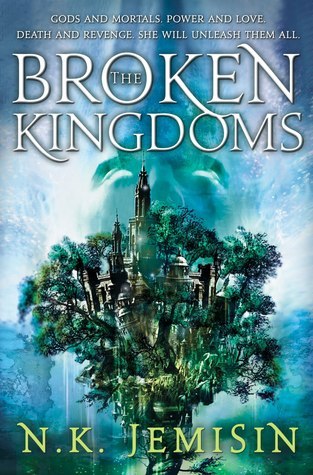
#CBR5 Book 113. "The Broken Kingdoms" by N.K. Jemisin

Page count: 417 pages
Rating: 4 stars

This is the second book in the Inheritance trilogy, and while the book can be read independently (I read the first book, The Hundred Thousand Kingdoms nearly a year and a half before I read this one, which was fine, once I'd re-familiarised myself with the plot on Wikipedia), you'll probably get a more cohesive and generally better reading experience if you read them in sequence (without waiting 18 months between them).

In the city of Shadow, beneath the World Tree that sprang into existence ten years ago, blind Oree Shoth makes her living as an artist. She does appear to be able to see magic of all kinds, though, and her strange second sight helps her paint. Oree lives with a mysterious, taciturn stranger who she rescued from a waste bin some months back. She doesn't think he's a godling (one of the many minor gods that have started appearing in the city since the World Tree grew), because he only glows at dawn. He's clearly not all human, either, as he keeps killing himself and coming back to life.

When godlings start turning up dead, Oree and her strange house guest, along with Oree's former lover, a godling called Madden, find themselves abducted and held prisoner by a secret religious organisation. They want to keep her friends hostage, to get Oree to cooperate with them. They need her help to kill one of the major gods, the Shadow Lord himself.

This book is set ten years after the end of The Hundred Thousand Kingdoms and the major characters in that book only turn up briefly in this book, mainly as cameos. So it's absolutely possibly to read the second book without knowing what happened in the first, but I found it added another dimension to know the reasons for the major changes this fantasy world has gone through in the last decade. As in the first book, the narrative is told in first person, this time from Oree's POV. Because it's a personal narrative, it jumps a bit back and forth, as personally recounted stories often do. This, of course, enables Jemisin to put in all sorts of foreshadowing and teases for the readers.

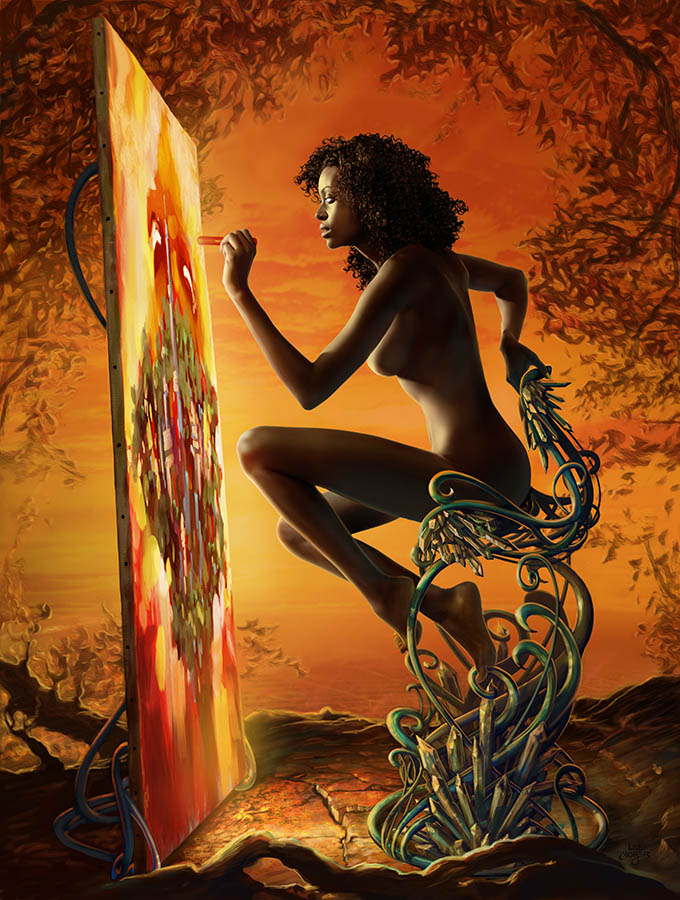
Those who have read the first book in the series, will not be that surprised at the identity of Oree's strange lodger, and I really like what Jemisin's done with this character and that she's built a fantasy universe where it's possible to explore the sorts of things she does. Jemisin is very highly acclaimed out there on the internet, and while I liked the book, I'm still waiting to be blown away by her writing, the way so many others out there seem to have been. Last year, as part of my now annual support of Worldbuilders, Patrick Rothfuss' charity fundraiser, I got the Literary Pinup Calendar, drawn by Lee Moyer. Very fittingly, September's image is of Oree. It's one of my favourite images in the calendar. I really wish I could love the book as much as I love this picture, but so far, after two books, for all that I see that her writing is great, there's just this little part of me that stays detached when I read Jemisin's books. That's not to say this isn't very good fantasy, quite unlike anything else I've found out there. Maybe the next book of hers is the one where I finally get properly hooked?

Thursday, 18 July 2013

#CBR5 Book 72. "Rose Under Fire" by Elizabeth Wein

Page count. 480 pages
Rating: 5 stars

This book is a companion novel to Elisabeth Wein's Code Name Verity. You don't need to have read that book to understand this one, but you should anyway, because it's one of the best books I've read in years. And you like good books, don't you?

Rose Justice is a young American woman, working for the ATA in Britain during World War II. She made friends among the other ATA pilots, she's dating a young soldier, and she writes poetry in her spare time. Her job is to taxi planes to various locations, and is on an out of the ordinary mission to France, when her plane is captured by the Germans, and she is sent to Ravensbrück, the women's concentration camp during the autumn of 1944. As very little news of the camps was actually released during the war, and what little came out was usually so horrifying that people didn't think it could be true, Rose has no idea what she's in for.

As she doesn't speak German, Rose has trouble communicating with the guards or other prisoners. As she was captured in France, she is labelled a French prisoner, even though she's American. Her clothes are taken from her, her hair is savagely shorn off her head. The treatment of the prisoners is dreadful. She's taken to work in the Siemens factory, where the prisoners get better food, and the barracks are not so crowded, but when she realises that the items she's set to make are missile components, she refuses to do any work. She's brutally beaten as punishment, and sent to a different part of the camp once she recovers enough to work. There she meets the group known as the rabbits, young women who've had horrifying and brutal medical experiments performed on them, and who have terrible scars and deformities because of it. Many of the prisoners are former students, and they love Rose's poetry. By reciting poetry she knows from her school days, or creating her own, Rose helps keep her own and the other women's spirits up.

I don't want to go into too much detail about what happens in the book, because anyone vaguely familiar with the sort of treatment prisoners of concentration camps received, will already have an idea, and anyone who doesn't know about these things, needs to read this book asap. To anyone worried, I can say that much of the book is Rose's journal entries AFTER she's back in Paris having escaped from the camp at the end of the war, so while the book is heartbreaking and serious and harrowing, I can reveal that Rose survives her terrible ordeal. Much of the story is her trying to actually process the things that happened to her. The first quarter or so of the book is her life in the UK before she's captured, and the last quarter is set later, during the Nüremberg trials, when Rose has to decide whether she is strong enough to face her tormentors and testify during the post-War tribunals about what she went through.

As was the case with Code Name Verity, this book has beautiful, touching and utterly believable depictions of female friendship. This is an even more difficult book to read, because while the former book was about two women during the war, one a pilot, the other a spy captured by the Gestapo, this book is about a group of women trying to survive against all odds in a German concentration camp. As Wein says in her afterword, while Rose Justice and several of the other women she writes about in the camp are fictional, everything she writes about the treatment of the prisoners, the unbelievable and sickening medical experiments performed on the rabbits, and the situation in Ravensbrück during the final months of the war is all true. She writes the book to educate, inform and pass on the knowledge. While it's one of the worst books I can imagine to read on a plane (as I foolishly did, literally choking back tears and trying desperately to not sob uncontrollably several times during the story), it's a wonderfully written book. It's an important book. It's without a doubt going to show up on my best of the year list.

Disclaimer! I was granted an ARC of this from the Disney Book Group through NetGalley. This has in no way influenced my review.The book is released in the US on September 10th. However, the book is already out in the UK, where I bought my own copy.

Wednesday, 17 July 2013

#CBR5 Book 68. "It Happened One Midnight" by Julie Anne Long

Page count: 384 pages
Rating: 4.5 stars

Jonathan Redmond is the youngest of the Redmond sons. His eldest brother is missing, off doing God knows what (but rumours suggest it may be piracy). His brother Miles is a famous explorer, disowned by their father because he married someone the powerful Isaiah Redmond didn't approve of. Miles wants to be an investor, and would like his father's help to invest in a printing business specialising prints. His father coldly dismisses his ideas, and reveals that he sees his son as little more than a pretty face and an irresponsible rake. He claims Jonathan needs to settle down with a wife in the next six months, or he's going to cut off his allowance.

Jonathan doesn't really feel that his rakish reputation is deserved. Young eligible women keep throwing themselves at him, because of his looks, family name and connections. They keep misinterpreting things he says while dancing with them as promises, and suffer broken hearts when he doesn't court them. Determined to prove his father wrong, Jonathan needs to find fellow investors elsewhere. He finds an unlikely one in Thomasina de Ballesteros, a beautiful young woman driving the young men of London to distraction. Her mother was a famous courtesan, and now she charms gentlemen at exclusive salons. No one knows that in the evenings, she risks her life rescuing children from ruthless employers and finding them new and better homes. In return for supplying Jonathan with funds to start up the coloured printing business, Tommy (yes, I hate the nickname, but got used to it as the book went on) ropes Jonathan into helping her on a couple of rescue missions.

While both acknowledging the other person's attractiveness, neither Jonathan nor Tommy are initially in any way romantically interested in the other. Tommy is fending off young gentlemen by the dozens, not really wanting to become some man's mistress, and Jonathan needs to find himself a high-born and suitable wife, or risk being ostracised and cut off by his father, just like his brother Miles. As they spend more time together, of course their friendship develops into more. It wouldn't be a historical romance otherwise.

Gripes I had with this book: I hate the shade of green of (presumably) Tommy's dress on the cover. It's a virulent, toxic green. I'm glad I own the book as an e-copy, so I don't have to actually look at it.

- I don't like that the heroine is, in effect, called Tommy. I think male nicknames for female characters are dumb. It annoyed me less the further into the book I got, though, I think my brain just started substituting it with Tammy, or something.

Things I really enjoyed: Pretty much everything else. When Julie Anne Long isn't on form, she still writes a pretty decent romance. In this case, she wrote a tremendously entertaining and very good one. It may have helped that I had very low expectations to the book, as Jonathan has been such a non-entity in previous books, even as a supporting character. Hence I underestimated him, just like his father, and most of the world, clearly does in this book. Jonathan is not just handsome, he's brave, and loyal, and incredibly smart, and clearly a very shrewd investor and businessman. He sets out to prove his father wrong, and succeeds brilliantly.

Tommy was an interesting character too. While her quest to rescue disadvantaged servant children may seem a bit futile (after all, if they got one child from the work house and tricked them into years of horrible servitude or factory work, won't they just get another one when the first kid is taken away?), it's still better than doing nothing, and the fact that she's frequently risking her life to get them out shows a bravery that not many romance heroines possess. She also desperately wants to connect with her father, a man she's only heard about from her mother's stories.

I liked that Jonathan and Tommy became genuine friends first, before their feelings developed into romantic love. I liked Jonathan's relationship with his sister, Violet, and his determination to make a name and fortune for himself, not just to live off the funds from his family. While What I Did for a Duke is still my favourite of Long's novels, this may well be my second favourite. Well worth a read.

Friday, 28 June 2013

#CBR5 Book 67. "Ella Enchanted" by Gail Carson Levine

Page count: 240 pages
Rating: 4 stars

Ella lives in a fairytale world, where there are ogres, giants, fairies and magic. When she is born, poor Ella is given the gift of obedience by a very misguided fairy, who refuses to take it back, even after the appalled pleading of Ella's mother and fairy godmother. Lucinda the Fairy is of the opinion that this is a wonderful gift to bestow on a child, and so Ella grows up having to obey any direct order given to her, and knowing that if someone were to ask her to chop off her own head, she'd have to obey. Luckily, the only ones who actually know the truth about Ella's "gift" are her mother, and the loyal cook. Ella also learns to be creative in the ways in which she obeys any orders. If asked to fetch something, she might throw it at the person, or when asked to hold something, she might march around with the object, forcing the other person to follow her around in order to get to it.

Then Ella's beloved mother gets sick, and dies. Her father, a merchant, is barely ever around. When he is home, he's worried that Ella's manners and accomplishments aren't necessarily all those a young lady should possess, and against Ella's wishes, he sends her off to finishing school, with the odious daughters of a friend. On the way there, Hattie, the eldest of the two girls, discovers that Ella, however reluctant, has to do exactly what she's told, and she exploits this as much as she can. Olive, the younger, and much stupider sister, is not let in on the "game". Because of her "gift", Ella actually becomes quite accomplished at "finishing". She has to obey orders, and most of the teachers there speak in nothing else. She also makes a good friend, and keeps in touch with Mandy (the cook and her fairy godmother) and others she cares about, including Prince Charmant, through the pages of a magical book.

Ella is desperate to have her birthday curse broken, and when she discovers that Lucinda loves weddings and christenings, she runs away from school to find the fairy at a giants' wedding across the kingdom. On the way, she has several adventures, including nearly being eaten by ogres. After the wedding, her father declares that he's completely broke, and either he or Ella will have to marry someone wealthy. As Ella is only fifteen, it ends up being her father, who marries Hattie and Olive's horrid mother. Once the bride discovers that Ella's father is a pauper, and Ella's father goes off to trade as far away from his new family as possible, she forces Ella to be a servant, and Hattie and Olive make sure that Ella get the most menial and horrible chores in the house. The only thing keeping Ella's spirits up, is her correspondence with Prince Char - but because of her terrible "gift", she could never marry a prince, she could put him and the kingdom in far too much danger. She becomes even more determined to get her curse broken.

I first heard about this book years ago, but never read it. I then saw the film, starring Anne Hathaway, never realising that there are only the tiniest of similarities between the story of the book, and the plot of the film. If you are one of the people not terribly impressed with the movie (which let's face it, is not exactly one of Hathaway's finest), and has discounted the book because of it, do yourself a favour and find a copy as soon as possible. It's a delightful book, and such a creative retelling of the Cinderella tale. There are no tiny animals helping with dress making, nor any birds pecking out the stepsister's eyes (seriously, Grimm's original fairy tales can scar a child for life!), but there are glass slippers, and a coach made from a pumpkin, and evil stepsisters, and a very charming prince, who likes Ella just the way she is, and doesn't at all want her all "finished" at school. Ella is spirited, and clever and brave, and a wonderful role model to young girls. Much better than any Disney princess I can think of.