Showing posts with label epistolary. Show all posts

Friday, 8 November 2024

CBR16 Book 64: "Obsidio" by Amie Kaufman and Jay Kristoff

Page count: 615 pages
Audio book length: 13 hrs 1 min
Rating: 5 stars

CBR16 Sweet Books: Binge
CBR16 Bingo: Celestial (set in space. I'm sure the characters observe lots of stars on their epic journeys through space)

Spoiler warning: this is the third and final book in the Illuminae Files. A lot of stuff happened in the previous two novels, and it will be impossible to review this book without referring to some significant plot points. Additionally, I don't see how this book would be a satisfying reading experience taken out of context. So if you aren't up to date, and have finished Illuminae and Gemina, skip this review until you can return unspoiled. Or you know, read it and get minor plot spoilers. It's your life, you do you.
'
Previously in these books. The evil BeiTech corporation attacked an illegal mining colony on a small ice planet called Kerenza. They also deployed some scary biological weapons with disastrous results. Only very few of the refugees who originally escaped Kerenza in various rescue ships are still alive, now doing their best to stay alive on the Hypatia. They were trying to get to the wormhole at Heimdall station, but BeiTech's evil goons arrived before them and did their best to wipe out everyone there as well, trying to cover the tracks of their evil actions. Now the Heimdall space station is no more, the wormhole is useless and the survivors from Heimdall station need to join forces to survive. Luckily, the leader of the BeiTech assassination squad had a pretty cool spaceship that they now have access to, but it wasn't really designed to hold and transport several thousand passengers.
'
Our intrepid YA heroes include Kady, Ezra, Hanna, and Nik, not to mention Nik's genius cousin Ella. Despite all the amazing feats these young people have managed to perform, a lot of the older crew members now distrust and underestimate them, which leads to conflict and frustration. They discover that there are still people alive on Kerenza and that BeiTech hasn't been able to mine enough fuel to leave the place yet, but the clock is ticking, and despite the reluctant mining crew's many attempts at sabotage and delay, soon the evil corporate overlords will have what they need to leave for good, and whatever survivors are still on Kerenza will be disposed of.

On Kerenza, we are introduced to two new young rebels to cheer for, even though Rhys is working as an engineer for BeiTech and is now forced to work with the mercenary soldiers on the planet itself. He is shocked to reunite with his old girlfriend, Asha, who also happens to be Kady Grant's cousin. After a very passionate love affair a few years back, where both of them made some questionable decisions and got involved with some unsavoury people, Asha and Rhys were forced apart. Rhys was enrolled in a military academy, and Asha was sent to live with her relatives on Kerenza. While actually a pharmacy trainee, she now works as a nurse and pathologist at the only med centre left on Kerenza, and she is also a member of the resistance trying to sabotage BeiTech's remaining operations as much as possible. She can't believe that the man she loved is now part of the evil organization who is oppressing her friends and neighbours, but obviously, there is more to the story that she knows - and it will surprise no one that Rhys isn't actually a villain.

So we have the desperate people trying to stay alive on Kerenza, and the harried survivors returning through space from Heimdall station, on a ship that may not have enough resources to get everyone safely there in time. It's clear that these brave young people have to outsmart BeiTech once and for all, and to do that, they also need to make sure that all the atrocities are documented. So in this book, we finally find out how a lot of the material we've been reading for the past two books was assembled, and we discover the identity of the snarky young tech who has been narrating all of the video files throughout.

This is the first of the books I read partially in audiobook, after recommendations from among others, my friend cheerbrarian (she also has a podcast). I don't know if I would have liked the audiobooks from the start, knowing how many different types of text are collected in the novels, but having read the other two in paperback, having this as an audiobook for when I was out and about was great. I have also gotten the audios of the previous two and can see myself using them when I want to reread in the future.

This YA series is unlike anything I've ever read before and it made me feel pretty much all the feels at some point or another. I've been scared, grossed out, I have laughed and cried. Despite all of these events clearly being told after the fact at a tribunal for the head of BeiTech industries, so it's obvious that our band of heroes will be OK in the end, I was still on the edge of my seat and scared that one or more of them wouldn't make it. It's also important to note that while our protagonists survive, these books have death counts in the multiple thousands. So many innocent (and not so innocent) people die, in all sorts of horrible and/or tragic ways, and yet you feel elated and happy at the conclusion of the trilogy, because a little core of found family is safe and well, despite everything. 

Crossposted on Cannonball Read

Sunday, 18 August 2024

CBR16 Book 47: "Gemina" by Amie Kaufman and Jay Kristoff

Page count: 672 pages
Rating: 5 stars

CBR16 Sweet Books: Binge
Nowhere Book Bingo: A YA novel
Smart Bitches Summer Bingo: Epistolary romance
CBR16 Bingo: Part 1 and Part 2 (the book has more than 600 pages)

This is the second book in a series, and starting with this one means a lot of stuff won't make much sense. I also don't think it's possible for me to review this book without spoiling the previous one, so if you're not up to date, start with Illuminae.

After the disastrous events, first on the mining colony of Kerenza, and then on the space fleet evacuating survivors, the only remaining ship, Hypatia, is on its way to Jump Station Heimdall, hoping for aid. BeiTech, the organisation which launched the attack on Kerenza and utilised the bioweapon which led to a plague, cannot risk word getting out about their heinous deed and therefore need to make sure that they eradicate the Hypatia. To do so, they will need to use the jump station's wormhole, and later make sure that there are no survivors on Heimdall left to reveal the truth.

Entirely unaware of BeiTech's sinister goals are two teenagers aboard the Jump Station, Hanna Donnelly and Niklas "Nik" Malikov. Hanna is the station captain's beloved and pampered daughter, Nik is part of the Malikov crime family, and Hanna's occasional drug dealer. There's clearly an attraction between them, but Hanna is in a relationship with the dashing Jackson Merrick, one of her father's officers, and consequently doesn't really have time for more than some light flirtation with Nik. Life onboard a space station surrounding a wormhole obviously isn't very exciting for either of them, but Hanna tries to pass the time by studying, parties and working out, while Nik reluctantly assists with his family's business.

Both of their lives are irrevocably changed once an elite team of BeiTech mercenaries arrive, and very rapidly take control of the station. The mercenaries start by wiping out the people who helped their ship get onboard (Nik's family) and Nik only survives because he's on his way to deliver party drugs to Hanna. Thankfully, while she's annoyed that Nik is late for their deal, Hanna is also spared from seeing her father shot in the head when the mercenaries take control of the majority of the station. Now, Hanna might seem like nothing but an airheaded, fashion-obsessed teen, but being the daughter of a military commander with a keen interest in history, she's picked up a lot of useful knowledge about strategy, tactics and how to be stealthy. Nik, meanwhile, has only one family member left alive and is determined to avenge the Malikov crew in any way he can deal hurt to the mercenaries. Unfortunately, in all the sudden danger, both Nik and his computer genious cousin Ella completely forget about the very dangerous alien parasites hatching in a secluded part of the station (long story, the drugs the Malikovs sell are derived from some truly scary creatures, who should not be left unattended and allowed to crawl through space station vents and the like). Of course, the BeiTech baddies don't know about them either.

The BeiTech kill squad need to take control of the wormhole so that a second kill team can be sent through to deal with the Hypatia. They were not expecting to be foiled by a few teenagers and a few officers having sealed themselves on the bridge of the space station. Can Hanna, Nik, and Ella with a few ragtag allies foil their enemies, warn the Hypatia, save the remaining crew and thwart BeiTech's evil schemes? (This is book 2 of 3, what do you think?)

Fans of Ezra and Kady (her dad is the chief of security on Heimdall), not to mention AIDAN, will be pleased to know that in the latter half of the book, they do appear, although they are not the focus of this story, that would be Hanna and Nik. While Kady and Ezra had a past, and many months of separation with only computer chats to make the heart grow fonder, Hanna and Nik's attraction to one another is basically put to a boil in an insanely tense and demanding situation, where they are fighting for survival, grieving loved ones and trying to find a way to help complete strangers aboard the Hypatia. 

Hanna is unbelievably badass, and Nik may seem like he's got a dangerous and ruthless past but is really just a big, tattooed cinnamon roll (who will still do what is necessary if his or others' lives are in danger, he just needs more time to process it than Hanna). Ella is more of a secondary character, but the girl is fierce, especially since she's not really able to move around except via her computer. I love all of them and am so glad that Kaufman and Kristoff had the surviving characters from Illuminae take a backseat so readers could get to know these guys as well.

I am also grateful that while the lanima (super creepy alien parasites) are scary and unpleasant, any scene involving them (including the early ones where it's explained how they incubate) was a pale shadow of all the horror with the virus rage zombies of the previous book. I really liked how the book includes the photos and call signs of all the BeiTech mercenaries, and how as the book proceeds, more and more pictures are just crossed out (they may be teenagers, but Hanna, Nik and Ella are NOT messing around). 

Having now read two of these books, I have absolutely no idea what the authors are going to come up with next, but I'm hopeful that eventually the BeiTech corporation will be brought to justice for all the horrible things it has done. Having now heard so many cool things about the audiobooks, I may do the third and final book partly in audio.

Judging a book by its cover: While the first book was all warm colours, red and orange, this one is all cold, with a cloud of something (dust? smoke?) blue over a black background. I think this entire series has a very well-done cover design, with the covers of the trilogy complementing each other so well. 

Saturday, 23 March 2024

CBR16 Book 14: "Illuminae" by Amie Kaufman and Jay Kristoff

Page count: 602 pages
Rating: 5 stars

Nowhere Book Bingo: An epistolary novel
CBR16 Sweet Books: Binge (I have already bought the next two books in the series in paperback, so I can read all of them as soon as possible.)

Official book description:
Kady thought breaking up with Ezra was the worst thing she'd ever been through. That was before her planet was invaded. Now, with enemy fire raining down on them, Kady and Ezra are forced to fight their way onto one of the evacuating craft, with an enemy warship in hot pursuit.

But the warship could be the least of their problems. A deadly plague has broken out and is mutating, with terrifying results; the fleet's AI, which should be protecting them, may actually be their biggest threat; and nobody in charge will say what's really going on. As Kady plunges into a web of data hacking to get to the truth, it's clear only one person can help her bring it all to light: Ezra.

Kady is a talented hacker and is fully aware that the evacuated passengers aren't being told much of anything. She is determined to find out the truth of what is going on, especially after the AI of the leading evacuation ship, AIDAN, blows one of the other two up unexpectedly. Naturally, the remaining ship's crew are rather nervous about the incident being repeated and the AI needs to be shut down until they can figure out why it acted so erratically. Ezra is recruited as a fighter pilot, working to defend the evacuation fleet, not exactly a job without significant risks.

As Kady becomes more and more isolated, and the losses really start affecting her, her illegal communication with Ezra becomes one of the things that keep her going. Neither of them has anyone else significant left in their lives, and it becomes clear that the reasons why Kady dumped Ezra in the first place become very insignificant in the grand scheme of things, and now they would just like to be reunited, before they quite possibly die. 

As the back of the book says, the novel is "Told through a fascinating dossier of hacked documents—including emails, schematics, military files, IMs, medical reports, interviews, and more". I am very glad I got the paperback from the library, I'm genuinely not sure how in the world this book would work in audio, and I don't think I would have found it as engrossing a read on an e-reader screen. There were sections where I literally had to keep turning the book sideways or on its head to be able to read everything. It's a very interesting take on the epistolary format. 

I can absolutely see why this book wouldn't be a 5-star read for some people. It was a bit slow to catch my interest in the beginning, but since it's not divided into chapters like a traditional book, but interview transcripts, memos, chat logs, and the like, it's very easy to get tempted to read just a little bit more, since each individual section is so short. Once things really started escalating, I had trouble putting the book down. I stayed up until far too late o'clock on a work night just to finish it (and had to actually peek at the ending about halfway through the book because all the tension was going to kill me if I didn't know how it all turned out). So to me, this was a five-star read, even though some of the characterisation probably could have been deeper, and parts of the book were pure horror, and really upsettingly graphic when it came to the violence perpetrated by those afflicted with the virus. 

I have now bought this book for my keeper shelf, along with the two sequels, if they're even half as gripping as this one, I want physical copies of them for my very own. Also, having read the first one in a physical format, I'm not even sure it would be possible to get all the necessary information if you read them as an e-book or listened to it in audio. 

Judging a book by its cover: The reds and oranges are very eye-catching and I'm not entirely sure what the cover is supposed to show, but I think it might be a firestorm, suggesting either the original attack on Kady and Ezra's home world or the subsequent explosion of one of the evacuation ships. 

Crossposted on Cannonball Read

Sunday, 31 December 2023

CBR15 Book 104: "Emily Wilde's Map of the Otherlands" by Heather Fawcett

Page count: 352 pages
Rating: 4.5 stars

Spoiler warning! There will be some spoilers in this review for the first book in the series, so if you're not caught up, stop what you're doing and go read Emily Wilde's Encyclopedia of Faeries immediately. This review will be here when you return. 

Emily Wilde is back at her university in Cambridge, pleased with the success of her Faerie Encyclopedia. The proposal from her best friend Wendell Bambleby is still something she needs to consider, but after having her suspicions confirmed, that he isn't just a faerie, but a Faerie King gives her pause. Usually, nothing good happens to humans who get romantically involved with the Fey. She's determined to help him find a door back to his kingdom, though, and this is what most of her current research focuses on, when she's not working on her comprehensive map of the realms of Faerie.

Sadly, Bambleby's true identity wasn't just revealed to Emily, but to a whole host of villagers back in Hrafnavik as well. Now it seems the information is spreading, and his wicked stepmother, who usurped his throne and exiled him is sending assassins after him. Emily decides they need to get proactive about locating a back door to his kingdom, so they can stop his stepmother once and for all. This involves another journey, this time to the village of St. Liesl in the Austrian Alps, where several Faerie researchers are rumoured to have gone missing in the past. Along for the journey is Emily's niece Ariadne, who also wants to be a Faerie scholar, as well as Farris Rose, the head of Dryadology at Cambridge, who has pretty much blackmailed his way onto the expedition, threatening to have both Wendell and Emily discredited for falsifying sources for their academic publications (very much true in Wendell's case, very much not in Emily's). 

Will Professor Rose survive the dangerous expedition he has strongarmed his way onto? Will Wendell persuade Emily to actually be his wife? Will Emily manage to locate a door back to his kingdom? Will they manage to stop his wicked stepmother and counteract the poison affecting Wendell so that he and Emily even have a future together? 

I may have actually uttered an unladylike squeal of joy when I discovered this book on a shelf in the Waterstones in Morpeth (the English town where my parents-in-law live). I had seen on Heather Fawcett's Instagram that some UK readers got their pre-orders delivered early and some bookshops had received early deliveries of the book but never dared to hope that I was going to be lucky enough to go to one of those stores. Was I planning on buying this in hardback? No, now it doesn't go with my pretty paperback at all. Is the Norwegian kroner at a record low to the British pound (I seriously can't remember it being this bad for literal decades)? Absolutely. Did I snatch the book up and buy it anyway? Of course, I did! The book doesn't officially release until January 16th and I've wanted to read it pretty much since I finished book 1. There wasn't even a question in my mind.

Did it live up to my expectations? Yes, I am glad to say. I think I like it even better than the first book, even though it was a bit slow in parts and meanders a bit. I also wasn't as interested in the subplot about the missing scholars, but YMMV. Emily and Wendell are a delight together, and I liked that while Wendell had to rescue Emily in the first book, she was very much the rescuer here, even at the risk of her own safety and sanity. I don't know how many books Ms. Fawcett is planning for the series, but I was very happy to see that there will be at least one more book before I have to say goodbye to the characters. This was a really lovely book to finish off my reviewing year. 

Judging a book by its cover: Isn't this just the prettiest thing? The green is one of my favourite shades and the flowers and mushrooms and little items are so delicate and dainty. It also complements the colours of book 1 beautifully. 

Crossposted on Cannonball Read

Tuesday, 25 July 2023

CBR15 Book 31: "Emily Wilde's Encyclopedia of Faeries" by Heather Fawcett

Page count: 320 pages
Rating: 4.5 stars

CBR15 Bingo: History (set in an alternate history, in the Victorian era)

15-word review: Introverted lady scholar goes to fictional Iceland to research faeries, followed by her handsome colleague.

Official book description (because I finished this at the start of May):
Cambridge professor Emily Wilde is good at many things: She is the foremost expert on the study of faeries. She is a genius scholar and a meticulous researcher who is writing the world's first encyclopaedia of faerie lore. But Emily Wilde is not good at people. She could never make small talk at a party--or even get invited to one. And she prefers the company of her books, her dog, Shadow, and the Fair Folk to other people.

So when she arrives in the hardscrabble village of Hrafnsvik, Emily has no intention of befriending the gruff townsfolk. Nor does she care to spend time with another new arrival: her dashing and insufferably handsome academic rival Wendell Bambleby, who manages to charm the townsfolk, get in the middle of Emily's research, and utterly confound and frustrate her.

But as Emily gets closer and closer to uncovering the secrets of the Hidden Ones--the most elusive of all faeries--lurking in the shadowy forest outside the town, she also finds herself on the trail of another mystery: Who is Wendell Bambleby, and what does he really want? To find the answer, she'll have to unlock the greatest mystery of all--her own heart.

Ok, first of all, anyone who picked this up because they thought it was going to be a romance was probably very disappointed. Yes, Bambleby is interested in Emily, but she's so busy trying to do her academic research and figure out what all the f*ckery that keeps happening to the local populace is caused by (well, obviously local faeries - but which ones, and why?) so she hardly notices him, except to be exasperated by his presence.

Early reviews I read for this suggested that it's set in a fictional historical Norway. While in this alternate history, the area that Emily visits may count as part of fictional Norway, it's clearly a fictional historical Iceland. Since the vast majority of readers who pick up this book probably have no idea what differentiates Norway and Iceland, or any of the Nordic countries really, it's a very silly thing to get annoyed by, but nevertheless, I want it clearly stated that the various character and place names described to us by Emily (the entire book is written as her journal, or letters to or from her) are Icelandic, because, to someone from my part of the world, it is very obvious.

With some books, I reduce my rating by the time I get around to reviewing them, but in this case, I've actually added half a star to my original rating, because this is one of those books I keep thinking about, even months after finishing it. Emily and Bambleby are both excellent characters and I loved reading about them, their banter, and their adventures in a strange culture from their own. Emily is a bit of a curmudgeon, prefers solitude and while it is never stated, is probably autistic (this is set in an alternate Victorian era so that diagnosis would not be known yet), she is a very devoted scholar and has been working on her encyclopedia for years. Bambleby is pretty much her exact opposite. He's outgoing, charming, gregarious, and makes friends easily (all of these qualities are among the things Emily seems to find extremely annoying about him. Of course, Bambleby is also Emily's only friend and just seems amused by her anti-social behaviour. 

As a consequence of being so different, the two scholars very much complement each other and make an excellent team, especially once Emily admits to herself that Bambleby's assistance may in fact be beneficial to her stay in Hrafnsvik. As I mentioned earlier, there are hints of romance here, so slow burn as to nearly be treacle in the cold, but I suspect the next book (which isn't out until January 24, boo!) will do more to develop the romantic relationship that is gently introduced in the last third or so of this book. As a huge fan of Bambleby and romance, I would have liked there to be quite a bit more of this subplot, but it would also not be in Emily's character to fall head over heels either. 

I found this whole book delightful and especially liked the various touches of folklore explored (I'm a sucker for folklore, be it actual or fictional). I can't wait to read the sequel and see where Emily and Bambleby's adventures take them next. 

Judging a book by its cover: With some books, the UK and US versions aren't too dissimilar and it's clear that the publishers have gone for a similar feel. With this book, they almost couldn't be more different. The UK cover is creamy off-white with delicate illustrations of flowers and mushrooms, looking very inviting. The US cover is black and full of spooky details like bones and creepy vines. Both strangely capture some of the vibes of the book, but I wonder at the publishers choosing such different approaches to represent the book. 

Crossposted on Cannonball Read. 

Monday, 23 January 2017

#CBR9 Books 4 and 5: "84 Charing Cross Road" and "The Duchess of Bloomsbury Street" by Helene Hanff

Combined page count: 230 pages
Rating: 5 stars

In October 1949, New York writer sends off a letter to a bookshop in London, Marks & Co, on 84 Charing Cross Road. She is looking for reasonable second-hand books and luckily the staff at Marks & Co are able to help her. By Christmas, as she has heard that everyone in the UK are still on rationing, she has ordered a whole ham and a lot of powdered eggs to be shared out among the staff and her generosity prompts the mysterious FPD that she's been corresponding with is in fact called Frank Doel.

The outgoing and often very impulsive American writer and the more restrained English bookseller carry out a correspondence over the years, with the occasional letter included from other people in the store, and later Frank's wife Nora, who are all blown over by Ms. Hanff's continued generosity. She keeps insisting on sending food parcels to the store around every big holiday, and before long, she is receiving Christmas presents from the thankful staff as well. The correspondence, which chiefly focuses on the books Ms. Hanff requests, and a love of reading, come to include stories of their everyday lives, information about their families and career ambitions (in the case of Ms. Hanff). Her many eventual friends in the UK keep admonishing her to visit, but every time she gets closer to her goal of saving up enough, something big interferes and she has to put it off for a while longer. Sadly, in January 1969, after nearly 20 years of letters back and forth, Ms. Hanff is notified by a secretary at Marks & Co that Frank Doel has passed away. His daughter gives her permission to publish his letters, however, in what became 84 Charing Cross Road.

Said book and it's strange and wonderful success is what finally allows Helene Hanff to travel to London, but not until the summer of 1971, while still recovering from a hysterectomy. For five weeks, she is able to visit her beloved London, although she's terrified when she gets off the plane. She gets to meet several of the friends she made during her many years of corresponding, even though the bookshop Marks & Co is now closed. Her English publishers put her up in a lovely little hotel in Bloomsbury and various friends, family of former correspondents and fans of her book all insist on treating her to the time of her life, hence the title of her next book, The Duchess of Bloomsbury Street. She really feels wonderfully pampered during her stay, and while sadly she never manages to see the inside of the Tower of London, she nonetheless gets to visit a fair amount of locations in the London and its surroundings.

Made up from her diary entries while she was in England, the book gives somewhat more insight into Ms. Hanff and her dreams, fears and insecurities. I'm not surprised that she has adoring fans that want to show her every courtesy, I loved both books immensely. They're both such quick, witty and entertaining reads. I know that there is a film based on 84 Charing Cross Road, I should probably try to find a copy and watch it. The paperback I got at my local library contained both books, and even so, I was able to read both in a couple of indulgent afternoons. I've heard of both the film and the book, and am delighted that I finally read it.

Judging a book by its cover: A delicate creamy golden colour for the cover, with the shopfront of Marks & Co, where Ms. Hanff bought her books for so many years (but which had sadly closed by the time she visited London) at the bottom, showing the reader just what the bookstore looked like and allowing the reader to imagine its loyal employees, who all became such dear friends to Ms. Hanff. An open second-hand book at the top shows the reader that they are most certainly also central in this story.

Crossposted on Cannonball Read. 

Sunday, 3 May 2015

#CBR7 Book 56: "Texts from Jane Eyre: And Other Conversations with Your Favourite Literary Characters" by Mallory Ortberg

Page count: 240 pages
Rating: 4 stars

Oh people, how do I even start reviewing this book? I'm pretty sure I devoured the whole thing in less than two hours total (in between running errands, meeting up with friends, working and other stuff). I can tell you that for the bits that worked for me (about 75% of the book), I laughed so hard on occasion that my abs hurt.

I kept quouting bits out loud at my husband, demanding that he also load this onto his e-reader, so he can read the whole glorious thing. I have long been a huge fan of a lot of the things on The Toast, my favourite thing of theirs is probably "How to tell what novel you're in" feature, although there's so much that makes me laugh and/or nod my head in recognition. The single post that felt more than all the others I've ever seen on the website as if it was aimed directly at me was this, and I wasn't even vaguely surprised to see that Mallory Ortberg wrote it. Chances are, if I really laugh at something on that website, it's been written by Ms. Ortberg. Some of the text exchanges featured in this book have been posted on the website previous.

I don't know if this book would work for everyone. It probably helps if you like reading, and a bit more varied than one genre at that. Failing that, a knowledge of classical literature and the "greats" of British and American literature, as well as some historians and philosophers won't hurt. There's text conversations between Medea and Glauce, Achilles and his men, William Blake (and I assume his poor wife), characters in King Lear, Hamlet, Don Quixote, Emma, Oliver Twist, Pride and Prejudice , Moby Dick, Gone with the Wind, Little Women, the Great Gatsby, Peter Pan, Jane Eyre (obviously, what with the book being named for them) from Wordsworth, Coleridge, Plato, Lord Byron (oh God, the texts from Byron), Emily Dickinson, John Keats, as well as more recent stuff like between the characters in Sweet Valley High, the Outsiders, the Baby-Sitters Club, Atlas Shrugged, the Hunger Games and Harry Potter, to name a selection.

Each chapter is short and it's a super quick read because it's literally just text conversation. It shows such a clever insight into a number of stories, without mocking the characters or stories too much. This whole review could basically just be me quoting my favourite bits, but I really don't have space for that, so I selected one of the bits that made me laugh the most.  If you like books, and/or The Toast, you should try to get your hands on a copy of this book. You may want to borrow it from the library until it's out in paperback, as the hardback price can be too high for some.

I leave you with this exchange from Pride and Prejudice: 

"And you must see to it that your sister invites Mr. Bingley, Lizzie"

"He isn't here, Mother"

"Isn't he?
he must be here
the ball is in seven days
and if he is not here then how will we convince our Mr. Darcy to attend?"

"Mr. Darcy isn't here either"

"No?
but I thought he was in London
for business
and would return in time for the ball"

"No
he is not in London
he is on a ship
he is going to war"

"but this is terrible news"

"there is an actual war on right now
against Napoleon"

"how could this have happened??"

"he was commissioned months ago"

"And Mr. Bingley?"

"He is also there
He is also at the war that is happening now"

"Oh my god
we are going to have to put off this ball"

"Probably yes"

Crossposted on Cannonball Read.

Monday, 6 April 2015

#CBR7 Book 35: "Daddy Long-Legs" by Jean Webster

Page count: 249 pages
Rating: 3.5 stars

Jerusha "Judy" Abbott is a Canadian orphan, who at 17 is still living in the orphanage, mainly because they are using her as free help. She is frequently told that she needs to keep her strong opinions and overactive imagination to herself, or nothing will come of her. She dreams of becoming a famous author and when a wealthy benefactor of the orphanage offers to send her to college on a scholarship, she is closer to achieving said dream. She doesn't know who he is, having only seen his shadow as he left the matron's office, but she knows that he is tall, and his shadow resembled a daddy long-legs. Hence, when she is told that she needs to write letters to her benefactor detailing her progress, she addresses each one to "Dear Daddy Long-Legs".

Having never had a family of her own, Judy (as she reinvents herself at college. Who can blame her for wanting to be rid of the name Jerusha?) starts imagining that Daddy Long-Legs all the relatives she's been missing. Going to college and receiving an education, Judy thrives. She loves learning, she loves improving her writing and making new friends. She never gets any replies to her letters, but the occasional gift (sometimes quite extravagant) proves that her anonymous rich benefactor reads her missives and doesn't want her to feel left out among the other girls at the college. Very occasionally, Judy will get written instructions through her benefactor's secretary, who among other things, helps find her places to spend her summers, while the other girls go home to their families.

As she grows older and her education is coming to an end, Judy becomes more and more curious about the identity of "Daddy Long-Legs" and tries to use her prodigious imagination to figure out who he might be.

I picked up this book both because Dear Mr. Knightley, which I really liked, was inspired by it (which meant that I wasn't really surprised by any of the major story beats, as they are pretty much the same) and because Forever YoungAdult and the Book Smugglers, both review sites I trust and often agree with, rated it 5 stars and called it a must-read classic. Written in 1912, I'm sure this is a beloved book to many, but whether it's because I'd just read modern book with a very similar plot, or whether I just found some aspects of the book a bit disturbing, it just didn't entirely work for me.

While Judy is rather delightful, smart, opinionated and a bit too prone to speaking (or writing) her mind before she thinks about what she's actually saying, there was something very off-putting to me about her addressing most of her letters to "Dear Daddy". Especially as based on the reviews I'd seen, I knew that there was a romantic subplot, and it was clear that she was actually going to fall in love with her benefactor, without knowing who he really was. When "Daddy" starts dictating where she spend her free time, obviously to prevent her from spending more time with her college friend's brother, it left a bad taste in my mouth. The reviewer on Forever YoungAdult points out that Judy frequently disregards the attempts at manipulations from her benefactor, and once she wins a scholarship due to her writing skill, she insists on being allowed to start paying back the money she's been given so far, not wanting to be in debt for any longer than necessary.

I don't think it was just because of just having read Dear Mr. Knightley that I figured out quickly who "Daddy Long-Legs" was. While the character seems perfectly pleasant, and has very socialist leanings for a rich person of the time, I just couldn't get over the inappropriate way he keeps trying to direct Judy's life. Judy herself, as I have already mentioned, is great. She, like the precocious orphan girl ever, Ms Anne Shirley is the reason I liked the book as much as I did. It's really not going to be a book I revisit though, and the hero, if he can be called that, did little but skeeve me out.

Crossposted on Cannonball Read.

Sunday, 5 April 2015

#CBR7 Book 34: "Dear Mr. Knightley" by Katherine Reay

Page count: 336 pages
Rating: 4 stars

Disclaimer! I got this from NetGalley in return for a fair and honest review. 

Samantha Moore has spent most of her life in foster care. Having tried to hold down a job on her own, she reluctantly accepts a scholarship offered by an anonymous benefactor, to Medill School of Journalism at Northwestern University. The scholarship will only be available as long as she completes her degree, and writes about her progress to the foundation, care of the CEO, who hides behind the name Mr. Knightley. Samantha has always had trouble relating to people in the real world, hiding away in classical literature, where she finds solace. She has trouble making connections with others, since she speaks more in literary quotations than actual words, afraid to really be herself or let anyone close to the real her.

Because George Knightley is such an admired hero of Sam's, she accepts the stipulation, and begins to write regularly. Mr. Knightley never responds, but Sam knows her missives are beign read, as very occasionally, she receives a note from the CEO's assistant, responding if it is required. To begin with, Sam finds journalism extremely difficult, wanting instead to focus on a career in creative writing. Because of her difficulties in opening up and properly communicating with other people, her journalistic work is stilted and impersonal. As well as in her many books, Sam finds escape through running. On the running track, she slowly starts bonding with Kyle, one of the other foster kids, but as they are both wounded and slow to trust others, their friendship is difficult to really build.

As she struggles to discover who she really is and overcome her academic challenges, Sam gradually manages to emerge from behind her affected literary personas and make genuine connections. She makes a couple of female friends at college and through a series of coincidences befriends her favourite author, the crime writer Alex Powell. She gets a boyfriend for the first time, and her letters to Mr. Knightley become more like a personal journal than reports on her academic progress. Will she ever find out the real identity of her mysterious benefactor, and how will she react when she does?

I get a fair amount of books through NetGalley, mainly because I can't stop myself from requesting everything that looks even vaguely interesting to me. Sadly, I am really not as good about reviewing the books I am granted ARCs or review copies of, frequently forgetting about them unless they're by an author I especially love (and even then there are so many other shiny books out there to distract me). This is one of those books I forgot about completely and only remembered again when I was looking for epistolary novels for my Eclectic Reader challenge. The fact that it also fit into my key word challenge for March was just a bonus.

While I can see on Goodreads that quite a lot of people (at least of the reviews I browsed) found this book disappointing, and a pale copy of the children's book that it's inspired by, Daddy Long-Legs, I found it very sweet and it reminded me a lot of another book I really like, The Language of Flowers by Vanessa Diffenbaugh. It also features a heroine with a long history in the foster care system, who is wounded and needs to learn to find her place in the world. I can absolutely understand why readers may find Sam annoying. I'm fairly sure she's supposed to be. The entire premise of this book is that she is so guarded and distrustful that she's unable to make any real connections, seeking refuge in books and hiding all her true feelings and ineptly channelling fictional characters when forced to talk to others. She's a complete train wreck, but there are good reasons for that. While the book starts when she is 23, this book is clearly a coming of age narrative, and Sam needs to grow up and learn to face reality, both the painful and the joyful parts.

As far as I can tell, the epistolary aspect of the book, where she has to write letters to the mysterious Mr. Knightley is to make it as close to the premise of Daddy Long-Legs as possible. I'm sure I'm not the only reader of the book who started suspecting the true identity of her benefactor fairly early on, because really, I'm not even sure if it's supposed to come as a surprise to anyone who's read more than a couple of books in their life. There are only so many people it could be. It didn't take away from my enjoyment of the book, although I think said person could have come clean sooner instead of continuing to deceive Sam. It still didn't ruin my suspension of disbelief.

Reading and enjoying this book has also made me decide to check out the book that it's based on, and that so many Goodreaders are enthusing about. I'm very glad I re-discovered this book in my NetGalley pile, and will happily seek out other books by this author in future.

Crossposted on Cannonball Read.

Saturday, 8 November 2014

#CBR6 Book 112: "Frankenstein" by Mary Shelley

Page count: 269 pages
Audio book length: 8 hrs 35 min
Rating: 3 stars

I refuse to spoilertag anything in this review, because people, this book is nearly 200 years old. You've had ample time to read this book, if anything in my review spoils it for you, on your own head be it. 

 Captain Robert Walton writes letters to his sister Margaret, recounting his journey to the North Pole in a quest for scientific fame. He writes of the strange and charismatic man they rescue in the wilderness, a Victor Frankenstein. Through Walton's letters, we also get Frankenstein's tale of terrible hubris, as well as the story within the story of the creature Frankenstein in his arrogance created and abandoned to ultimately wreak havoc.

The son of a rich and loving parents, Victor Frankenstein is able to pursue his dreams as a student of science and natural philosophy. He goes to Ingolstadt in Germany and becomes obsessed with the idea of reanimating dead matter. He labours for years with his theories and eventually creates a disfigured giant cobbled together of all sort of scavenged corpses and manages to infuse the creature with life. He's so horrified by its yellow skin and ghastly visage that he runs away from the flat where he conducted his experiments and promptly has a nervous breakdown.

Being a scientific genius doesn't go so well for Victor Frankenstein. The creature he created and then ran away from is a sentient being, not all too pleased that its creator made it into such a terrifying monster. The creature longs for companionship and friendship, but has been met with only shrieks of terror and rejection whereever it goes. Victor meets the creature again, after becoming convinced it murdered his younger brother and allowed an innocent woman to hang for the crime (he's not wrong). The monster has taught himself to speak and reason and rails at his creator for basically giving him life he never asked for and then abanoning him to a life of loneliness and despair. He demands that Victor make him a companion, as he, like all living creatures is entitled to a mate and happiness.

Victor goes off into the wilds of Scotland to create a bride for the monster, but is so plagued by guilt because of the actions of his first creation that he cannot go through with it. He destroys the female he was making, causing the creature to appear and swear his vengeance. Suffice to say, things don't go well for Frankenstein, or most of his extended family and he eventually ends up nearly frozen to death in the Arctic telling his story to an explorer.

Frankenstein was not what I expected, mainly because most of my impressions come from pop culture references and my knowledge of movies (none of which I've actually seen). I was pretty sure there wasn't going to be a a mob with pitchforks trying to kill anyone, or a hunchbacked servant with a lisp or Victor Frankenstein triumphantly exclaiming: "It's alive!" but I wasn't expecting to feel so much sympathy with the creature, who really is dealt a very shitty hand. It goes on quite the murderous rampage throughout the book, which isn't exactly a nice thing to do, but I feel that Victor bears at least half, if not more of the blame, as he is the one who imbued a freakish patchwork of corpseparts with life and then ran away, forcing the creature to fend for itself. If you're an awful and neglectful parent, you don't get to turn around and be upset when your child turns out less than stellar in the morals department.

While I didn't exactly love the book, it was very interesting to me, and I am in awe of young Mary Shelley who started the book when she was 18. On a dare. Really, that girl was wicked talented. Her Frankenstein is so much more of a lasting classic than the poetry of her then much more famous husband and still inspires people today. One of the reasons I wanted to read the book was so that I could finally start watching Frankenstein, M.D, from the creators of The Lizzie Bennet Diaries and Emma Approved. I love getting my classics retold in YouTube video form, it seems. I wasn't expecting such a sophisticated book. The story within a story within a story narrative, the philosophical and moral quandries that are discussed throughout the the book, the genuine horror of the situation - girl is a genius. The book is frequently described as the first science fiction novel, and it's certainly a very good creaping horror story. Having read up on her on Wikipedia before writing this review, I also had no idea just how awesome a lady Mary Shelley seems to have been, and how scandalous her relationship with Percy Shelley actually was.

I will leave you with this webcomic by the extremely talented Kate Beaton:


Crossposted on Cannonball Read.

Sunday, 7 September 2014

#CBR6 Book 92: "Where'd You Go, Bernadette?" by Maria Semple

Page count: 306 pages
Rating: 4 stars

Because I read this book a month ago, and the plot is somewhat convoluted, I am resorting to the plot summary from Goodreads to help me explain what the book is about:

Bernadette Fox is notorious. To her Microsoft-guru husband, she's a fiercely opinionated partner; to fellow private-school mothers in Seattle, she's a disgrace, to design mavens, she's a revolutionary architect, and to 15-year-old Bee, she's a best friend, and simply, Mom.

Then Bernadette disappears. It began when Bee aced her report card and claimed her promised reward: a family trip to Antarctica. But Bernadette's intensifying allergy to Seattle - and people in general - has made her so agoraphobic that a virtual assistant in India now runs her most basic errands. A trip to the end of the earth is problematic.

To find her mother, Bee compiles email messages, official documents, secret correspondence - creating a compulsively readable and touching novel about misplaced genius and a mother and daughter's role in an absurd world.

I know I'm ridiculously late to the party when it comes to this book. So far this year, it's already been reviewed by Badkittyuno and MelBivDevoe, and last year, for Cannonball V, it was reviewed by a staggering 15 people (search the archives to find the reviews). So a lot of my fellow Cannonballers already know how great this book is. I'm not even going to pretend that I've read all your reviews, sorry guys, but way to go for discovering this book before me.

Maria Semple was one of the staff writers on Arrested Development, so it should be no surprise that she can do funny, satirical and absurd. Even having noticed that a lot of people out there were excited about this book, I really had no idea what to expect. The book was quite different from what I thought going in. Comprised of e-mail correspondence, journal entries, letters, in-voices, receipts, reports, articles and other written forms of documentation, the book tells the story of Bernadette Fox, who won a MacArthur grant for her revolutionary architectural design and ended up becoming an agoraphobic recluse in Seattle. Her husband, Elgin Branch, is a lauded genius over at Microsoft, but is so busy with his own career that he hasn't really noticed just how off the rails his wife has gone. Bernadette hates the expectation and opinions of all the other mothers at the private school Bee attends, and refers to them dismissively as gnats. Through a series of escalating events, she ends up in a full-blown feud with one of them, her next door neighbour, Audrey, resulting in a devastating mudslide and total chaos at a recruitment drive for Bee's school.

Having agreed to take her beloved Bee to Antarctica, Bernadette is reluctant to renege on her promise, even though the trip clearly terrifies the heck out of her. And as the family are about to depart on their trip, Bernadette disappears, without a trace. It's Bee's attempts to trace her, as well as discover more about who her mother really is and used to be, that makes up the majority of the book.

This is such a funny book, and an amazingly quick and engrossing read. I read it all in one day, amazed at the twists and turns the story took. No matter what you think you've figured out, Semple manages to keep you surprised. While a very clever and entertaining satire, the book deals deftly with serious issues like mental illness, daring to be different and defying the expectations of society. I may have been late to join in with the praises sung for this book, but am glad I finally caught up.

Crossposted on Cannonball Read.

Friday, 2 May 2014

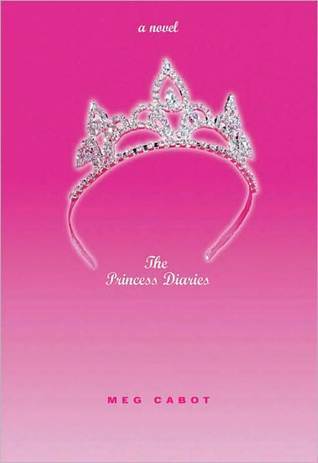
#CBR6 Book 39: "The Princess Diaries" by Meg Cabot

Page count: 304 pages
Rating: 3 stars

Mia Thermopolis hates being one of the tallest freshmen in school, and she's flunking algebra. The dreamiest boy in school is dating the evil witch that constantly makes Mia's life difficult, and now she has to deal with the fact that her algebra teacher asked her mother out. And her mother accepted! Her mother gives her a diary into which she can write down her thoughts and feelings, and after some misgivings, Mia starts doing just that.

To begin with, her worries are just the ones outlined above. Then her father, who she always knew was a rich and important person from the small European principality of Genovia arrives in New York, and springs the news on her that he is indeed a prince, and as he can no longer father children, Mia is his only heir. He wants to take her back to Genovia, but Mia refuses. They agree that she can finish her time at her New York high school, but needs to go through princess training with her grandmother.

Now Mia has barely any free time. When she's not at school or being tutored in algebra, she has to hang out with her grandmother, who criticises everything she does, from the way she dresses, to her posture, the way she speaks, walks and eats. Mia doesn't want to tell her best friend Lilly what is going on, which means they have a massive falling out, and Lilly refuses to speak to her anymore. Then the news about Mia's true heritage is leaked to the press, not making things better. To top it all off, even being a princess, Mia doesn't have a date to the Cultural Diversity dance.

Having seen the movie years ago, and thought it was cute, I added this to my TBR list and promptly forgot about it. Then "princess" was a monthly keyword for April and I remembered that I still hadn't read the book. I was surprised at how different the book is from the movie, to the point where I wonder if the film is based on more of the books in the series (a quick browse on Wikipedia suggests that this is not so). Although I think the film is perfectly decent, I think, as with another Anne Hathaway-movie based on a book, Ella Enchanted, I prefer the book. For one thing, I liked the character of Mia's father quite a bit, and he's dead in the movie. I also really liked Mia's friend Tina Hakim-Baba (and her fondness for terrible teen romances), who didn't appear in the film at all. Of course, the movie had the divine Julie Andrews as Mia's grand-mére, but having seen the film first, I kept picturing her in my head as I read the book.

Even though Mia is blond in the book, I couldn't keep from picturing her as a brunette because of Anne Hathaway. My Wiki-research also revealed to me that The Princess Diaries was Hathaway's debut film, which was a fun bit of trivia I hadn't realised before. The diary format is a good one for really getting to know a character, and Mia is clearly a sweet girl. I sometimes found her mother's artistic temperament and flakiness a bit annoying, but at the same time, the relationship between Mia and her mum in many ways reminded me of Rory and Lorelai Gilmore, which isn't a bad thing at all.

While the book was fun enough, I still haven't made up my mind if I want to read the rest of the series. There are so many shiny and exciting books out there vying for my attention. If I find any of the books on sale in the future, though, I won't rule it out.

Saturday, 23 March 2013

#CBR5 Book 30. "The Mislaid Magician or Ten Years After" by Patricia C. Wrede and Caroline Stevermer

Page count: 336 pages
Rating: 3.5 stars

The Mislaid Magician is the third book in a young adult series about cousins Cecilia (or Cecy) and Kate, who live in an alternate Regency England where some people have magical powers. Over the course of the first two books, they meet their husbands, go on a Grand Tour of Europe, and solve various mysteries that are magical in nature. If you want to be entirely unspoiled with regards to whom the young ladies end up with, you might want to avoid this review. The book works fine if you haven't read the other books too, it's been nearly a decade since I read the first two, and I had no trouble following the plot.

The book is epistolary in nature, following the correspondence between Cecy and Kate, and between their husbands James and Thomas, while Cecy and James are off in the north of England investigating the mysterious disappearance of a German magician and railway surveyor on behalf of the Duke of Wellington, while Kate and Thomas take care of their four children at their estate. Kate's sister Georgy, the Duchess of Waltham unexpectedly comes to stay with them, giving no indication of why she's left her husband. After a dramatic turn of events, Kate's son gets spirited away in a gypsy carriage, and when they locate him, he is in the company of a young girl, whose identity is a further mystery to be solved. Her clothes are expensive and her manners impeccable, but as she refuses to speak for much of her early stay, it's difficult for Kate and Thomas, or the many children to ascertain whom her family are or where she belongs.

As I mentioned, I haven't read the previous two books in the series Sorcery & Cecilia or The Grand Tour for a very long time, and this is one of those books I've had on my shelf for years and years, and just never got round to reading. Still, I remember the first two books fondly, and the third book was a cozy and pleasant, but not exactly thrilling read. I suspect the book will be more enjoyable if you've read the earlier ones, and know the characters and their former adventures, but at the same time, each of the books work as self-contained units as well.

Friday, 23 November 2012

CBR4 Book 99: "The Perks of Being a Wallflower" by Stephen Chbosky

Page count: 224 pages
Rating: 3 stars
Date begun: November 5th, 2012
Date finished: November 9th, 2012

Charlie starts high school after an extended stay in therapy because his best friend committed suicide the year before. His brother was the star quarterback, but is now in college on a sports scholarship. His older sister pretty much ignores him, and Charlie is more or less a social pariah, until he befriends the outgoing and charming Patrick, and his stepsister Sam, who are both seniors. They find Charlie's bluntness and awkwardness endearing, take him under their wing and introduce him to their clique of oddball friends.

Famously banned in several schools, and challenged frequently, probably because it shows a pretty honest take on high school life, with homosexuality, drunken parties, sexual experimentation, drug abuse, also alienation, depression, social anxiety, unrequited love and trying to find your place in the world - the book is structured as letters Charlie writes to an unknown recipient.

I must confess, I saw the film adaptation before I read the book, and therefore saw the characters pretty much as the are in the movie, but as the film is scripted and directed by Stephen Chbosky himself, that's not really a problem, because the book was adapted brilliantly. While I think I'm a bit older than the intended target audience, I would probably have loved it wholeheartedly if I discovered it as a teenager. Several of the teenage girls I teach are currently reading it because of the film, and they absolutely adore both interpretations of it.

Saturday, 13 October 2012

CBR4 Book 91: "Dreaming of Amelia" by Jaclyn Moriarty

Page count: 592 pages
Rating: 4 stars
Date begun: October 4th, 2012
Date finished: October 11th, 2012

This is the fourth (and as far, as I know, final) Ashbury/Brookfield novel. It can be read completely independently of the others, but as many of the characters in this book were introduced in previous books in the series, it may be more enjoyable if you've read at least Finding Cassie Crazy and/or Becoming Bindy Mackenzie, where several of the characters in this book were first introduced.

Like all the previous novels in this series, the book is entirely epistolary, telling the story of the graduating year of high school at the posh Ashbury high. Two new scholarship students have been accepted to the school, Riley and Amelia, and no one seems to know who they are or where they come from, only that they are a couple, and enigmatic and glamorous doesn't begin to describe them.

Told through the exam essay accounts of Riley, the girls Emily and Lydia (both introduced in Finding Cassie Crazy), their friend Toby (introduced in Becoming Bindy Mackenzie), various meeting transcripts from the scholarship committee, and the occasional blog entry, we are given the story of how Riley and Amelia arrived at Ashbury, how they at first seemed completely unwilling to engage in anything, but slowly revealed themselves to be brilliant at swimming, various academic subjects, drama and music.

As always, Moriarty captures the voices of the various teenagers brilliantly, as well as those of the adults in the books. I'm truly sorry that this is the last of the books, as I'd grown so very fond of these characters, and would've loved to read more about them, and Riley and Amelia, who I only got to spend time with in this book.

Though the cover of the book is bright and pastel-coloured, don't let it fool you. This is also a Gothic novel, complete with hidden rooms, dark and mysterious pasts, drama, jealousy, deception and manipulation, unhappy love affairs, self-serving plots, and of course, ghosts. The American title of this book is The Ghosts of Ashbury High, and the students writing exam papers all have to write with reference to the Gothic fiction they have read during the term.

As Emily begins her paper: "Lighting struck! There was a howling of wind, as if wolves roamed about, howlingly. Thunder crashed! Lightning struck again. 

It was the first day of year 12. I had set out that morning with trepidation. I did not, in all honesty, see a crow, a raven, or any other black bird on the way to school that day. And yet! I was trepidatious."


It therefore fits perfectly into the R.I.P VII challenge, and is probably my favourite of all the books I've read for the challenge so far. Highly recommended to everyone.

Monday, 3 September 2012

CBR4 Book 67: "Becoming Bindy Mackenzie" by Jaclyn Moriarty

Page count: 496 pages
Rating: 4 stars
Date begun: June 20th, 2012
Date finished: June 21st, 2012

Because it's been nearly three months since I read the book, I'm going to include the book blurb from the author's own website:

The Motive
Bindy Mackenzie is the most perfect girl at Ashbury High. She scores in the 99.99th percentile in all her classes. She holds lunchtime advisory sessions for her fellow students. She keeps careful transcripts of everything said around her. And she has been Kmart casual Employee of the Month for seventeen months straight. No wonder somebody wants to kill her.

The Suspects
Bindy is horrified to learn that she must take part in the Friendship and Development project - a new class meant to provide a "life raft" through "the tricky seas of adolescence". Bindy can't see how airheaded Emily Thompson, absentminded Elizabeth Clarry, mouthy Toby Mazzerati, malicious Astrid Bexonville, silent Briony Atkins, narcissistic Sergio Saba and handsome, enigmatic Finnegan Blonde could ever possibly help her. (Well, maybe Finnegan could).

The Crime
But then Bindy's perfect life begins to fall apart. She develops an obsession with the word "Cincinatti". She can't stop feeling sleepy. She fails an exam for the first time ever. And - worst of all - she just doesn't care. What could be the cause of all these events? Is it conspiracy? Is it madness? Is it...murder?

The Truth
Lots of people hate Bindy Mackenzie - but who would actually kill her? The answer is in Bindy's transcripts. The detectives are the members of her FAD group. But Bindy has made every one of them into an enemy...and time is running out. 

Another great book in the Ashbury/Brookfield series, written entirely in diary entries, notes, e-mails and quite a lot of Bindy's insanely detailed transcripts. This may have been the hardest of the books for me to get into, because Bindy really is a rather unlikable girl, even though she is completely oblivious to the fact. However, Moriarty is a gifted storyteller, and soon, I couldn't help but feel sorry for Bindy and got caught up in the mystery at the centre of the novel. Is someone actually trying to kill Bindy? Or has the pressure of being the cleverest girl in school finally got to her, and she's losing her mind as a result?

Moriarty has done a brilliant job of continuing her epistolary style, while creating an engaging suspense/mystery novel for teenagers. Yet again she brilliantly depicts teenage life, and I'm so glad I discovered these books. I still have one more to go in the series, and I'm saving it until the days get long and dark, so I have something to comfort myself with.

Tuesday, 5 June 2012

CBR4 Book 57: "Code Name Verity" by Elizabeth Wein

Page count: 288 pages
Rating: 5 stars
Date begun: May 21st, 2012
Date finished: May 22nd, 2012

In October 1943, a British plane crashes in Nazi-occupied France. Both the pilot and the passenger are women, and they are best friends. Queenie, code name Verity, a British spy, is captured by the Gestapo, and tortured for information. While she knows she should be strong and defiant, revealing nothing to her captors, she breaks, and hopes to prolong the time before her execution with a Sheherazade-style narrative about herself and Maddie, the pilot who's killed in the crash. She writes her story on beautiful stationary, recipe cards, prescription pads and unused sheet music, hoping to keep the interest of the Gestapo officer in charge, earning herself a day or two longer with each "chapter" of her narrative.

The story of how Queenie (actually a Scottish noblewoman) came to befriend the granddaughter of a Jewish motorcycle salesman, and how Maddie became a successful pilot during the war, while Julia was recruited into espionage, is told interspersed with desperate ramblings about her time imprisoned in an occupied hotel, her feeble hopes of further survival, her self loathing about having cracked under torture, how she knows the other prisoners despise her for being a collaborator. Each new chapter gives further insight both into Maddie and Queenie became unlikely best friends and got involved in the British war effort in their different ways, and the horrible situation that Queenie finds herself in.

About halfway through the book, there is a surprising revelation, and if I wasn't already completely engrossed in the story, this development ensured that I was even more reluctant to put the book down. The chapters in the latter half of the book are much shorter, and I kept reading with bated breath, both to find out the end to Queenie/Verity's and Maddie's story, and what would ultimately befall Queenie? Would she be rescued by the allies, and have to face their condemnation for her treachery? Would she, condemned as a nacht und nebel (shadow and fog) prisoner, be sent off to a concentration camp to have medical experiments performed upon her? Did Maddie actually die in the plane crash, as the Gestapo claimed?

It shouldn't come as a surprise that a book about a young woman, imprisoned and tortured, during the Second World War is heart breaking and unlikely to end with puppies and kittens and sunshine and fun. I haven't cried so much during the latter half of a book since I read The Fault in Our Stars earlier this year, although it has to be said, not all the tears were sad. The book is very cleverly written, with more than one surprise in the narrative, and the two protagonists and their friendship are wonderful. True heroines both, they defy the contemporary gender roles of women, and risk their lives to make a difference.

While the book is not based on actual events, the author confesses that the story is inspired by a number of incredibly brave women who fought for their countries during World War II. This book is an absolute treasure, although the subject matter is obviously not a frivolous one. Because it's written for young adults, most of the references to torture and the true horrors of Queenie's imprisonment are implied rather than graphically described, but it's still quite a harrowing read, so readers who tend to invest heavily in the books they read (like I do), should probably be warned that it's a bit of an emotional roller coaster. You should still read the book, though, because it's awesome. Easily one of the best books I've read this year, possibly several years.

Monday, 4 June 2012

CBR4 Book 55: "Feeling sorry for Celia" by Jaclyn Moriarty

Page count: 278 pages
Rating: 5 stars
Date begun: May 16th, 2012
Date finished: May 17th, 2012

Elizabeth Clarry is a pupil at the posh Ashbury Academy, where her new English teacher has decided that the pupils need to be introduced to the fine art of letter writing. Each of the pupils are to write letters to a pupil at the neighbouring Brookfield school, in order to improve relations between the schools (Ashbury students think that the majority of Brookfielders are delinquents and drug-dealers, while Brookfield students think the Ashbury kids are spoiled, vacuous and snooty).

Elizabeth lives with her mother, who is absent a lot, but communicates with her through the medium of hilariously written all-caps notes that she leaves around the house. Elizabeth also seems to receive a large amount of snarky letters from her own subconscious, addressed from the Cold Hard Truth Association, or the Association of Teenagers (who feel that she is a dismal failure, both in her lack of rebelliousness and never having had a boyfriend and it would be easier for everyone if she just climbed into a fridge and died). Elizabeth's parents are divorced, and her father used to live in Canada, but has now moved back to Australia temporarily, and keeps wanting to see her and spend time with her. When Elizabeth isn't worrying about her distinct lack of coolness, her non-existent love life or her missing friend Celia, she tries to keep both parents happy, and she also enjoys long distance running.

Elizabeth's best friend Celia is clearly a rather unusual person, and in her letters to Christina, Elizabeth talks about the many different antics Celia has got up to in the past. This time, she's gone missing, though. Celia's mother seems to think everyone around her is overreacting, and that it's perfectly natural for a teenage girl to want to spread her wings and find herself. After a while, Elizabeth starts receiving post cards from Celia, who's run away with a circus.

Christina comes from a big family, and confides in Elizabeth about her wish for some privacy on occasion, which is difficult when you share a room with your younger sister, and her boyfriend troubles. While Elizabeth has little experience in the romance department, she advises Christina as best she can, and the two strike up a close friendship through their correspondence, encouraging each other, comforting and helping each other, without ever meeting face to face.

As the book progresses, it becomes clear that all is not well with Celia on her circus adventure. Elizabeth, with the the help of a boy she's been running with, goes to rescue Celia, but their friendship isn't the same anymore, for a number of reasons, and Elizabeth really struggles to come to terms with this. When she and Christina finally meet, it's under fairly dramatic circumstances, where several story line threads have come to a head.

This is a really difficult review to write, because when trying to describe the plot of the book, not that much seems to happen, but it's an absolutely delightful novel, made more interesting because of the epistolary device. All the characters are incredibly well fleshed out, even the supporting characters like Elizabeth's parents, or Christina's boyfriend Derek, and the two main characters are both wonderful girls, who you'd be lucky to have as friends in real life. There are also several unexpected twists in the narrative (which while a bit dramatic, nonetheless seem plausible), the first being the reveal that Celia's run off to join a circus.

I absolutely loved this book, probably not helped by the fact that I got to know my best friend Lydia through old timey correspondence (back in the days when we didn't really have regular access to Internet and e-mails), and the entire book made me miss the joy of writing letters. I'm just not very good at writing about books I feel really strongly about (I never seem to get across exactly what's so great about them), but take my word for it, this book is a complete delight, and I will try to get as many people as possible to read it.

Tuesday, 4 January 2011

CBR3 Book 1: "The Guernsey Literary and Potato Peel Pie Society" by Mary Ann Shaffer and Annie Barrows

Publisher: Bloomsbury
Page count: 256 pages
Rating: 4.5 stars
Date begun: January 1st, 2011
Date finished: January 4th, 2011

Juliet Ashton is travelling around Britain in 1946, promoting her wildly popular book Izzy Bickerstaff Goes to War, a collection of humorous newspaper columns written all through the Second World War. She is trying to come up with a topic for her next novel, and having very little luck. One day, she receives a letter from a man in Guernsey, who's ended up with a book she once owned, telling her interesting things about something called the Guernsey Literary and Potato Peel Pie Society, founded quite accidentally during the war. Juliet is fascinated by the story of its founding, and is soon corresponding not only with Dawsey Adams, who wrote her the first letter, but with a number of diverse members of the Literary Society.

As she continues to travel around, talking up her last book, being wined and dined and wooed by a wealthy American publishing magnate, she keeps getting letters from the members of the Society at Guernsey, and learning more and more about both the society, and life for the people of Guernsey during the war. She makes a number of dear friends, and decides to travel to the little island to do research for a possible new book, all about the German Occupation of Guernsey.

The Guernsey Literary and Potato Peel Pie Society was written by Mary Ann Shaffer, but finished by her niece Annie Barrows after Shaffer became very ill after the manuscript was sold to a number of publishers, and unable to edit and finish it herself. It is an epistolary novel, the entire narrative is made up of letters. Letters from Juliet to Sophie, her best friend, who is married to a Scotsman and living in Oban. To Sidney, Juliet's publisher and Sophie's older brother. To and from Dawsey Adams, Amelia Maugery, Eben Ramsey, Isola Pribby and other members of the Literary Society, and through the various letters we get to know Juliet, Sidney and all the rich and complex characters of Guernsey, as well as the fascinating story of how the Literary Society was founded to cover up a secret roast pig dinner from the Germans. All the letters have very distinct voices, and although there are a number of characters to keep track of, I never found it difficult to follow the plot or keep the people apart, as they have such distinctive personalities and writing styles.

The book is in turns very funny, delightfully quirky and at times deadly serious and very sad. Mary Ann Shaffer did a lot of research on Guernsey during the Second World War, and the Occupation was not an easy one. While the book is a work of fiction, it is based on real event and inspired by real people, and while for the most part I was smiling broadly while reading, certain parts also brought tears to my eyes and nearly had me crying. It's not a very long book, but very well written, and the impression that you get the privilege of peeking at other people's personal correspondence made it a somewhat different, but very pleasant reading experience.