Showing posts with label slavery. Show all posts

Sunday, 9 April 2023

CBR15 Book 14: "Legendborn" by Tracy Deonn

Page count: 544 pages
Rating: 4.5 stars

Bree Matthews applied to an early admissions residential program at the same college that her mother attended, only to discover that her mother strongly objected to her going there. They had a blistering argument, and Bree's mother died in a car accident before they had a chance to settle things. Bree blames herself for her mother driving when angry. Her grief and guilt are overwhelming, so Bree hopes that being away from home is the best way forward. She has barely arrived at the college before witnessing a magical attack at a party. An imperious young man calling himself 'Merlin' attempts to wipe her memory, but fails to do so.

The incident instead makes Bree remember something strange from the night her mother died when she and her father were told the news in the hospital. Bree is certain that there was a Merlin (it's a title that all powerful wizards sworn to protect the Legendborn share) there as well, manipulating her and her father's memories. She becomes determined to find out what really happened to her mother, and if that means infiltrating the secret society calling themselves the Legendborn, then she'll do so. She discovers that Nick, her college-appointed tutor, has connections to the society and persuades him to help her get selected as an initiate. 

After being accepted as an initiate of the Legendborn, in part because of Nick's sponsorship of her (he's the son of the current leader, and his rejection of the group has long upset a lot of people) Bree discovers that magic is very much a real thing, most of the members of the Legendborn are descendants of the knights of King Arthur (Nick and his dad are apparently directly descended from King Arthur himself), and they are fighting a war to prevent demons from escaping from another realm to overwhelm the world and humanity. She also discovers that the reason she seems able to withstand the Merlin's mindwiping is that she comes from a long line of witches herself, and the root magic she has access to is very different from that of the Legendborn. Of course, the Merlin is convinced that she is possibly a demon herself and refuses to trust her. 

Having finished this back in February, there are quite a few elements of the story that are now a bit hazy to me. So I'm going to list what I liked and what didn't work so well for me.

I liked:
- This took a lot of the tropes of YA fantasy and in part subverted them, and in part just did something new and interesting with them. Yes, Bree is a lot more powerful than she initially seems and she has access to two different kinds of magic. She's also a very conflicted young woman who struggles with rage and grief and figuring out how to move forward after her mother's death. 
- The way the casual racism Bree has to deal with a lot of the time isn't brushed over or ignored. Also how the history of chattel slavery is explicitly tied into the various powers that Bree is discovering within herself. The flashbacks to her various descendants were very interesting, if rather harrowing.
- The whole 'descendants of King Arthur' have their own secret society and are protecting humankind from demons and evil was pretty well done.
- The reveal towards the end of the story absolutely makes me interested in reading more of the series. 
- This book gets rather violent in places and the danger the characters faced felt very real. Always good to see that not everyone is protected by plot armour.

What I didn't like:
- The insta-love between Nick and Bree. Come on, children, you've barely met. Even with the proximity to danger, you shouldn't head over heels that quickly.
- The inevitable love triangle. I like everyone involved outside of the forced romantic situation, but I don't really care who ends up with whom (although it would be very progressive and surprise the heck out of me if the other two parties decided to hook up and leave Bree as the forgotten party altogether). 

Having waited until book two was out, I now have to decide if I want to read book two and have to wait for heaven knows how long for book three to come out, or whether I'm going to wait patiently until the trilogy is completed. It worked out well for me with The Scholomance, so we'll see how it goes. 

Judging a book by its cover: I think this cover is stunning. Even if this book hadn't gotten very good reviews all over the place, this very spooky and cool cover (which captures Bree perfectly) would have made me pick up the book. 

Crossposted on Cannonball Read. 

Saturday, 23 June 2018

#CBR Book 48: "Kindred" by Octavia E. Butler

Page count: 304 pages
Rating: 5 stars

In what must be the most frightening birthday surprise ever, on Dana's 26th birthday, as she is moving into a new house with her husband Kevin, she suddenly feels dizzy and gets transported away from her safe and familiar surroundings in 1976. She comes to in the woods by a river, where a boy is in the process of drowning. Dana reacts instinctively and wades into the water, rescuing the boy. Faced with the boy's hysterical mother, and more terrifyingly, the boy's angry father, who points a rifle at her, Dana is suddenly back with her husband. She might have believed that she hallucinated the whole thing, except she's wet and muddy and bruised after being pummelled by the boy's hysterical mother.

It doesn't take long before it happens again. Now Dana is transported into an old house, and has to put out a fire in some curtains. While it's barely been a few hours for Dana in 1976, the boy she rescued in the river has clearly aged a few years. Not only that, he lives in the early 19th Century, in Maryland, long before slavery was abolished. While the boy, Rufus, gets increasingly older with each new encounter, barely any time passes in Dana's present between each new and terrifying time jump. She's unable to relax and enjoy her life, never sure when she may be suddenly dragged back through time. She begins keeping supplies with her in a bag, tied to her body, and her visits in the past seem to last longer with each new encounter.

At first Dana, who is a young black woman, cannot understand what connects her to this white man, but as she learns more about him and where he's from, she figures out that he must be one of her ancestors and something inexplicable is drawing her to him every time he is in danger. She needs to make sure he stays alive long enough to father the girl who will pass on Dana's family line. With each consecutive stay in the past, Dana's own life is further endangered, and there is the very real and scary possibility that she might die, trying to ensure that she ever gets born in the first place.

Kindred was the June 2018 CBR book club selection, one of the most highly rated books in the history of the site (I suspect its average rating has gone up even more now, with more people reading or re-reading it). My copy was given to me during the CBR gift exchange last year, and I was very excited when it was picked for the book club. I've long wanted to read something by Octavia E. Butler, and this, while nominally science fiction, seemed a lot more like historical fiction with a twist to me. Readers of my reviews know that while I do occasionally find the odd sci-fi book that I really enjoy, it's still one of the genres I keep having to challenge myself to keep trying and more often than not, it doesn't entirely work. But historical fiction with some time travel - that's pretty much Outlander. In addition, I am always aware that I should read more diversely. I'm a middle class white woman, I need to read books by individuals from different cultural, racial and religious background than my own.

While I didn't classify it as such in my tags, this book could clearly have been tagged as suspense. Dana's initial jump into the past is quick and doesn't get too scary, but with each subsequent encounter between her and Rufus, the stakes get higher. By the second visit, Dana figures out that it's danger to Rufus that makes him call her to him in the past, but it takes her a bit longer to understand that it's danger to herself that sends her back forward to her own time. Interestingly, as she spends more time in the past and gets accustomed to the brutality then, it takes more and more to send her home, as she comes to learn just how resilient her body actually is.

It's never explained how Dana comes to be jumped through time, but she learns quickly that whatever she touches at the time is sent back with her and in one particularly dramatic incident, her husband Kevin is sent back with her. Because Kevin is white, everyone in the past (many of whom are not entirely sure what to think of Dana, who is certainly not like the other downtrodden black people - most of whom are slaves - and her strange comings and goings, appearing to barely age) believes him to be Dana's owner. While the idea upsets and disgusts both of them, they figure that it's just easier to go with that story than try to explain their real relationship. Shockingly, Dana is transported back to 1976 without Kevin and while their separation is "only" eight days for her, more than five years have passed for him when she returns. Because the whole story is told from Dana's point of view, we don't learn too much of what Kevin experienced in that long and no doubt harrowing separation.

Dana is an educated and enlightened woman in 1976. Both she and her husband are writers and think they are fairly well informed about history and slavery. Yet Dana quickly discovers that reading about her enslaved ancestors and observing, and in parts, living as a slave is something completely different. Then there's the horrible fact that she needs to ensure that Rufus lives long enough to father the child who will continue the line down to Dana herself. The woman who is to birth the child starts out as a free woman, Alice, who loves someone else, yet Dana needs to pretty much support the enslavement and subjugation of this woman, to ensure that she herself will be born in the future. It's an unthinkable dilemma and naturally does a number on her.

I couldn't quite read this book in one sitting, but every time I picked it up, I found myself reading for longer than I should because I just had to find out what scary and unthinkable thing was going to happen next. Dana is a very engaging protagonist and each of her involuntary visits to the past are contained in separate chapters. Neither she nor the reader knows how long it will be until she's called back and that provides extra impetus to keep reading. Dana's experiences in the past, observing slavery firsthand and coming to both understand and feel personally the effects it had on people, the sad corruption of Rufus (from a little boy who is friends with black children, both enslaved and free to a selfish, petty man who will willingly enslave one of the companions of his childhood) - it all affected me on a deep level. I understand now why this is such an acclaimed book, both among critics and readers in general. I will absolutely be trying more of Ms Butler's books in the future.

Judging a book by its cover: This is the cover of my paperback and as always, books done in black, white and red are very striking and eye catching. There's the hands reaching across the cover, one man's and one woman's. Do they belong to Dana and Kevin? Or Dana and Rufus? Or Rufus and Alice? Alice and her husband's? There are several possibilities. There's the white links, evoking chains. I like the cover a lot.

Crossposted on Cannonball Read.

Sunday, 18 February 2018

#CBR10 Book 8: "A Hope Divided" by Alyssa Cole

Page count: 320 pages
Rating: 4 stars

Until she was thirteen, Marlie Lynch grew up with her mother, a freed slave and wise woman. After her white father's death, she was taken in by her half-sister and has been able to combine her knowledge of herbs and root magic with scientific principles. Three years into the American Civil War, Marlie and her half-sister are working surreptitiously to aid the cause of the Union, giving aid to runaway slaves and Freedmen, taking medicine and food to imprisoned Union soldiers, and with Marlie sending coded messages about troop movements and the Confederate Home Guard to the Resistance group the Loyal League.

Unfortunately for Marlie and her sister, their various anti-Confederate enterprises are endangered when Marlie's half-brother (and technically the heir) returns home with his unpleasant and racist wife, who is deeply loyal to the Confederate cause, to the point where she offers to let the Home Guard use their estate as their base of operations. While Marlie has always been a free woman, and has been treated more or less as a part of the family, she now sees how little protection she actually has, and how easily she can be ignored and mistreated because of the colour of her skin. Only a few trusted servants know that Marlie is hiding an escaping Union soldier, Ewan McCall in the laboratory in her private quarters. While McCall was imprisoned in the camp nearby, he and Marlie would exchange notes discussing ethics and philosophy. There was an attraction between them even before Marlie came to shelter him from danger in her rooms.

As Marlie's evil sister-in-law grows increasingly more controlling and jealous, and the cruel Captain of the Home Guard turns his eye more closely to Marlie, whose independence and spirit offends him, it becomes clear that Ewan can no longer stay on the Lynch farm and will have to escape. When Marlie's freedom is suddenly threatened as well, she has no choice but to go with him. While Marlie wants to believe that Ewan's feelings for her are true, she's very conflicted because of her own background, a product of the unequal union a slave-owner and her then enslaved mother. Can a relationship with a white man ever really last, no matter how sensitive and philosophical he seems?  Marlie has also dedicated her life to the healing and helping of others; how will she react when she discovers that Ewan was a torturer before he was taken prisoner?

This is the second book in Alyssa Cole's historical romance series The Loyal League, set during the American Civil War. As with the first book in the series, An Extraordinary Union, which I read back in July of last year, A Hope Divided was widely loved and gushed over on several romance review sites I follow. In the first book, we meet spies Malcolm McCall and Elle Burns, who work to bring down the Confederacy once and for all. Ewan McCall, the hero in this book, is Malcolm's younger brother, who clearly doesn't have the social graces of his brother (and frankly comes across as if he may be neuro-atypical). While he doesn't really want to fight, he believes in the Union cause enough that he joined the army, and was quickly discovered to have a knack for interrogation, due to his dispassionate and seemingly unfeeling manner. Ewan seems to have been very good at torture, but it's not something he enjoyed or is proud of, and he feels especially ashamed of having lost control of his temper and emotions when questioning the sadistic Captain of the Home Guard who later comes to plague Marlie's existence. 

Marlie also works for the Loyal League, but in a much less active role than Elle or Malcolm. With her white half-sister and some of their most loyal servants (all freed slaves), they do their best to help runaway slaves and Union soldiers get to the northern states, and Marlie sends coded letters, and feeds and treats wounded imprisoned Union soldiers, but otherwise has lived a very sheltered life on the family's farm. Her skin colour has always kept her from being a fully accepted part of the Lynch family, but she discovers how lucky and privileged her life has been when her half-brother's vicious and prejudiced wife takes control of the household and invites brutal and ruthless Home Guard soldiers to stay in their home. Her status as an intelligent and independent freedwoman and half white means nothing to these people and she grows increasingly more despairing due to their treatment of her.

Ms Cole has clearly done a huge amount of research for these books, and as I personally don't actually know the time period very well, it was very interesting to me to learn about all the various ways many of the people of the Southern states actually worked against the Confederate cause. While the romance between Marlie and Ewan is central to the book, both have a lot of emotional baggage before they are able to commit to anyone else, even before you add in the complications of an illegal bi-racial union. At one point in the story, I was honestly not sure how exactly they were going to find a satisfying HEA together, but I am very glad that they did.

While the first book in the series was good, I think I liked this one even more, and will be excited to see what Alyssa Cole has in store in her next novel (I'm wondering if the next book will be about the third McCall sibling, the sister). 

Judging a book by its cover: Now, this is a lovely cover for a romance novel and I really like it. The cover model portraying our heroine looks confidently out at the reader, surrounded by the herbs and tools of her trade. I cannot speak for the accuracy of her dress (Civil War era America not being one of the historical periods I know a lot about), but there's no unlaced back, nor implausible amounts of skirts (while still showing a remarkable amount of leg). Just a beautiful, confident woman at her work desk. I don't know if Ms. Cole has any say in the choices of these covers (most authors don't), but either way, she's lucked out.

Crossposted on Cannonball Read.

Sunday, 30 July 2017

#CBR9 Book 69: "An Ember in the Ashes" by Sabaa Tahir

Page coun: 464 pages
Audio book length:
Rating: 3.5 stars

Spoiler warning! Some spoilers for the early parts of the book in this review (although some of it is already spoiled in the book's blurb). 

We're back to me reviewing books I read a month ago, so Goodreads will have to help me out here:

Laia is a slave. Elias is a soldier. Neither is free.

Under the Martial Empire, defiance is met with death. Those that do not vow their blood and bodies to the Emperor risk the execution of their loved ones and the destruction of all they hold dear. 

It is in this brutal world, inspired by ancient Rome, that Laia lives with her grandparents and older brother. The family ekes out an existence in the Empire's impoverished backstreets. They do not challenge the Empire. They've seen what happens to those who do.

But when Laia's brother is arrested for treason, Laia is forced to make a decision. In exchange for help from rebels who promise to rescue her brother, she will risk her life to spy for them from within the Empire's greatest military academy.

There Laia meets Elias, the school's finest soldier - and secretly, its most unwilling. Elias wants only to be free of the tyranny he's being trained to enforce. He and Laia will soon realise that their destinies are intertwined - and that their choices will change the fate of the Empire itself. 

I read a lot of YA fantasy (and the occasional sci-fi) and after a while, the tropes start to feel a bit repetitive and a lot of the stories feel rather samey. This book reminded me somewhat of Marie Rutkoski's The Winners trilogy, Pierce Brown's Red Rising trilogy, with some elements from Mary E. Pearson's The Remnant Chronicles (which reminds me, I have yet to track down and read the final book in that series). You've got the brutal empire, modelled on ancient Rome. You have some sort of oppressed underclass, possibly enslaved. You've got the various neighbouring peoples, who have different and seemingly barbarian customs. Not all the evil ruling class are necessarily evil (where would be the fun in that) and most of the oppressed underclasses are too afraid to mount any sort of rebellion, because they'd surely be defeated and soundly crushed. Yet of course there are rebels, because in such a situation, there will always be people who try to fight.

Laia is quite happy keeping her head down and not making a fuss, until soldiers come to their house one night, ready to arrest her brother for treason. They brutally cut down her grandparents and seize her brother, while Laia, terrified runs away. She's deeply ashamed of herself and rather than considering that she would most likely be dead too (probably after the various soldiers had their way with her), she is determined to redeem herself by getting her brother out of prison. Laia's parents were legendary rebels, who were betrayed by someone close to them and captured by the Empire, along with Laia's eldest sister. Her mother was especially ruthless in her fight against the oppressing Empire, known as the Lioness. Laia feels about as far from her mother as its possible to be.

She nonetheless manages to track down the rebels (partially through blind luck) and negotiates a deal with them. She will pose as a slave and work for the Commander of Blackcliff military academy, where they train the most elite soldiers of the Empire. As the Commander is known to be heartless, vicious and prone to maiming or disfiguring her slaves, if they survive for very long in her service at all, it's a very dangerous mission. Laia's terrified, but feels she must do anything and everything to ensure the rebels get her brother out of prison.

At Blackcliff, she discovers that all the rumours about the Commander are true, and that the cold and cruel woman doesn't seem to have affection for anyone, not even her own son, Elias Veturius. He is seemingly the most promising soldier of the current graduating class, but no one, not even his best friend, Helene Aquilla, knows that he's planning on running away after the graduation ceremony, determined to reject the Empire and all its teachings.. Running away would be considered treasonous, and if he's caught, he would be executed.

Before he gets a chance to escape, Elias is approached by one of the Augurs, ancient, immortal, pretty much omniscient beings that tell him that if he stays at Blackcliff and takes part in the upcoming trials, he will finally have a true chance at freedom and of changing the course of the Empire forever. Apparently the Augurs have seen that he is a key figure in the future, no matter what the outcome is, and if he runs away, he will ruin everything.

So Elias stays at Blackcliff after graduation, and is selected to take part in the trials to select the new Emperor - along with his best friend Helene, along with two of the more brutal aspirants of their year. Because he stays, he also meets and starts interacting with Laia, his mother's new slave. They have a strange connection, but she's a slave and he's part of the Empire that enslaved her, so what future could they possibly have?

This book has garnered a lot of praise, and been nominated for a ton of literary YA awards. I'd heard a lot about it, but must admit I wasn't really all that engrossed for the first half of the book or so. Laia is just so timid, naive and scared all the time. While that's perfectly natural, it isn't always that much fun to read about. Elias is full of self-loathing and resents being taken from the tribespeople he spent his early childhood with to be a favoured and wealthy son of the Empire and taken to Blackcliff to train. It does sound like the training of the elite soldiers is pretty awful, but he's still in a position of privilege and control and came across as rather spoiled and whiny.

As is so very common in YA nowadays, there are also romantic undertones, in the form of two love triangles. Yup, Laia is drawn to Elias, as well as one of the brave and plucky rebels. Elias finds himself attracted to both Laia and his best friend Helene, who is also one of his rivals in the trials for Emperor. There's a whole load of meaningful glances, but a whole load of near-misses, where nothing much of anything happens. While the characters think about kissing, or about attractive attributes of their love interest, there is very little actual action going on. That got frustrating after a while, too.

Another thing that got to me, that was just depressing, was the constant thread of misogyny and threat of rape towards any female character in the story. It's heavily implied that the reason the Commander hates Elias so much is because he is the product of rape (this is not confirmed, but I would not be surprised if it's revealed in a later book). For some reason, they allow one woman into Blackcliff every so often, and despite the fact that their Commander is a woman, and Helene seems to be one of the best soldiers in her graduating class, there is an absolutely horrible attitude towards women, and even Helene keeps being threatened with sexual assault. It's not just the slaves that are vulnerable.

By the last third of the book, Laia has grown more of a backbone and starts getting actually interesting to read about. Elias ends up in a rather precarious position, and I appreciated the timid and oppressed girl having to rescue the big bad soldier and ending up in a position of power over him. The change in the status quo and the set-up for the next book is interesting enough that I will probably keep reading, even though this took me a while to get into.

Judging a book by its cover: This is a pretty bleak and depressing cover, but then both Laia and Elias have pretty bleak lives. There's a very big concrete wall, with hints of buildings in the background. Since both protagonists live their lives in some form of captivity, it seems appropriate, but I still don't think it's a very appealing or inviting cover.

Crossposted on Cannonball Read.

Wednesday, 14 September 2016

#CBR8 Books 95-97: "The Captive Prince trilogy" by C.S. Pacat

Total page count: 1088 pages
Rating of series as a whole: 4 stars

I'm going to review this whole trilogy in one review. As such, there is bound to be some spoilers, and if you want to go in completely cold, you may want to skip this review and just trust me that while the first book is a bit slow, and not the most engaging of reads on its own, the trilogy as a whole is mighty compelling reading, and well worth your time. At least if you like well-written fantasy, tons of political intrigue and plots that twist and turn repeatedly.

Volume one: Captive Prince - 3 stars

Prince Damianos of Aikelos, better known as "Damen" to most close to him, is a war hero and utterly beloved by his people. When his long-ailing father dies, Damen's older half-brother Kastor seizes power, and Damen finds himself overpowered, cast in chains and sent as a pleasure slave to the court of the rival neighbour nation of Vere. Everyone in Aikelos is told that Damianos was killed by his rebelling slaves after the king's death, and to add to the betrayal, Damen's mistress Jokaste makes it clear to him before he is subdued and sent from the country that she is aiding Kastor in his coup.

In Vere, a decadent and indolent court, Damen is given to Prince Laurent, the young heir to the throne, whose older brother Auguste Damen killed in single combat during a war six years ago. Even if he could reveal his true identity and be believed, he's in the one place where he is truly hated, under the control of a man who has sworn revenge on Prince Damianos for the actions nearly a decade ago. Laurent doesn't really seem interested in a pleasure slave, in fact, there are rumours that he is frigid. The crown prince, nearly of age, is locked in some sort of complex power struggle with his uncle, the current Regent, and seems like he may in fact, be both immature and unstable. The Regent seems to think that Damen may be used to influence his nephew in a positive manner, but the seemingly spoiled Laurent trusts no one, certainly not a lowly slave from the country he hates the most.

Both Aikelos and Vere are nations that support slavery, although in Vere, it seems that slaves have the opportunity to buy their freedom if able to collect enough gifts and favours. In Aikelos, like in ancient Greece or Rome, slaves seem to be captured during wartime, but also bred to serve. They have no way of gaining their freedom and are completely dependent on the benevolence of their masters. In both Aikelos and Vere, slaves seem to be used for sex, although in Vere, there are strong taboos about heterosexual couplings outside of marriage, as illegitimacy is frowned upon and sex between men and women should be for procreation, first and foremost. At least among the elite, marriages seem to be mainly political alliances, with no one batting an eyelid if both parties have pleasure slaves on the side for enjoyment. Hence in Vere, men have and support male pleasure slaves, while women have female slaves.

The author doesn't really spend a whole lot of time giving details about the setting. As most of the books take place in Vere, we only really get information about Aikelos through Damen's recollections and the way he's constantly comparing Vere and his own country. Then there is the fact that most of the book takes place at court, so it's difficult to get a full picture of what the country as a whole is like. I pretty much pictured Vere like late Medieaval France, while Aikelos was more like the Roman Republic.

It's difficult to get a feel for any of the characters other than Damen in this book, and he's really a rather unreliable narrator throughout, as it's revealed in book two and three that he is unaware of so much of the plots and alliances bubbling under the surface in Vere and his initial judgement of the Regent and Laurent are formed without having enough information to understand the situation. Damen's only goal is to escape, get back to his own country and claim back his throne. He needs to be careful that his identity is not revealed to Laurent, as the young man wouldn't hesitate to kill him. Of course, despite his humiliation at being kept as a slave, and his disgust at the decadent ways of the Vere court, Damen finds himself both attracted and repelled by Laurent. Their relationship is certainly a strange one.

Volume two: Prince's Gambit 4.5 stars

At the end of the first book, Laurent is manipulated by his uncle into taking a troupe of men to patrol along the border of Vere and Aikelos. By this point, he has revealed to Damen that his uncle was behind the assassination attempt Damen helped foil, and Laurent takes his slave with him, as he has realised that the man is a highly skilled soldier and he needs his expertise to get his ragtag bunch of soldiers into shape, and survive his scouting mission. It's obvious that the Regent doesn't want his nephew to succeed, that they are likely riding towards a trap, and the men they have at their disposal are in no way fit to fight anyone.

Because Laurent is dangerously clever (he'd have to be to survive to adulthood), he uses the resources at his disposal. Together with Jord, the captain of his guard and Damen, he's actually able to turn the men assigned to him into a passable fighting force, but only after some very public demonstrations of his authority and some creative detours to give them more time to drill before they get to the border. Damen is in the incredibly unenviable position of having to help the man who currently OWNS him, and would probably straight up murder him if he were to discover his true identity, help secure his throne, despite the high likelihood of Laurent then turning right around and declaring war on Aikelos, Damen's home country.

On top of that, there is the growing trust between them, a much closer understanding and absolutely, mutual attraction developing between the two sworn enemies. Damen has to reevaluate everything he observed or experienced in the first book as he comes to learn more about the incredibly messed up power games between Laurent and his uncle. Damen is naturally constantly worried about what might happen if Laurent actually discovers his true identity, and more intimate their relationship becomes, the more uncomfortable he is about it. He killed Laurent's beloved older brother, and to a certain extent feels responsible for the lonely and f-ed up adolescence that Laurent has had, in the clutches of his seemingly benevolent, but in true fact super evil, uncle.

Damen keeps being torn between his wish to escape and go back to Aikelos to reclaim his own throne, and his growing affection for Laurent, that keeps him at his side, keeping him safe and aiding him in securing his own throne. Their growing romance seems impossible, and there is a fair amount of anguish on the part of the reader (at least there was for me), because how could the two of them ever really make it work. They are potential rulers of rival nations that have been at war countless times, and let's not forget - Damen killed Laurent's brother! It's difficult to forgive and forget that sort of thing.

At the end of the book, Aikelos seems on the verge of full out war with Vere, and Damen, instead of escaping, promises to hold an important border fort while Laurent rides into what is clearly an ambush orchestrated by his uncle. Then there are some revelations that made my mind literally boggle and forced me to start volume three as soon as I was able.

Volume three: Kings Rising 4 stars

Damen's secret is out, and everyone knows he is in fact Prince Damianos of Aikelos. Vere and Aikelos are on the brink of war, with Prince Laurent's uncle, the Regent, amassing his forces, and Kastor, Damen's usurping and treacherous half-brother also on the war-path. The only way Damen is going to be able to reclaim his throne is with the aid of Laurent, the man who swore to kill him. Can Damen convince Laurent to set aside his enmity to face the bigger threat, his uncle?

Can the hesitant trust and growing love between the men be rekindled, even with Laurent being fully aware of Damen's true identity? Will they survive to enact revenge on their usurpers and can they have any future together, with full knowledge of the terrible actions of their pasts?

Here's where it gets hella spoilery, people. Seriously, do not read this if you haven't already finished books one and two. So yeah, Laurent knew about Damen, from the beginning. Having grown up in the viper pit that is the court of Vere, fighting the influence of his wicked uncle (who it's clear sexually abused him shortly after Crown Prince Auguste and his father died), Laurent is presented with his worst enemy as a slave, and told he's not allowed to harm him, or risk diplomatic relations with Aikelos. Of course he twists the situation so he can flog the living daylights out of Damen. Of course he mentally tortures him. This is the man that killed his brother! It makes the trust that builds between them, the friendship that turns to romance so much more remarkable, because while Damen didn't know that he knew, Laurent went to bed with Damen, despite his many (understandable) sexual hang-ups, even knowing exactly who he was.

He trusted him with an army and gave him control over one of his border forts, even knowing that he was the Prince Killer from Aikelos. The uneasy truce they form in the beginning of this book is an uncomfortable one, because you just want them to kiss (and more) and make up and turn the combined might of their brawn and intellects towards pummelling their enemies.

While the first book is slow and a bit confusing, because we don't have all the cards yet, and the second book is full of espionage, double-crosses, intrigue and romance, this book starts out well, but sort of collapses a bit towards the end. The stakes are oh so very high, but then the ending is sorted out oh so neatly, almost depressingly so. Everything falls into place just that little bit too conveniently and it all happens a bit too quickly to be entirely satisfying.

Not that the book before that isn't extremely enjoyable. Damen is back in the northern reaches of Aikelos, needing to muster support from the powerful lords of the country, all the while convincing them to support him against his treacherous half-brother, despite the fact that he's in open alliance with the true ruler of their enemy neighbour state. Damen and Laurent make an uneasy truce and have to prove themselves worthy of support, and outsmart the men who have taken what is rightfully theirs. This bit was a lot of fun, even if the angry tension between Damen and Laurent got on my nerves. I totally understand it, it would be massively unrealistic if they just jumped into each other's arms and let bygones be bygones, but still. I wanted my HEA.

And yet I complain when in the end, I did get a HEA for my dudes, but it just seemed to come a bit too easily. Still, in its entirety this trilogy is excellent, and I had such a fun time reading it.

Judging a book by its cover: These books have had a variety of covers, depending on the release. The newer, wide-release editions of these books are not exactly all that exciting, but play in rather well to the fantasy and political intrigue aspects of the trilogy, rather than the "two dudes are gay for each other and have some sex, but that is really a very small part of the whole". Various pastelly colours, with a brick wall, battlements or a tower in the background. A fancy font. A rearing lion. I think the marketing department has done a good job making really very neutral covers.

Crossposted on Cannonball Read.

Tuesday, 15 July 2014

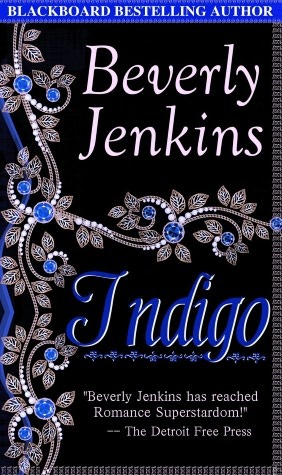
#CBR6 Book 71: "Indigo" by Beverly Jenkins

Page count: 372 pages
Rating: 4.5 stars

Hester Wyatt was born as a slave, because her father, originally a free man, sold himself into slavery to be with her mother. When she was born, her mother severed part of her finger to make her more easy to identify, and Hester was found and taken in by her aunt Katherine, who taught her to read and write and raised her as her own. Now she lives in her dead aunt's house, a valuable member of Michigan's Underground Railroad. One night, she's asked to hide a badly injured man. She discovers that he is "the Black Daniel", one of the most wanted members of the Underground Railroad. To hide him could put her in danger, and yet she doesn't hesitate.

"The Black Daniel" is actually Galen Vachon, a member of one of the free black families in New Orleans. He doesn't deal well with being hurt and having to stay hidden during his convalescence, and Hester finds him rude and deeply disagreeable at first. She also refuses to believe him when he claims to have been betrayed by someone in her little town. As Vachon recovers, his mood improves, not to mention his behaviour towards Hester. He's amused by her primness and innocence and her steadfast faithfulness to her fiancee, even though she admits their relationship is purely platonic. When he leaves, having recovered enough, Hester doesn't think she'll ever see him again.

She's wrong, of course. Galen, unable to forget the formidable little woman who tended him at his lowest, buys a big house in Whittaker, the town Hester lives in, and proceeds to try to win her heart. His quest is made easier by the fact that her platonic fiancee returns from England already married and seemingly madly in love with his young bride. He keeps lavishing Hester with gifts and attention, while trying to root out who the traitor in the area is.

I'd never read any Beverly Jenkins, but had heard the name when one of her books was selected as the monthly book club read at Smart Bitches, Trashy Books and then this book came highly recommended from my online romance partner, Mrs. Julien. I can see why she rated it so highly, it's an amazing book.

Hester is a lovely character, independent and opinionated, yet not anachronistically so. She tries to always do the appropriate thing, and Vachon has so much fun tempting her into accepting more and more of his gifts, and luring her further into sensuality and giving into her desires. She's clearly an important member of the Whittaker community and has many valued friends. Her hands and feet are permanently stained with the indigo dyes she was forced to work with as a slave, and she's convinced they render her deeply unattractive. She's perfectly content to settle for a marriage of convenience with a man whose intellectual interests she shares, and is completely unprepared for the passion that Vachon awakens in her.

Vachon is a rake and a scoundrel of the first order, and has rejected his family to help as many slaves from the South gain their freedom as possible. His vicious old grandmother is clearly a nasty piece of business, manipulating everyone around her, and treated Vachon horribly until he came of age and into the money his parents left him. He turned his inheritance into a vast fortune, and uses his resources to help others, but clearly also loves a life of luxury. Once they're married, Hester keeps being uncomfortable being waited on, though Vachon's servants are clearly extremely well treated, and seem to love their jobs. She's shocked at the dressing rooms full of clothes he's gotten her, and the jewelry he gives her.  I'm also deeply grateful that while he is Creole, the number of French/Cajun endearments used in the book are at a minimum. I hate that sort of thing.

Not everything is smooth sailing in the book. There's a vicious slave catcher in the area, who sets his mind on proving that Hester is an escaped slave. The missions that Vachon go on are clearly dangerous. There's a nice blend of quiet moments and action in the book.

I enjoyed the book a lot. The main reason I can't give the book a full five stars is the subplot involving Hester's former fiancee's new wife, and the way they both treat Hester, and the development of that whole story line plays out. I can see why Jenkins needed to find a way to free Hester from her former commitment, but I really didn't like the way that all played out. I don't want to spoil things, and will therefore not go into detail. This is mostly a very excellent romance, though, and I've already bought a few more Beverly Jenkins books that I am looking forward to reading.

Crossposted on Cannonball Read.