This is my book blog, where I review books I read as part of Cannonball Read 18, where members compete to be the first to reach 52 reviews. We also try to get people excited about books and reading, and make money for cancer charities. As always, I will be reading and reviewing in memory of friends and family who died of cancer in the past few years. Wish me luck!
Sunday, 11 August 2024
CBR16 Book 45: "The Ex-Talk" by Rachel Lynn Solomon
Saturday, 31 December 2022
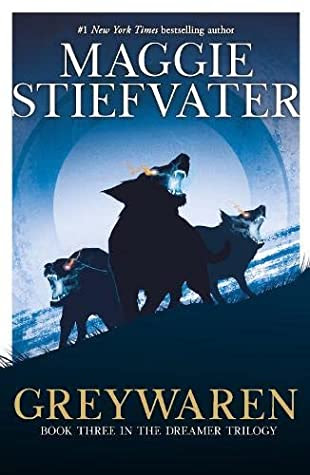
CBR14 Book 48: "Greywaren" by Maggie Stiefvater
Friday, 30 December 2022
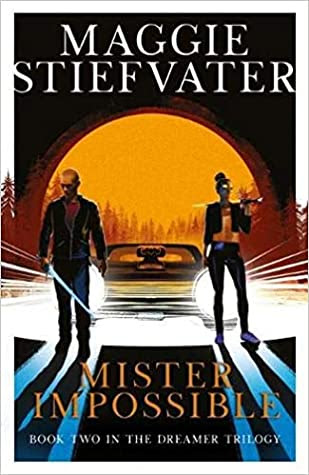
CBR14 Book 47: "Mister Impossible" by Maggie Stiefvater
Friday, 2 October 2020
#CBR12 Books 65-67: "The Sandman, part 1" by Neil Gaiman and Dirk Maggs
#CBR12 Bingo: Happy (I never thought that Sandman could be adapted into an audio story, so this made me very happy indeed)
Official book description:
When The Sandman, also known as Lord Morpheus - the immortal king of dreams, stories and the imagination - is pulled from his realm and imprisoned on Earth by a nefarious cult, he languishes for decades before finally escaping. Once free, he must retrieve the three “tools” that will restore his power and help him to rebuild his dominion, which has deteriorated in his absence. As the multi-threaded story unspools, The Sandman descends into Hell to confront Lucifer, chases rogue nightmares who have escaped his realm, and crosses paths with an array of characters from DC comic books, ancient myths, and real-world history, including: Inmates of Gotham City's Arkham Asylum, Doctor Destiny, the muse Calliope, the three Fates, William Shakespeare , and many more.
In July 1998, my life changed forever. In those days, I still lived in a suburb of Oslo and didn't necessarily visit the centre of the city all that often. When I did, I always took a trip to Avalon, the dedicated fantasy/sci-fi/all things nerd book shop there (the book shop sadly closed long ago now). On a display table near the front of the shop was Fables and Reflections, by no means the first volume in the long-running Sandman series, but an excellent introduction. I think Neil Gaiman had recently visited Oslo for the first time, and the shop was promoting his most famous work. I had never read any graphic novels before but was drawn by the description of the series. I bought the book, started reading it on the bus on the way home, and my mind was blown. I had never read anything like it before, and I was utterly hooked on the stories of dreams and nightmares, the family dramas with references to all manner of mythology, classical literature, comic books, and the like.
This was a time when Norwegian libraries were not particularly well-stocked with fantasy of any kind, and certainly not English-language comic books and graphic novels (I'm happy to say that that's changed massively over the last 20 years - one of the public library branches in Oslo is now dedicated entirely to comics and graphic novels in different languages. Hence, I had to buy each volume before I could read the full story. My records show that it took me about a year to get all ten volumes of trade paperbacks, some of which I've now had signed by Neil Gaiman himself.
Funny story, one of them isn't actually signed to Malin, because my dear friend Ben was a bit of an idiot back when he took my copy of Preludes and Nocturnes to a signing in Newcastle. This was back before I really knew him, and he was still just my then-boyfriend, now-husband Mark's school friend. See, Ben and another of Mark's school friends, Ruth, had initially joked that his Norwegian girlfriend's name was Helga. By the time Ben was taking one of my precious trade paperbacks to Newcastle to get it signed as a favour, he'd met me several times, and knew my name was Malin. But when he got to the front of the signing line, and Mr. Gaiman asked him who to sign the book to, Ben (lovable moron) blurted out Helga, and only after he'd left the shop remembered that it was not, in fact, my actual name. This is also why I have a signed copy of Anansi Boys, where Neil Gaiman apologizes to me for getting my name wrong.
So how do you successfully adapt what is both a written and a visual medium, you ask? You hire an excellent ensemble cast, so that all of the various characters we meet in the pages of the first three volumes of the graphic novel opus are voiced by different and distinct voices (there's a huge ensemble of people who do multiple voices over the course of the audio drama, but never in the same scenes, making it much easier to keep track of who's speaking at any given time). You also get someone to narrate and describe the various scenes and characters in them (or occasionally add descriptions of the setting and characters to the inner monologues of one or several of the people in a scene), so the listener is told what they would have seen on the page if they were reading the comic. That the narrator here is Neil Gaiman himself (whose voice I find very soothing) just seems extra fitting.
I read several reviews of this audio drama that complained that with very few exceptions, everything is kept exactly as it was in the original 90s comics, with no attempts to adapt or bring it more up to date. This was mentioned as a criticism, I didn't think it was a problem. I also know the source material being adapted exceptionally well, having read the comics multiple times. Even so, as I kept listening, I actually pulled my trade paperbacks off the shelf to halfway follow along. To someone who's never read the original graphic novels, it may be harder to follow the plot, even though the team who adapted did a very good job in filling in with background sounds to give you an idea of action and plot.
Each issue of the comic is one approximately 30-minute long episode, with little audio credits and everything. It felt like I was listening to an old-fashioned radio play, and I loved it. How well the adaptation works for you may also depend on how you feel about James McAvoy. I love him and his voice, and think he did a splendid job voicing Lord Morpheus. Kat Dennings worked surprisingly well as Death. The only one I wasn't entirely happy with was the guy playing Desire, whose voice just didn't "fit" with my mental image of what it should be.
A brief trigger warning towards the end. In both Preludes and Nocturnes, The Doll's House and Dream Country, there are elements of horror. The issue 24 Hours, for instance, where a number of people are kept trapped in a diner by an escaped Arkham Asylum inmate in control of Dream's ancient ruby and are slowly driven increasingly more insane over the course of the story was even more horrifying than it is on the page because all the various people got their own voices and felt more real than they do when you just read them. It was harder to stay detached. There are also stories of serial killers, and child abuse and women being raped and beaten - so be aware of that.
Now I'm left impatiently waiting and hoping that this becomes enough of a success for Audible that they'll choose to adapt the rest of the series as well. Recording audio dramas must be something that should be perfectly doable even now, with production halted on so many things due to Covid-19.
While I'm choosing to use this for my "Happy" square for this year's bingo, it could just as easily have fit with "Nostalgia", since this was such an important part both of my adolescence and so ground-breaking for comics in general during the 1990s.
Judging a book by its cover: I have tried to track down the name of the cover artist for the dark, broody image of Dream, without any luck. It's a good depiction of Lord Morpheus, and I like that it looks like he himself is made up of sand or dust and kind of blurring at the edges a bit.
Crossposted on Cannonball Read.
Friday, 31 July 2020
#CBR12 Book 52: "Call Down the Hawk" by Maggie Stiefvater
Audio book length: 13 hrs 45 mins
Rating: 4 stars
#CBR12 Bingo: Orange
Crossposted on Cannonball Read.
Monday, 4 September 2017
#CBR9 Book 77: "Strange the Dreamer" by Laini Taylor
Rating: 5 stars
From Goodreads:
The dream chooses the dreamer, not the other way around - and Lazlo Strange, war orphan and junior librarian, has always feared that his dream chose poorly. Since he was five years old he's been obsessed with the mythic lost city of Weep, but it would take someone bolder than he to cross half the world in search of it. Then a stunning opportunity presents itself, in the person of a hero called the Godslayer and a band of legendary warriors, and he has to seize his chance to lose his dream forever.
What happened in Weep two hundred years ago to cut it off from the rest of the world? What exactly did the Godslayer slay that went by the name of god?And what is the mysterious problem he now seeks help in solving?
The answers await in Weep, but so do more mysteries - including the blue-skinned goddess who appears in Lazlo's dreams. How did he dream her before he knew she existed?And if all the gods are dead, why does she seem so real?
I am reluctant to give more information about this book than the blurb already reveals, because as several other reviewers have pointed out before me, this book is a wonderfully immersive reading experience and the less you know about the details of the plot, the more lovely surprises there are for you along the way.
Anyone who's read anything by Laini Taylor before (and if you haven't, go check out Daughter of Smoke and Bone immediately. Don't worry, this review will wait) will know that she has a very rich prose, and is excellent at world building. She describes settings, experiences and characters so vividly and her books tend to completely engross me. This is absolutely the case here. She's also very good about writing complex individuals, there is very little black and white in her characterisation. Everyone is flawed in some way. Rarely is someone entirely good or wholly evil, but they are always interesting to read about.
The reader is taken into the story through the eyes of Lazlo Strange, an orphan who becomes a librarian and spends all his free time finding information about a mythical lost city. He vividly remembers the city having a different name at one point, but one memorable day in his childhood, it was as if it was stolen out of his mind, being replaced by the word 'Weep'. By the time he grows up, he almost doubts that there ever was a different name to it, but he still dreams. Lazlo is clever and humble, and a very good person. He will selflessly help others, even when it might lead to others exploiting his hard work and presenting it as their own. He is finally rewarded for his hard work when an exotic delegation comes to the library where he works.
There are so many other fascinating characters in this story as well, and so many different settings to explore over the course of the book. There are mysteries to be solved, and dreams that may or may not come true, and hints of romance, but also great loss and tragedy. It's also important to note that this book is NOT self-contained and ends on a heck of a cliff-hanger. There is as of yet no publication date for the sequel (I think this will happily only be a duology, so once you have the next book in your hot little hands, you'll get to read the end to the story), and if you hate unresolved endings and waiting for months or maybe years between books, maybe hold off until The Muse of Nightmares is released.
Judging a book by its cover: Both covers for this book are very pretty, but the edition I read had this, the UK cover, with the beautiful dark blue background and the stylised moth in the centre of the cover. I like that the faint patterns in the blue could be stars, or maybe tracings of a map, it's not entirely clear. Since the colour blue and moths are both very significant in the book, this cover seems wholly appropriate and the deep blue just soothes my soul.
Crossposted on Cannonball Read.