Showing posts with label Hist Fic. Show all posts

Saturday, 16 November 2013

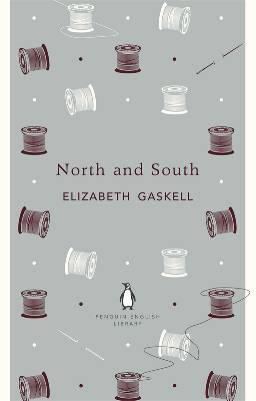
#CBR5 Book 135. "North and South" by Elizabeth Gaskell

Page count: 544 pages
Audio book length: 18hrs 18 mins
Rating: 5 stars

Young Margaret Hale's life is turned on its head when her father, a parson from the South of England, renounces his position because he experiences a crisis of faith. He moves his anxious wife and dutiful daughter to the factory town of Milton Northern, where he's going to work as a tutor. The town, a bustling result of the Industrial Revolution, is full of cotton mills, soot and smoke, a stark contrast to the pastoral idyll of the Southern English countryside. With the loss of Mr. Hale's living, the family is in severely reduced financial circumstances, (not helped by the fact that they keep sending money to Margaret's brother who is wanted for mutiny in England, and as a result living in exile in Spain) and can't really afford more than a modest lifestyle. Margaret bravely adapts fairly quickly, but her mother never feels happy or comfortable in Milton and her health gradually deteriorates.

In Milton, the main social interaction the Hales have is with Mr. John Thornton, a mill owner who leases from Mr. Hale's best friend, Mr. Bell (Margaret's godfather). Thornton's father drove his family into debt and further caused scandal when he committed suicide. Thornton had to quit school, and take a position as a shop clerk to support his sister and widowed mother. Putting aside most of what he earned, he slowly and quietly worked to repay all his father's debts and became a respected and formidable man in Milton. His mother is a proud and arrogant woman who loves her son fiercely, constantly worried some fortune-hunting young miss will get her claws into him.

Mr. Hale tutors Mr. Thornton, and they develop a close friendship. Margaret initially has difficulties relating to him, however. Thornton thinks Margaret is very beautiful, but aloof, distant and too caught up in her sheltered and genteel way of thinking, while she thinks Thornton is cold, arrogant, coarse and too hard on his workers. Before Margaret moved with her parents to Milton, she lived with her wealthy aunt in London for ten years, until her cousin Edith married an army captain and moved to Corfu. In the north, she has very few friends. Mrs. Thornton is dismissive of the Hales, and Miss Hale is spoiled, self-centred, vain and not in any way interested in the prim and serious Miss Hale. The only friends Margaret makes are of a lower class than her, Mr. Higgins and his consumptive daughter Bessie, and they become more of a charity project for her than confidantes and support to her.

I was surprised at how useless both of Margaret's parents are. Her father upends his family's entire life because of a point of principle, but once they arrive in Milton and it turns out that their new life is going to be difficult and not at all what he'd planned, he withdraws into his studies and teaching, leaving poor Margaret to deal with the complicated practicalities of managing the household with their meagre finances, the inability to secure extra help in the house, her mother's depression and deteriorating health and the worry about Frederick. She sees the deep love between her parents, and because of that, she won't accept a marriage proposal from a man she doesn't love. Shortly after leaving her aunt's house in London, she rejects the proposal of Mr. Lennox, her cousin Edith's brother-in-law, as she cannot see him as anything but a friend. So when Mr. Thornton is persuaded by his mother and sister that Margaret must be infatuated with him, he proposes, and is vehemently rejected. By the time Margaret is ready to reconsider his advances, a number of coincidences and complications has made Thornton believe that she loves another and is lost to him.

I discovered the BBC adaptation of North and South, with the darkly handsome Richard Armitage (currently most famous as the broodingest exiled dwarf king evah in The Hobbit) and the lovely Daniela Denby-Ashe a few years ago, but it's taken me until now to actually read the novel. I got the audio book narrated by the excellent Juliet Stevenson, who varies between crisp arch tones for the southern characters and wonderful northern accents. I was surprised at how nuanced the book is, for a Victorian novel, both Margaret and Thornton's feelings are very clearly depicted. I really hadn't expected so much insight into the emotions of both main characters. Gaskell's novel is typical of the time, showing a lot of social responsibility, with the social developments after the Industrial Revolution, the clashes between the factory owners and the workers, the hardship of a strike and so forth, but it doesn't feel like it's sermonising and lecturing the reader. I will absolutely be reading more Gaskell in future.

Friday, 27 September 2013

#CBR5 Book 121. "Drums of Autumn" by Diana Gabaldon

Page count: 1070 pages
Rating: 4 stars

This is the fourth book in the epic Outlander series, and I really wouldn't recommend it as a starting point (as things won't make a whole load of sense if you begin reading there). Obviously, this review may also contain spoilers both for earlier books in the series, as well as this one, so skip it if you want to avoid such things.

James Fraser and his time traveller wife Claire, have rescued their nephew Ian Murray from the kidnappers who took him to the Caribbean and are now in America, ready to start a new life away from the Scottish highlands. After a period accepting the hospitality of Jamie's aunt Jocasta, Jamie accepts a land grant from the governor of North Carolina, which he agrees to settle and find tenants for. Having had most of their fortune (a cache of precious gems), being robbed by river pirates, they're unable to ship Ian back to his family, but Ian's quite happy living in the woods of America, befriending the natives and settling the land with his uncle. Jamie finally gets to meet his daughter, when Brianna, having discovered in an old historical document that the Frasers are going to die in a fire in 1776, goes back in time to Scotland and takes a ship to America to find them and warn them. She is followed by historian Roger MacKenzie Wakefield, who wants to marry her.

Of course there is all manner of intrigue and complication - river pirates who rob and rape, murders, hernias, bear attacks, a surprise visit from Lord John Grey (one of my favourite supporting characters in the series) and his stepson, an epidemic of measles, inconvenient pregnancies, a paternity mystery, people being beaten to a pulp and sold to Indians, quests to get said individuals back from the Indians, and so forth.

As I mentioned in my review for Outlander, the first book in the series, these books have been a part of my life for a long time. The first time I read this book was fifteen years ago, and I still regard most of the characters very fondly. Re-reading this time, I discovered that I have a whole load less patience with Roger and Brianna than I used to, and especially the sections that involved them before they travel back to 1760s America bored me a lot more than they once did. These are big books, and the everyday Frontiers life stuff is balanced with some pretty crazy sauce melodrama. Unfortunately, the later books in the series contains a lot more less than thrilling filler, and I'm psyching myself up to read the really rambling ones that follow. Need to finish my re-read before the release of the new one in March next year.

Tuesday, 23 July 2013

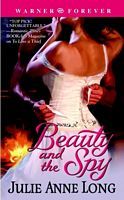
#CBR5 Book 96. "Beauty and the Spy" by Julie Anne Long

Page count: 400 pages
Rating: 3.5 stars

When Susannah Makepeace's kind, but distant father dies, leaving behind him nothing but debt, Susannah's engagement to a young gentleman is broken, and she has to move in with a distant cousin in the little village of Barnstable. She's barely arrived before she runs into the notorious Viscount Whitelaw, diving naked into a pond mere feet away from where she is sketching.

Kit Whitelaw is a spy, but his somewhat scandalous personal life of late has forced his father to present him with a choice. Spend a month on the family's country estate putting together a natural science folio, with sketches of flora and fauna, or find himself on the next ship to Egypt. Kit would much rather figure out why his friend James Makepeace died under mysterious circumstances, so it's a happy coincidence, when he realizes that Makepeace's daughter is in Barnstable. The girl keeps having near fatal accidents, and it's clear that someone wants her out of the way. But why?

I'm a huge fan of Julie Anne Long's Pennyroyal Green books. This is one of her earlier novels, published in 2008. It's the first in a series of three, featuring the three daughters of a politician who is murdered in the very first chapter of this novel. His mistress flees to the Continent, as she is being framed for his murder, and the politician's friend, James Makepeace, takes it upon himself to find homes for his friends' daughters, so they are safe from the unscrupulous man who killed their father. Susannah is the youngest of the three daughters, and grows up never realising that Makepeace isn't her real dad.

It's obvious that Long has developed a lot as a writer since she wrote this book. It's in no way a bad book, but I found the villain in particular rather tedious, and it would have been a more enjoyable book if it hadn't been made obvious from the start that the man suspected of all these dastardly deeds was actually guilty. I also found the many botched attempts to off Susannah a bit samey after a while, and it took me a while to actually grow sympathetic to her. She starts the book as rather spoiled and whiny, but luckily realises how lucky she has been, and that while the man who raised her both physically and emotionally distant to her for much of her life, she still grew up in luxury, with a stunning wardrobe, a nice house and servants. She never had to light her own fire, or cook her own meals, or go without meat because the household accounts were meagre.

While this book is called Beauty and the Spy, there was sadly very little actual spy stuff in it. It's more of a mystery, where the reader knows full well who the villain is, and the hapless couple have to figure it out, while slowly falling in love along the way. We keep being told what a great spy Kit is, but most of the book is him sulking because he's not allowed to have a mistress in London, and trying to figure out a way to keep his father from banishing him to Egypt. In between saving Susannah's life and trying to prove who killed her adopted (and biological) dad.

A perfectly good holiday read, but not in any way up to the standards of Long's later books.

#CBR5 Book 92. "The Heiress Effect" by Courtney Milan

Page count: 315 pages
Rating: 3.5 stars

This is the second full novel in the series of The Brothers Sinister. While the book works as a stand alone, it probably works even better if you've at least read The Governess Affair (a novella about the hero's parents).

Jane Fairfield is loud, and rude and dresses atrociously. She is also an heiress with one hundred thousand pounds, desperately trying to scare off any and all who might offer for her. She is also the product of her mother's affair, and her younger sister's uncle (and legal guardian) won't let her forget it for a second. He wants her married off as soon as possible, but Jane can't leave her sister, who has an unspecified medical condition (probably a mild form of epilepsy) which means said uncle keeps inviting a long line of unscrupulous medical "experts" to try all manner of horrors in the name of science, trying to cure her. She needs to scare away men, not befriend them.

Oliver Marshall is the illegitimate son of the former Duke of Clairmont, and half-brother of the current one (the hero in The Duchess War). He wants to go into politics, representing the common people and due to his background has to do absolutely everything right. He needs powerful allies, and can't set a foot wrong. While he seethes inside to have to curry favour from the same spoiled nobles who tormented him at Eton and Cambridge, he doesn't have a choice if he wants to win his seat in the House of Commons. Befriending the biggest social disgrace of Cambridge society certainly is not going to do his future career any good.

Courtney Milan is an excellent writer. I really do think that she is the best historical romance writer out there at the moment. Hence, it's not surprising that my expectations for every new book she writes keep getting higher and higher. As I said to Mrs. Julien prior to the release of this book, I think there should be a national holiday every time Milan releases a new book. That way, readers can savour her books properly, without having to feel guilty about completely ignoring or postponing any work they may be scheduled to do.

Unfortunately, this book was a disappointment. It was bound to happen, no one can strike gold that many times in a row. I was left at the end of this book, feeling that Jane, the heroine, could have done better. That's not really the feeling I want to be left with when finishing a romance from my favourite writer. Oliver was just a complete dud as a romance hero. He was fine as a supporting character in his brother's book. I was looking forward to reading about him in this book. He's a good brother to Robert, the Duke of Clairmont, and to his sisters who we learn more about in this book. He's a great friend to Sebastian (the hero in Milan's next novel, The Countess Conspiracy). He's just a coward, having been conditioned into shutting up and suffering all sorts of callous treatment all through his years at school with richer, more privileged men.

He observes things from the sidelines, and never really speaks up for himself or others. True, he refuses to actually join in with the mocking and condemnation of Jane, and he doesn't humiliate her as he is asked to do in return for political favour, but he never stands up for her or defends her either. He misguidedly attempts to rescue his sister, a bluestocking and supporter of women's suffrage, from a demonstration, but she doesn't need help and he's yet again left observing, and inactive. It doesn't help that Oliver is described as tall, auburn haired, with spectacles, very similar to another romance hero I read about this year - Cross in Sarah Maclean's One Good Earl Deserves A Lover. I know it's unfair to compare the two based on appearance, but I unconsciously did, several times, and Oliver came up wanting every single time. He does realise how awesome Jane is in the end, and how lucky he is to have her, grovelling very appropriately. It still didn't convince me.

There are lots of things I did like in the book, though. Jane is a great character, although there are inconsistencies in the way she is portrayed throughout the book as well. The various female relationships in the book, friendships and familial ones, are all wonderful. Jane and her sister, Jane and her two friends (especially after Jane can finally be honest with them about her scheme), Oliver's sister Free and her fraught relationship with their spinster aunt - all great.

This is the first Milan novel to have a secondary romance in a very long time. I can see why she wanted to attempt this, I'm still not sure it wouldn't have been better for Jane's sister to have her own romance play out in a novella. Milan writes amazing novellas. There is also some set-up for the next novel in the series, featuring the third "Brother Sinister", Sebastian Malheur, a scandalous scientist and his childhood friend, Violet, a widowed countess. Current romance tradition when it comes to series is that the most complex and messed up characters get saved for last, and if the tiny snippet from the next novel, included at the end of this one, is anything to go by, we are in for a doozy. It contained such an amazing reveal that I'm still reeling. I desperately want it to be December, so I can get my hands on it. I would still recommend Courtney Milan to anyone interested in romance, but I'd suggest they stay clear of The Heiress Effect until they've read most of her other ones.

Friday, 19 July 2013

#CBR5 Books 75-83. "The Little House series, books 1-9" by Laura Ingalls Wilder

Total page count: 2680 pages

Ratings: Little House in the Big Woods - 4 stars
Little House on the Prairie - 4 stars
Farmer Boy - 2 stars
On the Banks of Plum Creek - 4 stars
By the Shores of Silver Lake - 4 stars
The Long Winter - 4 stars
Little Town on the Prairie - 4 stars
Those Happy Golden Years - 4 stars
The First Four Years - 2.5 stars

So during the second week of my summer vacation, I got a really nasty cold and sore throat. What better reading material while sick than Laura Ingalls Wilder's comforting stories about her childhood in 19th Century Frontier America? I was of the impression that I'd several of these as a girl, as it turned out, I had only ever read Little House in the Big Woods. I have, however, seen most of the TV shows, as that was always in constant re-runs in the afternoon on Norwegian telly.

Ingalls Wilder's Little House books are a fictionalised account of her early life, up to and including her first four years of marriage to Almanzo Wilder. While most of the things she writes about is based on true events, quite a bit of the chronology of the locations the Ingalls family lived and the things that happened to them has been switched around in the books, mainly so the stories would flow better. Laura also doesn't write about everything that happened to the family. She very significantly never mentions her younger brother, who died while very young, or the period when the family lived in Burr Oak, where her sister Grace was born.

The books follow the fictional Laura's life from she is five and living in Wisconsin in "the Big Woods". The family later move to Kansas and build a house on the prairie, but are forced to move when it's clear that their land is on an area granted to the local Native Americans. They move on to Minnesota, and live in a dugout "on the banks of Plum creek" and some years later, after a bout of scarlet fever that leaves Laura's older sister, Mary, blind, the family move to South Dakota to stake a claim on a homestead, which eventually becomes the Ingalls family's permanent home. It's in De Smet, South Dakota that Laura earns her teaching certificate. She becomes a teacher at the age of fifteen to help pay for Mary's tuition to blind college. She also makes many friends, and meets Almanzo Wilder, the man that she goes on to marry.

Almanzo's childhood is written about in Farmer Boy, and it seems while I have infinite patience and find it soothing and wonderful to read about the Ingalls girl and their wonderful Pa and Ma, I found Almanzo's childhood fairly tedious and boring to read about. Ingalls spends a lot of time writing about the nature of chores, and food preparation and the ins and outs of managing on a farm in the mid to late 19th Century. Quite a lot of that got a bit repetitive in Farmer Boy, and Almanzo as a child just bored me. All he wanted to do was not go to school, and have a horse. Luckily, the character is much more awesome when he grows up, risking his life to ride through blizzards to save starving townspeople, and patiently wooing Laura over several years. I don't know why I found his book so much more tedious, I'm probably just very sexist.

The First Four Years was found in manuscript form after Rose Wilder Lane, the Wilders' daughter, passed away. It's a much shorter, and rougher book than the other eight, and was clearly published because the other books were so insanely popular. In it, the reader gets to share the incredible struggle Laura and Almanzo (suddenly called Manly throughout) went through during their first four years of marriage. It's really quite a depressing read. I don't want to spoil anything, but things go from bad, to worse, to pretty bloody disastrous. I can see why it wasn't published until much later.

Having read the entire series in about a week (I read three in one day when I had trouble sleeping), I am so very sorry that I didn't get to read these books as a girl. Ingalls Wilder does a wonderful job of depicting what must have been a really rather difficult life as something charming and adventurous. The family were uprooted so many times, and suffered so many hardships, yet the tone of the books are hopeful, cheery and just the right amount of educational. Ingalls Wilder adapts her writing style to fit the age of the Laura she's writing about. A five-year-old would have no great trouble reading Little House in the Big Woods, and as Laura ages, the writing style of the books becomes more complex and advanced, with Laura and her sisters in later books looking back on their childhood and reflecting and musing on all they've been through. They're still wonderful books to read as an adult, but I suspect they would have been magical when I was a child, and I would have treasured them alongside my Anne of Green Gables books.