Showing posts with label A to Z. Show all posts

Sunday, 11 May 2014

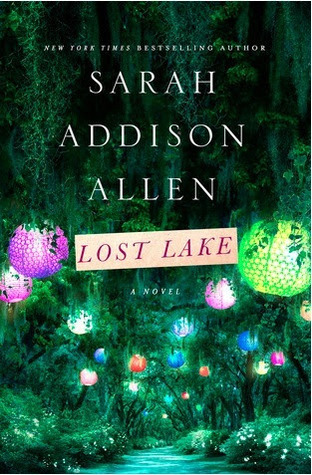
#CBR6 Book 52: "Lost Lake" by Sarah Addison Allen. Also, CANNONBALL!

Page count: 304 pages
Rating: 4 stars

Disclaimer! I got a free ARC of this through NetGalley. I have not been promised anything in return for this review, although if people wanted to start bribing me to read their books, that would be ok too.

Kate Pheris has been a widow for a year, and has been sleep-walking through her life since her husband Matt died. Now her house has been sold, her and her daughter's things are all packed and they're all set to move in with her mother-in-law, who has all sorts of plans for how they're going to get everything sorted out. Yet finally emerging from her grief, Kate realises that she doesn't want to live with her mother-in-law, and she doesn't want her daughter Devin to go to private school, forced to wear a school uniform and stifle her natural creativity. Having never really had to manage on her own, she's not sure what she will do, but she's sure that just settling for her mother-in-law's plans are not it. When Devin finds an old postcard in a trunk in the attic, Kate is reminded of her great-aunt Eby and her holiday cottages at Lost Lake. Kate spent a few weeks there when she was twelve, and as she has only fond memories from the place, she packs up Devin and they go off to see if Eby is still there.

Eby Pim is still at Lost Lake, but has at long last decided that she's going to sell her land and the holiday cottages to a pushy developer, as she is old and dreams of travelling back to Europe, where she and her husband George spent their honeymoon in the early 1960s. Apart from a few elderly regulars, no one ever comes to Lost Lake anymore, and the struggle to keep the place running is becoming too much for Eby. Apparently Eby was the exception in a long line of beautiful Morris women who were all beautiful, with striking green eyes, but who tended to marry unwisely, and were incapable of managing money, so always had to grasp for more. Everyone thought that the gorgeous Marilee, Eby's younger sister, would catch herself a wealthy husband, but she fell in love with a gas station attendant. Instead Eby found the rich suitor, when the boy she'd loved for most of her life came into an unexpected fortune, and proposed to her. Trying to escape her greedy relatives, Eby and George want to spend as much time alone in Europe as possible, but have to return when Marilee is left widowed with a young daughter. Surprising everyone, Eby and George give all of their money away to worthy causes, after settling Eby's mother and sister in comfort, and buying the property at Lost Lake.

Having determined to sell, Eby sends word to the few of the regulars who still visit the camp, but they insist on coming to visit anyway. Selma, Buladeen and Jack can't resist a final visit to the place they've spent every summer for so long. Jack is hoping to finally confess his love to Lisette, the French cook who has lived with Eby for most of her life. While on their honeymoon, Eby and George came across then sixteen year old Lisette, jumping from a bridge after Luc, the boy she rejected hanged himself. Horrified by her actions, Lisette was determined to take her own life, but was rescued by Eby, and decided to stay with her ever since. Born without a voice box, she communicates through written notes, that she burns after she shows them to people. Lisette is haunted by the ghost of Luc, who sits on a chair in her kitchen. She knows why Jack returns every summer, but is terrified that she will break his heart the way she once broke the teenage boy's.

Wes Patterson, who owns the land adjoining Eby's at Lost Lake, is resigned to selling to his uncle once Eby gives in. The only really happy time he spent at the place were the two weeks when Kate visited that summer long ago, and they spent pretty much every waking hour together, with Wes' younger brother Billy trailing after them. Wes' father was a drunk who beat the boys and mistreated them, only Eby and George really showed them any affection. When his father and Billy died in a fire that burned their home to the ground, shortly after Kate left, Wes went to live with a foster mother. He's never been able to forget that summer, or Kate, and is shocked to see her again after so long.

Devin loves it at Lost Lake, and despite the place being run-down, Kate feels at peace there too. Once the townspeople realise that Eby is serious about selling the place, they decide to show her just how important she and the camp have been to all of them, and perhaps they can manage to change her mind about selling. Buladeen, one of the holiday regulars is certainly determined to change Eby's mind. A retired English teacher from a wretchedly poor background, who's always been a voracious reader since she was taught to read, she's fully aware that not all endings are happy. She also knows that plots don't always take the most predictable turns, and that it's important to work to succeed in your hopes and dreams. She comes every summer with Selma, another elderly woman with barely any female friends. The daughter of an unfaithful man, Selma was given eight magic charms by one of her father's mistresses. With these charms, she can lure unhappily married men away from their wives and make them fall madly in love with her. As a result, most women tend to dislike her, and none of her marriages have lasted more than five years. Now she only has one charm left, which she's saving for something big. She claims she doesn't like Lost Lake, or understands why Buladeen insists on claiming that they're friends, but she returns every year, nonetheless.

I'm a huge fan of Sarah Addison Allen's earlier books, my particular favourites being Garden Spells and The Peach Keeper. Reading the acknowledgements for this book, I realised that the reason there was such a gap between The Peach Keeper and this coming out, is because the author has been struggling with breast cancer. I didn't know that when I picked this book as my fifty-second book, and the one I completed my first Cannonball with, but now I'm so glad I did, because it's extra appropriate. Cancer is a horrible disease, and I'm so glad that I can help collect money to fight it by reading books that I love and blogging about them for others.

As in Allen's previous books, family ties are strong in this one, as are those of friendship. There are absolutely magical realism elements, such as Lisette's ghostly reminder, the alligator who only Devin seems able to see and who sends her on a quest and Selma's love charms. Yet the main focus of the book is love and friendship and how different people deal with losing their loved ones, and to what degree they pick themselves back up again and carry on. It's clear that most of the women in Kate and Eby's family love fiercely and passionately, but fall apart completely once their love dies, to the detriment of the next generation. Eby never had children, and was lucky enough to have friends and Lost Lake to help her through her grief. Kate is nearly unmade by her grief, but manages to surface and fight to secure a chance of future happiness for Devin and herself. I was so happy when I was granted the ARC for this, and then I forgot it for a bit again. I'm so glad I finally got the chance to read it, and will absolutely buy it, so I can own it like I do all of Allen's other books.

And with this, I complete my first Cannonball of 2014! Whohoo!

Crossposted on Cannonball Read.

Wednesday, 1 January 2014

Reading challenge wrapup 2013 - A to Z Reading Challenge

Yet another of the reading challenges I've completed in 2013, is the A to Z Reading Challenge, hosted by Dollycas. It's a fairly simple challenge, really. Read one book starting with each letter of the alphabet. Articles (a, an, the) don't count, and for the letters Q, Z and X, the letter can be anywhere in the title of the book. I'm quite proud that X was the only letter where I couldn't find a book starting with the letter. For neatness' sake, I decided that no author should appear on the list twice. I started it at the beginning of May and completed it on the 26th of December. My books were as follows:

A - Anna Karenina
B - Breadcrumbs
C - The Chocolate Touch
D - Dark Currents
E - Ella Enchanted
F - Fangirl
G - Gameboard of the Gods
H - The Heiress Effect
I - If I Stay
J - Jellicoe Road
K - Knaves' Wager
L - The Light Between Oceans
M - Magic Rises
N - North and South
O - The Ocean at the End of the Lane
P - Proven Guilty
Q - Quicksilver
R - Rose Under Fire
S - The Sparrow
T - Three Parts Dead
U - The Unchangeable Spots of Leopards
V - Vampire Science
W - Wallbanger
X - Bigger Than a Bread Box
Y - You Don't Have to Say You Love Me
Z - Zel

Tuesday, 31 December 2013

#CBR5 Book 153. "The Unchangeable Spots of Leopards" by Kristopher Jansma

Page count: 272 pages
Rating: 4 stars

This is such a very difficult book to review, as to give away too much of the plot, or say too much about the characters would ruin the reading experience of those yet to read it.

Each chapter starts with a quote from a famous author about the art of writing, the art of creating fiction or just lying. "The truth is beautiful. Without doubt; and so are lies." is the first one. In the first section of the book: "What was lost", our unnamed narrator starts telling us about his childhood, waiting in Terminal B of an unnamed airport for his flight attendant mother to come back from wherever she'd gone to next. We're told how the twenty-two page adventure story he wrote (with illustrations) was lost when the man who ran the watch repair suddenly collapsed, and the book was thrown away. He tells us about going to a debutante ball because the brother of the girl he fancied was injured on a golf course shortly before, about going to college and starting to write in earnest, striking up a friendship and life long rivalry with the mysterious and charismatic Julian. At college he also meets the glamorous Evelyn, a promising actress, who may or may not be the love of his life.

In "What was found", we may finally have discovered the name of our narrator, or have we? He's had a disastrous falling out with his two closest friends, and is now travelling the globe, making a living from spinning clever and believable lies in one way or another. This section really spans the globe, set in parts in America, Dubai, Sri Lanka, Iceland and a wealth of other locations and continues to explore the nature of truth, lies and the art of storytelling. Can we trust our narrator, or is he always going to be unreliable? Is he still "telling us the truth but slant" as he learned in college? Does it actually matter?

This book first came to my attention when Joanna Robinson, one of the staff writers on Pajiba raved about it, saying it was one of the best books she'd read all year. That made me notice it in a number of other places, and other Cannonballers and online reviewers have rated it very highly as well. It made it a natural choice for "a book everyone but you has read" in my Book Bingo challenge, and it also worked nicely in my A to Z challenge. I read it pretty much in one sitting, while on the plane back from Marrakesh after Christmas. It was one of the only things that took my mind off the churning nausea raging in my belly, and for that I am very grateful. I may not have loved it as much as Joanna, but I can highly recommend this clever book to anyone who likes a more unusual read exploring the joys of fiction.

#CBR5 Book 152. "Vampire Science" by Jonathan Blum and Kate Orman

Page count: 288 pages
Rating: 2.5 stars

In 1976 a young med student named Carolyn meets the eight Doctor and his teenage companion Sam, while they're trying to stop Eva, a vampire, from killing a young woman. Having never realised that there was such a thing as vampires, time travel or exciting individuals like the Time Lord and his companion, Carolyn's word is forever altered, but despite an unspoken invitation to join the Doctor on his continued adventures, Carolyn chooses to take the injured woman to the ER and worry about her upcoming exam instead.

Twenty years later, there are clearly vampires in San Francisco again. Carolyn is a doctor herself now and has made great strides to fulfil her dream of finding a cure for cancer. She has a good life, and a dependable lighting technician boyfriend, but when the Doctor and Sam appear again, barely changed from when she met them two decades ago, she starts to wonder if she made the right choice.

There's been a number of mysterious deaths, and the Doctor and Sam are there to stop them. It turns out that not all the vampires necessarily want to hunt humans, some are trying to find alternatives to drinking human blood. Then again, one faction of the San Francisco vampires are more than happy for things to remain the same, and they don't feel that the Doctor, Carolyn, Sam or even UNIT are enough of a threat to keep them from declaring war on humanity.

It seems very likely that the writers of this book originally intended Carolyn to be Grace Holloway, from the 1996 TV movie. The film was set in San Francisco, and her character was a doctor. Due to rights issues, they needed to change things, and the beginning of the book has a lot of really rather clunky info dumping, as well as the rather hurried prologue, probably inserted to desperately give Carolyn some back story with the Doctor and more of a characterisation than would have been needed if they could've just used Grace. Sadly, James, her lighting technician boyfriend barely gets any characterisation at all until the book is nearly over. Having just been reminded with Night of the Doctor that the Eight Doctor, played by Paul McGann, was by far the sexiest of his many incarnations, I'm not the least bit surprised that Carolyn would be tempted to drop everything and run off with him in the TARDIS.

There are a lot of clever nods to all sorts of previous vampire stories, including Anne Rice, Dracula, and there's even a mention of Buffy the Vampire Slayer, although most likely the movie version, as the book seems to have come out before the TV series started airing. There are some amazing revelations as to what forms the "vampire science" of the title have taken, including some really very funny attempts at turning various animals vampiric. A quick enough read, it is still by far the weakest of the Doctor Who novels I've read, and unless you're very into vampires, there are better ones to check out first.

#CBR5 Book 151. "The Sparrow" by Mary Doria Russell

Page count: 408 pages
Rating: 4 stars

In 2060, disgraced Jesuit priest Emilio Sandoz is the only survivor left after an expedition to the planet of Rakhat. He's grievously injured, both physically and mentally, and refuses to speak to the investigators who are desperate to find out what went wrong, far away on the alien planet. Sandoz stands accused of some pretty terrible crimes, and slowly the story of what took place several light years away is revealed.

Proof of extra terrestrial life is discovered in 2019 in a small and fairly insignificant listening post in Puerto Rico. While the United Nations and other global powers are still trying to figure out what to do about the discovery, the Jesuits organise a scientific mission in secret, sending eight people to the newly discovered planet, Rakhat, hoping to establish communication and peaceful relations with the aliens whose heartbreaking songs proved their existence on Earth. Emilio is one of the eight, and at least six of the other members of the exploration crew are close personal friends of his. "They meant no harm" is the final line in the prologue, and it's such an ominous hint of what's to come in the rest of the novel.

The Sparrow is not an easy read. It was one of three books suggested to me by Jen K to complete a square on my Book Bingo card, and I must admit, I ended up reading it both because it was the shortest of the three, because I've seen it so highly rated elsewhere for years and because I keep trying to make myself like science fiction, something that only rarely seems to work out. The book reveals pretty much in the opening section that all the characters we keep reading about in 2019 are no longer alive in the sections that take place in 2060. That made me depressed throughout the book, and bracing myself for the worst, long before it's actually revealed what actually happened, and what "harm" the well-meaning Earthlings actually caused.

Once the truth of what had happened to Emilio and all his friends was finally explained, it was also more tragic and even worse than I had imagined, and really very unpleasant indeed. It's a very well written book, and it deals with a a number of philosophical, metaphysical, moral and religious questions without providing any easy answers. I can totally understand why so many people rate it very highly. Unfortunately, I didn't actually enjoy reading large parts of the book. While it was great to see how the various members of the Stella Maris expedition came to meet and befriend each other, and their wonderful discoveries on the alien planet, I knew from the start that all of them except Emilio were doomed, and it was very clear from early on that he wished he'd died, as well. So I don't think I'll be reading the sequel, and I really wish that the book hadn't scarred me, because that's the only word I can think of to describe it, as much as it did.

#CBR5 Book 150. "Zel" by Donna Jo Napoli

Page count: 227 pages
Rating: 3 stars

Zel lives in a remote cottage in the mountains with Mother. The only time she sees other people is twice a year, when they go to Market in the nearest town, quite some distance away. While Zel finds the people, bustle and excitement of town life exhilarating, Mother insists that they have everything that they need in their little home, and warns her daughter away from strangers. Yet Zel dreams of a different life, of some day having a husband and children and a home of her own. Just before her thirteenth birthday, she meets a beautiful young man with a spirited horse, and she can't seem to get him out of her mind.

Konrad, the young count, is also unable to forget the young girl he met in the marketplace, and who seemed to almost magically calm his horse. Even when his parents try to arrange suitable marriages for him with lovely young maidens, he refuses, riding around the countryside trying to find out where the mysterious Zel can be found.

Mother grows anxious and worried when Zel mentions the pretty young man, and claims that there are bad people out there who want to harm them. She takes Zel to an abandoned tower, a fair distance from even their remote cottage, and before Zel realises entirely what is going on, she is trapped high above ground, with no way of escaping, with Mother on the ground, saying she will keep the bad people away. Zel's hair starts growing at a furious rate, until she can pull Mother in and out of the tower with it. Lonely and distressed, the young girl dreams about the young man, and tries to while away the months and years of her imprisonment. She's fairly sure she's gone entirely mad, when one day there is a call for her to let down her hair, and count Konrad climbs in instead of Mother.

This is a short read, and an interesting retelling of the story of Rapunzel. Some of the chapters are narrated in third person, and show Zel and Konrad's point of views. The ones from Mother's POV are in first person, making her account the most personal of the three, and making the reader empathise more with her, even as she's the nominal villain of the story. The witch who forced a young couple to give away their child in return for the Rapunzel salad they had stolen from her garden, who locks the girl in a tall tower to keep her away from all others - Mother is more than this here. A frustrated and intelligent woman given a tempting choice, incredible power over all growing things in return for a soul she might not even believe she has, who finds herself barren and alone, willing to do anything to gain a child, and who loves that child so much that she's determined to do anything to keep her, even if it means making the girl possibly hate her. Mother can't bear to lose her beloved daughter, but when it becomes clear that she may have caused her more harm than good, she makes the ultimate sacrifice to ensure her daughter's eventual happiness.

#CBR5 Book 149. "Bigger Than a Bread Box" by Laurel Snyder

Page count: 240 pages
Rating: 3 stars

12-year-old Rebecca's parents have been arguing for a while, and one day Rebecca's mother takes the kids and her stuff and moves from Baltimore back to her mother in Atlanta, needing some space to figure things out. Rebecca is not at all happy about her parent's separation, having to live in a new place, starting a new school and spends quite a lot of time sulking. Rummaging around in her grandmother's attic, she finds an old breadbox, which appears to grant wishes, as long as whatever is wished for actually exists in the world and can fit into the space within the breadbox (so no unicorns or infinite wishes).

Thanks to the things Rebecca manages to acquire through the breadbox (new clothes, an Ipod, money, gift cards, lots and lots of candy, among other things), she manages to make herself quite popular at school and finds her new home with her grandma a bit easier to accept. While she still resents her mother for taking them away, and misses her father terribly, she's starting to settle in and adjust. Then she discovers the truth about where the items in the breadbox come from, and things get a lot more uncomfortable and difficult. Rebecca discovers that you can't get something for nothing, there is always a price to be paid.

Having reached December with quite a few books left on my "A to Z" reading challenge, this is the book I picked for X (as Q, Z and X don't need to be the first letter of the book, cause that would be very difficult indeed). It deals with the rather serious issues of separation and sudden upheaval well, and while Rebecca spends a lot of the book being a total brat to her mother (I, as a grownup, had a lot less patience with her clearly rather useless dad), being completely uprooted and having to settle in at a new school when just entering your teens is never going to be fun. Apart from the magical breadbox, there isn't a lot of fantasy to this book, and the lessons Rebecca gets about actions having consequences are things that a lot of middle grade books, in my experience, gloss over.

#CBR5 Book 147. "Knaves' Wager" by Loretta Chase

Page count: 240 pages
Rating: 4 stars

Thanks to Mrs. Julien for her awesome romance review template!


Knaves’ Wager is a romance of the you are everything I never knew I always wanted AND opposites attract variety: Boy meets girl. He is the reprobate former best friend of her now-dead husband. She hates him because she believes he drove her husband to his early death, and is left owing him crippling gambling debts. He agrees to a foolish wager to seduce her against all odds. Boy and girl move forward together secure in their love and commitment.

A historical romance set in the Regency era just around the end of the Napoleonic wars and written by Loretta Chase, Knaves’ Wager is my fourteenth book by this author. I generally find her work at least enjoyable, and at its best, spectacular and infinitely re-readable. Chase is, most famously, the author of Lord of Scoundrels, the book All About Romance’s readers have voted as the number one in their top 100 for more than a decade. Personally, I prefer The Last Hellion, but what do I know? I found Knaves’ Wager, one of her early romances diverting, enjoyable and romantic. This book is a clean (lacking in any sex scenes, graphic or otherwise) romance, and I’ve seen it compared to the writing of Georgette Heyer. However, none of the Heyer books I’ve read contain the palpable sexual tension present in this novel, or kisses half so scorching as some of the ones in this book, so be aware that it’s not entirely chaste. I have several of Chase’s early romances still on my TBR List and will continue to seek them out because this one really was very enjoyable indeed and I would absolutely recommend it to others.

The main plot of Knaves’ Wager focuses on the reformation of a rake. Lord Julian Wyndhurst, Marquess of Brandon is that rake. He is stinking rich, handsome as sin and has a reputation for gambling and vice. He’s also been on the Continent for seven years since his involvement in a particularly scandalous duel, working closely to bring down Napoleon, and is exasperated to be brought home only to sort out his young cousin, Lord Robert Downs’s scandalous betrothal. Lilith Davenant is a widow and a victim of circumstance. She is formidable, all that is proper, decorous and virtuous, and a caring and affectionate aunt, willing to sacrifice even the last remains of her fortune to secure happier futures for her nieces and nephews than she herself found in her unfortunate marriage. Due to her husband’s gambling debts to Lord Brandon, she is forced to accept the proposal of an old friend to secure her future. Brandon agrees to seduce Lilith in order to get Robert’s mercenary mistress to release Robert from the betrothal. Julian and Lilith start out as antagonists, at least in Lilith’s eyes, yet they cannot deny the attraction they feel towards each other. Over time, they come to discover that despite any challenges they face, they make an excellent team.

The subplot in Knaves’ Wager revolves around Robert, Brandon’s young, somewhat dim cousin and Lilith’s clever niece Miss Cecily Glenwood, who is in London for her first season. The seemingly guileless country miss sets about not only getting her chosen husband, but making sure her aunt doesn’t end up in a stuffy marriage of convenience either. It was an excellent addition which nicely complemented the main plot. 

While an early effort of Chase’s, written in the early 1990s, this novel still has great characterisations, an excellent eye for detail and wonderfully witty banter. Brandon really has his work cut out for him, wooing and charming the icy Lilith, and it’s glorious to see the calculating libertine gradually fall head over heels for the irreproachable widow. As some of Chase’s most recent novels have been rather mediocre and a bit of a disappointment, it was delightful to discover that I have more of her good work to look forward to. For anyone wanting a gateway into romance reading, you would be strongly recommended to check out Loretta Chase, but avoid her Dressmaker series, pretty much everything else she’s written is better.

© 2013 Mrs. Julien Presents

#CBR5 Book 145. "Proven Guilty" by Jim Butcher

Page count: 479 pages
Audio book length: 16 hrs, 16 mins
Rating: 4 stars

Harry Dresden is now one of the wardens of the White Council of wizards, and he's about as thrilled about it as many of the wizards on the council are about him being recruited. Harry's asked to look into rumours of black magic in the Chicago area, and his mentor, Ebenezer McCoy, also requests that he enquire with his faerie contacts about why the Fey Courts are refusing to involve themselves in the conflict with the Red Court of vampires, even after the vampires broke into faerie territories in the Nevernever.

Harry still owes Mab, the Winter Queen, two favours, and his dealings with the Fey never really turn out in his favour. Lily, the new Summer Lady (youngest of the three Summer Queens) owes him a favour, but neither she nor Fix, the Summer Knight, can directly answer Harry's questions, or aid him, due to a compulsion laid on them by Titania, the Summer Queen, who's not exactly one of Dresden's biggest fans. Getting the answers McCoy wants isn't going to be easy.

The possible black magic use he's been asked to investigate seems connected with mysterious attacks at a horror movie convention. Molly Carpenter, the teenage daughter of Harry's friend Michael, comes to him for help. Her boyfriend is the chief suspect after a man was viciously attacked in a bathroom, but claims he's innocent. Shortly after Harry arrives at the convention to investigate, a number of people are attacked by a seven foot tall assailant who looks just like the killer in the slasher flick recently screened. An assailant who dissolves into ectoplasm when hit with a power burst from Harry's staff. It becomes clear that the ghostly entities can take physical and deadly form, and they feed on fear. Harry needs  how Molly Carpenter and her friends are connected with the case, who is summoning the monsters, and how he can stop them before more people die.

I'm a sucker for the wicked faeries, and Butcher's faeries are always ambiguous and difficult to trust, no matter what side they're purportedly on. Hence I like the books involving Fay machinations more than the ones about White Council business. Here the two sort of intertwine, but neither are the central issues in the book. It was very nice to meet the Carpenter family again, and as there's always a substantial period between each of the Dresden Files books, Molly has grown up quite a bit since the last time Harry and the readers met her. Just because she's older doesn't necessarily mean that she's all that wise, though, and she clearly has a lot of developing left to do.

Michael is away on a mission for much of the book, but his wife Charity, always so very critical of Harry, plays an important part instead. It becomes clear why she's so very suspicious of Dresden, and worried about his involvement with her family, and she really gets a chance to shine. The book also sees Thomas finally move out of Harry's apartment, having apparently found a job and lodgings elsewhere, although he's being very mysterious about the whole thing. I really like Thomas as a character, and hope that he'll not become relegated back to being a minor supporting character, just because Harry gets his apartment to himself again.

Saturday, 16 November 2013

#CBR5 Book 135. "North and South" by Elizabeth Gaskell

Page count: 544 pages
Audio book length: 18hrs 18 mins
Rating: 5 stars

Young Margaret Hale's life is turned on its head when her father, a parson from the South of England, renounces his position because he experiences a crisis of faith. He moves his anxious wife and dutiful daughter to the factory town of Milton Northern, where he's going to work as a tutor. The town, a bustling result of the Industrial Revolution, is full of cotton mills, soot and smoke, a stark contrast to the pastoral idyll of the Southern English countryside. With the loss of Mr. Hale's living, the family is in severely reduced financial circumstances, (not helped by the fact that they keep sending money to Margaret's brother who is wanted for mutiny in England, and as a result living in exile in Spain) and can't really afford more than a modest lifestyle. Margaret bravely adapts fairly quickly, but her mother never feels happy or comfortable in Milton and her health gradually deteriorates.

In Milton, the main social interaction the Hales have is with Mr. John Thornton, a mill owner who leases from Mr. Hale's best friend, Mr. Bell (Margaret's godfather). Thornton's father drove his family into debt and further caused scandal when he committed suicide. Thornton had to quit school, and take a position as a shop clerk to support his sister and widowed mother. Putting aside most of what he earned, he slowly and quietly worked to repay all his father's debts and became a respected and formidable man in Milton. His mother is a proud and arrogant woman who loves her son fiercely, constantly worried some fortune-hunting young miss will get her claws into him.

Mr. Hale tutors Mr. Thornton, and they develop a close friendship. Margaret initially has difficulties relating to him, however. Thornton thinks Margaret is very beautiful, but aloof, distant and too caught up in her sheltered and genteel way of thinking, while she thinks Thornton is cold, arrogant, coarse and too hard on his workers. Before Margaret moved with her parents to Milton, she lived with her wealthy aunt in London for ten years, until her cousin Edith married an army captain and moved to Corfu. In the north, she has very few friends. Mrs. Thornton is dismissive of the Hales, and Miss Hale is spoiled, self-centred, vain and not in any way interested in the prim and serious Miss Hale. The only friends Margaret makes are of a lower class than her, Mr. Higgins and his consumptive daughter Bessie, and they become more of a charity project for her than confidantes and support to her.

I was surprised at how useless both of Margaret's parents are. Her father upends his family's entire life because of a point of principle, but once they arrive in Milton and it turns out that their new life is going to be difficult and not at all what he'd planned, he withdraws into his studies and teaching, leaving poor Margaret to deal with the complicated practicalities of managing the household with their meagre finances, the inability to secure extra help in the house, her mother's depression and deteriorating health and the worry about Frederick. She sees the deep love between her parents, and because of that, she won't accept a marriage proposal from a man she doesn't love. Shortly after leaving her aunt's house in London, she rejects the proposal of Mr. Lennox, her cousin Edith's brother-in-law, as she cannot see him as anything but a friend. So when Mr. Thornton is persuaded by his mother and sister that Margaret must be infatuated with him, he proposes, and is vehemently rejected. By the time Margaret is ready to reconsider his advances, a number of coincidences and complications has made Thornton believe that she loves another and is lost to him.

I discovered the BBC adaptation of North and South, with the darkly handsome Richard Armitage (currently most famous as the broodingest exiled dwarf king evah in The Hobbit) and the lovely Daniela Denby-Ashe a few years ago, but it's taken me until now to actually read the novel. I got the audio book narrated by the excellent Juliet Stevenson, who varies between crisp arch tones for the southern characters and wonderful northern accents. I was surprised at how nuanced the book is, for a Victorian novel, both Margaret and Thornton's feelings are very clearly depicted. I really hadn't expected so much insight into the emotions of both main characters. Gaskell's novel is typical of the time, showing a lot of social responsibility, with the social developments after the Industrial Revolution, the clashes between the factory owners and the workers, the hardship of a strike and so forth, but it doesn't feel like it's sermonising and lecturing the reader. I will absolutely be reading more Gaskell in future.

#CBR5 Book 134. "You Don't Have to Say You Love Me" by Sarra Manning

Page count: 560 pages
Rating: 4 stars

Neve is in her mid-twenties and awkward around new people, especially men. She works as an archivist and seeks refuge in classical literature. Over the course of the last three years, she's kept up an old-fashioned pen and paper correspondence with William, one of her professors from Oxford, whose currently lecturing in California. During the same three years, she's also lost more than half her body weight (from a UK size 32/US size 30/European size 62 to a smallish UK size 16/US size 14/EU size 44) through a strenuous and rigid exercise and diet regime. William is due back in little over three months, at which point Neve is determined to be a size 12. She's sure that once William sees her again, he will love her as much as she has always loved him, and everything in her life will finally be perfect.

Her little sister Celia is not convinced that Neve is doing the right thing, pining for William and rejecting all other men. She encourages Neve to get some dating experience, saying that she doesn't want to be completely innocent when William finally returns. The only man she warns Neve away from entirely, is Mx, one of the assistant editors at the fashion and lifestyle magazine where Celia works, claiming that he's a bit of a man whore and will only break Neve's heart. As Max has a young blonde draped over each arm and throws an ice cube at her accidentally the first time they meet, Neve is pretty sure she'll be able to resist his "charm", yet ends up taking him home at the end of the night, desperate to get some of that precious experience with someone who seems to have lots of it. Their first night together is absolutely dreadful, and it's clearly better if she and Max never speak again.

Neve is put off the idea of casual sex after that first attempt with Max, but wants a "pancake relationship" to get some practical experience before William returns. Her theory is that the first pancake always turns out messed up and gets discarded, it's the practise run for the real pancakes. She goes on a series of absolutely awful first dates, and suddenly Max doesn't seem so bad after all. He finds the idea of a non-sexual relationship with a woman, where Neve can get experience with kissing, dating, and even sleeping with a man strangely intriguing. He knows he has the reputation of a cad, a shallow social butterfly and an inconsequential ladies' man, and to him, a temporarily permanent non-sexual relationship represents something new, an exciting challenge, so he agrees to be her "pancake" boyfriend.

Neve and Max have three months to practise before Neve hopefully reaches her goal weight and is ready for her HEA with the scholarly and intellectual William. Despite Celia and Neve's personal trainer's misgivings, the relationship, after a few initial hiccoughs goes pretty well. Max brings Neve out of her reclusive existence and shows her that social events can be fun if you're with the right people, and Neve gives Max a much needed grounding and stability. Yet the day when William returns is rapidly approaching. Is he actually the man she's destined to be happy with, or is Neve overlooking someone a lot closer to home?

A good contemporary romance novel is basically a romantic comedy in book form. There is a certain predictability and inevitable outcome in a story like this, but it's the journey, not the destination that is what makes it so enjoyable. I'm not going to say that the ending doesn't matter, because we all know that would be a lie. But the build up in a romance, the gradually developing relationship, that is what is really important for the HEA to feel truly earned and satisfying. From the setup of this book, with the bookish, innocent young woman pining for another man, and the introduction of the charming and worldly playboy, with their agreement to help each other test-drive a relationship so to speak - it's not really going to end with Neve going off into the sunset with William. The fun of the story is how two such opposite personalities as Neve and Max can realise how perfectly they compliment each other, and support and nurture the other, finally realising that they can't live without the other.

Neve has huge self esteem issues. She was always a big girl, and her weight ballooned as she was bullied all through school. She achieves something truly remarkable by losing so much weight, reshaping herself entirely and taking control of her life (some might say that her control tendencies go a bit far with regards to her diet), but she still has tremendous trouble accepting the praise and acknowledgement she gets for this from other. Even though she's come so far, only her end result matters. Until she is a size 12, she cannot relax, cannot settle down and she certainly won't be able to find true happiness. Everything up until that point is practise, meant to be left behind and discarded. She's quite blind to her own achievements, and rather judgemental. She believes all of Celia's gossip about Max and his irresponsibility and fickleness. There's a fair amount of slut shaming towards Max, even though he's never anything but completely honest about who he is and the way he lives.

It quickly becomes clear, that for all of Neve's body image issues, Max is the more emotionally vulnerable of the two. His lack of experience with long term girlfriends may be because he doesn't think anyone would actually want to commit to a permanent relationship with him. Both his parents are dead, his mother left him with a number of emotional issues, and the closest thing he has to a family are those of the footballer's fiancee whose chick lit novels he ghost-writes. For all her complaints about her parents and siblings, Neve has a close network of supportive family members and close family friends who have always been there for her. Max is drawn to that, as much as to Neve herself. While she initially is quite dismissive of him and his lifestyle, he doesn't judge her. Instead he tries to bring her out of her shyness and awkwardness, daring her to try new things. He admires her intelligence, drive and cleverness, and despairs at her blind belief that she's still fat and unattractive. While he hopes she'll change her mind about the no sex-rule, he never tries to pressure her and gives her the time and space to come to terms with her own desires.

I found Neve very easy to relate to, yet also wanted to shake her vigorously several times. Max is clearly a great guy, your modern day rake. He's got a good career, he's gorgeous, he's adopted a neurotic shelter dog and most of all, he's fun! William is half a world away, his letters to her show that he's unlikely to feel as strongly about her as she does for him (it's not like she ever confessed to her crush on him), and while I knew that she and Max would end up together in the end, I was not looking forward to the obligatory third act conflict before they sort everything out and settle down for good. While it's quite a long book, I didn't mind. I enjoyed spending time with the characters and liked the supporting cast of Neve's family and co-workers, and the gradual friendship developing between her and Max, which evolves into something romantic as their "pancake relationship" progresses. I discovered this book when looking for books for my A to Z reading challenge, and had such a good time reading it. Neve's weight loss battle has also helped me force myself to the gym a bit more often in the weeks since I finished it, as well, so added bonus there.

Sunday, 22 September 2013

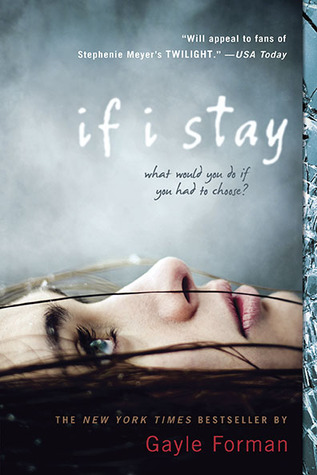
#CBR5 Book 117. "If I Stay" by Gayle Forman

Page count: 262 pages
Rating: 4 stars

Mia has everything a girl could want. Loving, supportive parents, a little brother who's more funny and clever than annoying, a likely admission to Julliard, and a romantic and talented boyfriend. Then her family are in a car accident, and her parents are killed instantly. Mia watches herself and her brother being transported to the hospital, and spends the next twenty four hours out of her own body, watching her relatives, friends of the family, her boyfriend Adam and her best friend Kim as they huddle in the hospital waiting room for news about her.

With her body being kept alive by machines while she's in a coma, Mia suddenly only has one thing left - she has to decide whether she's going to choose to live, and go on without her immediate family, or whether she should let go. Is there enough left for her to make staying worth it?

If I Stay is not a long book, and has fairly short chapters, alternating between Mia's present, where she observes her grieving friends and relatives waiting to see whether she wakes up from her coma or not, and her past, giving us a full picture of the life she had before, and what she lost when her family died in the car crash. Her father, the former rock band member turned high school teacher. Her mum, a former Punk chick. Her younger brother, that she helped deliver when he was born. We see how the daughter of rock enthusiasts started playing the cello and eventually excelled at it. How she and her best friend Kim started out as enemies and became inseparable. How Adam, who plays guitar in a promising Indie rock band, took her to a Yo Yo Ma concert for their first date, and how their relationship blossomed despite their seeming to come from different worlds.

Not feeling like she entirely fits is one of the things that makes Mia question whether she should stay alive. A classical musician surrounded by parents and family friends who preferred rock, with a boyfriend whose band is on the verge of launching their career. From her recollections about her life, it's clear she frequently felt a bit like a fish out of water. Insecurities are natural for teenage girls to have, even when most of their loved ones have completely different frames of reference to them.

A lot of themes are explored in the book, chiefly obviously loss and grief. I found it an engaging and moving read, and am not at all surprised to discover that it is being adapted into a movie, with Chloe Grace Moretz starring as Mia. Hopefully the film captures the sadness and emotion of the book, and doesn't just turn into a maudlin melodrama.

Monday, 2 September 2013

#CBR5 Book 111. "Wallbanger" by Alice Clayton

Page count: 320 pages
Rating: 4 stars

Caroline has many things to be happy about. She's got good friends, a devoted cat, a job she enjoys, a very nice Kitchen Aid mixer and a beautiful new San Francisco apartment. What is missing from her life, and has been missing for over six months, since a particularly disastrous date, is the big O. To make matters worse, the main flaw in her otherwise lovely apartment seems to be that the walls between her bedroom and that of the one next door, are very thin. And her neighbour has a very active, frequent and loud sex life with at least three different women (all of whom Caroline gives snarky nicknames). She keeps losing sleep, and one night, in a fit of frustration, pounds on the wallbanger's door (forgetting that she's clad only in a skimpy nightie) and demands he keep it down. Simon, as the wallbanger is actually called, answers the door wrapped only in a sheet, and seems very amused by the whole situation.

Caroline and Simon start out fairly antagonistic to one another, but when his two closest friends start going out with Caroline's two besties, they are naturally thrown together more often than not. They start out with a tentative truce, which turns into friendship, which eventually seems to blossom into something more. Will Clive the cat ever be united with his one true love, the woman who mieows through Caroline's walls intermittently?Will Caroline ever recover her lost O? Will Simon be able to give up his little harem of women and settle for just one woman?

This is a book that popped up in my recommendations on Amazon, and Goodreads, and which I completely discounted because of both the title and cover, which didn't really appeal to me at all. Only after reading rave reviews of it on a number of romance review sites that I follow and trust, did I decide to give it a chance, and I'm so glad that I did. It's a funny and frothy contemporary romance very much in the style of Jennifer Crusie at her best. The confident and very uncomplicated heroine who loves baking seemed taken straight out of one of her books. She's happy with her life, her friends and her job. I did get a little tired of just how much she obsessed about her missing O (really, this is a very central feature in the first third of the book), but in her position, I'd probably be pretty frantic, myself.

Simon is a great hero. He's not ashamed of his sex drive, or his multiple partners, all of whom are aware that he's not seeing them exclusively, and all of whom are vastly different women, in personality and body type. He travels the world in his job as a photographer, and clearly isn't happy with the idea of being tied down to one person or one place for too long. The secondary cast of friends and employers is also very well done, creating a very believable support network for both characters. The romance between Simon and Caroline isn't instantaneous, and even after they admit their attraction towards one another, without obstacles. It felt like a fairly realistic way for a relationship to develop, and I just wish that the climax, so to speak, of all the tension in their romance hadn't played out quite the way it did.

MINOR SPOILER!

I'm by no means I very obsessively clean person, but the mess the two make out of Caroline's kitchen, had me cringing and took me completely out of the book. I don't think smexy times and food should mix, and I certainly couldn't be passionately seduced if there was flour and honey and other sticky substances all over myself, my partner and my kitchen. *shudder*

SPOILER ENDED.

Caroline's somewhat long-winded whining about her missing O in the first part of the novel, and the somewhat messy romantic reconciliation of the couple aside, I really did enjoy this book immensely, and would recommend it to anyone who'd like a fun and quick read. It also made me want to learn to make zucchini bread (which Caroline bakes more than once) and re-visit Spain (where parts of the novel take place). None of those are bad things, though. Highly recommended, especially for Crusie fans.

Sunday, 1 September 2013

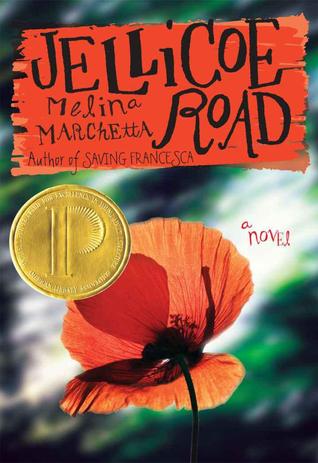
#CBR5 Book 109. "Jellicoe Road" by Melina Marchetta

Page count: 437 pages
Rating: 5 stars

Taylor Markham is seventeen, and has lived at the boarding school by Jellicoe Road since she was abandoned by her mother when she was eleven. She's just reluctantly accepted the post as leader for her house (boarding school dorm - think Harry Potter), which means caring for the well-being of the younger girls in the house, as well as masterminding the territory war between the town kids, the boarding school kids and the group of cadets who camp near the town for a number of weeks each year.

Hannah, the only grown-up that Taylor is really close to, just disappears one day, leaving behind the house she's been slowly restoring over the years, and an unfinished manuscript, which tells the story of four teenagers who met on Jellicoe Road more than twenty years ago. No one wants to tell Taylor where she's gone. Then she discovers that the leader for this year's cadets is none other than Jonah Griggs, the boy who helped her run away years ago, but who also betrayed her by getting them found. Hannah's disappearance and Jonah's reappearance in Taylor's life sparks a series of events that will finally lead to her discovering why she was abandoned by her mother, what really happened to her father, and what may be in store for her in the future.

I'm not doing a very good job of summarising this book, which started out very confusing (you see everything from Taylor's rather surly POV, and you're just plunged immediately into the action of what seems like the story of a very confusing and intricate way of playing 'Capture the Flag'. Taylor doesn't come across as very likable, and I was a bit confused as to how she had any friends at all. Still, the book has garnered a slew of awards, and came very highly rated on a number of review sites that I trust, so I kept reading, which is good, because it was SO worth it. Trusting her readers' intelligence, and ability to pay attention, Marchetta portions out new information sparingly with each chapter, making you grasp more and more of the big picture, and changing your opinions about the characters involved as the story progresses.

Another thing that was initially confusing in the book is the sections about the four other characters, who at first seem to have nothing to do with Taylor at all, but which you come to realise are extracts from Hannah's manuscript. This isn't spoilery, by the way, it's revealed fairly early on in the book, and I figured mentioning it here may help other readers accept it as an important supplement to the main story. It does become apparent why we're being allowed to read along with Taylor, and just take my word that you'll miss out on important stuff if you skip the sections in cursive.

This book made me laugh, and cry, and desperately want to hug several of the characters. If I were a teenager still, I'd want Taylor to be one of my friends, and as an adult, I want to embrace her and help her resolve her many understandable and conflicting emotions, not to mention her trust issues, fear of letting anyone get close to her, and her fear of abandonment. Then there's Jonah, the mysterious and brooding boy from her past, who killed his own father. Suffice to say, neither Taylor nor Jonah have any reason to particularly trust or rely on adults, and the running away incident in their past means there is a deep well of tension between them when they meet again. While the chief focus of the plot is Taylor trying to discover where Hannah went, and what actually happened with her parents, there is also a strong romantic subplot, which for all that this is a YA novel, took my breath away.

I've been putting this review off, trying desperately to get across why EVERYONE should read this book, and what a wonderful reading experience it turned out to be. Once I got through the first rather confusing chapters (which are still excellently written, just very sparing on helpful exposition), I was completely engrossed and I resented having to put the book down for things like sleep and doing my job. I read during the breaks between lessons, and every chance I got. I love this book, I quite possibly love every single significant character in it. I'll be very surprised if this book doesn't end up in my top 3 of the year.

Friday, 23 August 2013

#CBR5 Book 105. "Magic Rises" by Ilona Andrews

Page count: 320 pages
Rating: 4 stars

This is book 6 in a series. It's therefore not the best place to start reading, and I can guarantee that the review will contain spoilers for at least some of the other books that have come before. If you haven't read these books, run, don't walk to a bookstore or a library, and get started.

When several of the Pack's children threaten to turn Loup, and may have to be killed, mercenary bad-ass Kate Daniels and her mate Curran, the Beast Lord of the Pack realize that they need to get their hands on more panacea, a herbal concoction that ensures the survival of most of the young shapeshifters. It's obvious to both of them that the invitation they have received from a couple of European packs is a big ol' trap, but they're offered so much of the precious panacea (which they have absolutely no way of making themselves), that they simply cannot afford to refuse. So Kate and Curran ally with someone they normally wouldn't trust, gather up a band of their best fighters, and set off to Eastern Europe on an adventure.

Once they get there, they quickly discover that it was indeed a trap, but one of a completely different nature than expected (I may have cheered at this revelation). The Pack are far away from home, and the task they've been set, to guard a pregnant shapeshifter princess until she gives birth, is not an easy one. The biggest danger may be to Kate and Curran's relationship, however.

This is the road trip book, the one where the authors take the characters out of their established comfort zone (even if that is a zone frequently fraught with incredible danger, and near death experiences) and move them somewhere, with new and exciting challenges and threats to their lives and safety. During the journey, the Pack encounter pirates, and I may have been rather vocal in my appreciation of the type of shapeshifter they turn out to be. I love how creative this author team is with their world building.

Then they arrive in Eastern Europe, with rivalling shapeshifter clans, to do a job that seems nearly impossible to complete without sparking some sort of turf war. Kate, who's still getting used to not isolating herself and trusting no one, experiences jealousy for the first time, and starts questioning Curran's devotion to her, especially as she's dismissed by all the European shifters as the Beast Lord's human plaything. Why wouldn't he want a powerful shifter girl instead? I must admit, invested as I was in Kate and Curran's relationship and happiness, I was extremely unhappy with this part of the book, and I wanted to punch Curran in his pretty face for what he was doing to Kate. Of course it turns out to be a lot more complex than Kate knows, and Curran has very good reasons for what he's doing, but even after I found out what was going on, I was not happy with him. There is a great explanation for why both Kate and Curran acted the way they do on Ilona Andrews' blog, where the authors answer FAQ about the recent book - don't read it until AFTER you've finished the book, there are spoilers!

Because of the jealousy drama, this doesn't quite get included among my favourite Kate Daniels books, but it's a wonderful read. I laughed, I cheered, I cursed and bit my knuckles in suspenseful scenes. Reading an Ilona Andrews book tends to be quite an emotional rollercoaster, and while they always end on a happy note, there are very real dangers in each book, and casualties along the way. Don't be sure everyone's going to make it out unscarred, or even alive. I'm so glad this book got Ilona and Gordon to the top of the NYT Bestseller list, they deserve it.

Wednesday, 24 July 2013

#CBR5 Book 100. "The Chocolate Rose" by Laura Florand

Page count: 253 pages
Rating: 4 stars

Jolie Manon's father was one of the very top chefs of France, before his restaurant lost it's third Michelin star, and he had a stroke. Now Jolie is trying to coax him back into greatness, with a cookbook featuring several of his most famous recipes, although her father is cranky and despondent and refuses to be seen in public. Of course, she can't tell her father that they're being sued, by his former employee, now a star chef in his own right. Jolie needs to go to the Côte d'Azur to negotiate some sort of compromise. She's worried that news of the lawsuit is going to make her father have a relapse.

Gabriel Delange has a three star restaurant in Provence, but still can't believe that his old nemesis, Pierre Manon, has the gall to publish a cook book where at least a third of the recipes were invented by Gabriel, while he worked himself nearly to death to secure Manon the coveted third star, sacrificing his health and losing his girlfriend. Gabriel is furious to realise that Manon won't even face him personally, but sends his youngest daughter to negotiate. He's shocked to realise that his old nemesis had a stroke, but still can't forgive him. He knows that if he forces the issue, the old man may get sicker. Maybe he can blackmail the beautiful daughter into making a deal on her father's behalf?

Jolie remembers Gabriel as a skinny and constantly overworked young man from her father's kitchen. She's not prepared for the burly, muscular and very loud man she encounters, and she certainly hadn't expected to be completely incapacitated by her attraction to him. When he promises that he will drop the lawsuit if she works on a cookbook with him, spending three days a week working in close proximity with him, she has no choice but to agree. She wants to make a name for herself as a food writer, and working with one of the star chefs of France certainly can't hurt. Of course, she remembers all too vividly how her parents' marriage fell apart, and her mother's dire warnings that she never get involved with a chef. Besides, what chance would she have with a man who considers her father his greatest enemy?

I adore Florand's romances, which seem very calculated to appeal to women on a number of levels. You have the tall, handsome, temperamental supremely confident and very capable heroes, all involved in some form of food preparation, be it chocolate, pastries or gourmet food. They're set in France, in supremely romantic locations, with lavish descriptions both of the surroundings and the many delectable things that the heroes create with their magical food preparation skills, and that they woo the heroines with. In this, Florand has also written a modern twist on a classic fairytale. There's the sick old man, the youngest and most loyal of three daughters. There's a stolen rose (in this case a famous dessert created by Gabriel, which Manon takes credit for and agrees to have on the cover of the cook book) and there is the daughter agreeing to spend time with a loud, beastly individual to protect her father's health. As variations of Beauty and the Beast go, this was a very creative and incredibly fun one.

I loved how Gabriel was both wonderfully arrogant and supremely confident both in his attractiveness and his skills as a chef, yet was so vulnerable because of his terrible luck in previous relationships and his desperate yearning for a stable, long-term relationship with a wife and kids. While Jolie has seen her parents' marriage dissolve because of her father's single-minded focus on his work, and is deeply aware of her mother's warnings, she's also clearly fascinated with the work of top chefs, and loves spending time in busy kitchens. She understands what drives Gabriel, and as she feels a need to be alone a lot, his demanding work schedule is not actually a major obstacle. Like Florand's previous novels, this was a delight to read. I can't wait for her next one.

Tuesday, 23 July 2013

#CBR5 Book 97. "Summer Knight" by Jim Butcher

Page count: 371 pages
Rating: 3.5 stars

Harry Dresden is a wreck. He spends all of his energy trying to save his ex-girlfriend Susan from the vampiric curse that's pretty sure to claim her, and as a result, he may lose his office, his apartment and what few friends he has left. Mab, the Winter Queen of Faerie wants him to figure out who killed the Summer Knight, and most importantly, prove that she isn't the murderer. Harry tries to refuse her offer, but there are more complications thrown his way.

The White Council of wizards arrive in Chicago, and most of them want to gift wrap Harry and deliver them to the vampires, hoping this will make the vampires stop waging war. The only way Harry can keep them from basically stripping him of his wizard status and giving him up to become a vampire chew toy, is by accepting Mab's offer. If he doesn't figure out who killed the Summer Knight and stole his power, the Summer and the Winter Queens go to war against each other at Midsummer Eve, and that will have catastrophic results for the entire world. He should probably clean himself up a bit.

I've mentioned this on my blog before, but it bears repeating I don't know why I can read countless paranormal fantasy series with female protagonists (I haven't done a count in a while, but I'm pretty sure the various ongoing series I follow still number two figures) and find them fascinating, yet I have trouble engaging with male protagonists. The previous three Harry Dresden novels didn't really grab me, this is the first one where I didn't force myself to finish the book out of stubbornness, and frankly, if Harry hadn't snapped out of his moping over Susan, this would have been another chore to read.

Luckily, because of all the crap he gets dropped in his lap, Harry is forced to snap out of it. He seems to do really well when faced with near impossible odds, and it's not like he has a lot of support. The White Council are clearly mostly filled with douchebags, and it's not difficult to take Harry's side against them. I'm also a sucker for bad faeries, and as Harry still owes the Winter Queen two tasks before being free of her influence at the end of this book, it's clear that the faerie stuff is going to come back in later books too.

As far as I can tell from other reviews on the internet, this is the book where the Harry Dresden books really start becoming worthwhile. I really like some of the supporting characters, like Karrin Murphy and Billy the werewolf. If Harry actually stops moping so much and more of the future books involve faeries, I will probably keep reading. But not just yet. I have more lady-oriented paranormals to get through first.

#CBR5 Book 92. "The Heiress Effect" by Courtney Milan

Page count: 315 pages
Rating: 3.5 stars

This is the second full novel in the series of The Brothers Sinister. While the book works as a stand alone, it probably works even better if you've at least read The Governess Affair (a novella about the hero's parents).

Jane Fairfield is loud, and rude and dresses atrociously. She is also an heiress with one hundred thousand pounds, desperately trying to scare off any and all who might offer for her. She is also the product of her mother's affair, and her younger sister's uncle (and legal guardian) won't let her forget it for a second. He wants her married off as soon as possible, but Jane can't leave her sister, who has an unspecified medical condition (probably a mild form of epilepsy) which means said uncle keeps inviting a long line of unscrupulous medical "experts" to try all manner of horrors in the name of science, trying to cure her. She needs to scare away men, not befriend them.

Oliver Marshall is the illegitimate son of the former Duke of Clairmont, and half-brother of the current one (the hero in The Duchess War). He wants to go into politics, representing the common people and due to his background has to do absolutely everything right. He needs powerful allies, and can't set a foot wrong. While he seethes inside to have to curry favour from the same spoiled nobles who tormented him at Eton and Cambridge, he doesn't have a choice if he wants to win his seat in the House of Commons. Befriending the biggest social disgrace of Cambridge society certainly is not going to do his future career any good.

Courtney Milan is an excellent writer. I really do think that she is the best historical romance writer out there at the moment. Hence, it's not surprising that my expectations for every new book she writes keep getting higher and higher. As I said to Mrs. Julien prior to the release of this book, I think there should be a national holiday every time Milan releases a new book. That way, readers can savour her books properly, without having to feel guilty about completely ignoring or postponing any work they may be scheduled to do.

Unfortunately, this book was a disappointment. It was bound to happen, no one can strike gold that many times in a row. I was left at the end of this book, feeling that Jane, the heroine, could have done better. That's not really the feeling I want to be left with when finishing a romance from my favourite writer. Oliver was just a complete dud as a romance hero. He was fine as a supporting character in his brother's book. I was looking forward to reading about him in this book. He's a good brother to Robert, the Duke of Clairmont, and to his sisters who we learn more about in this book. He's a great friend to Sebastian (the hero in Milan's next novel, The Countess Conspiracy). He's just a coward, having been conditioned into shutting up and suffering all sorts of callous treatment all through his years at school with richer, more privileged men.

He observes things from the sidelines, and never really speaks up for himself or others. True, he refuses to actually join in with the mocking and condemnation of Jane, and he doesn't humiliate her as he is asked to do in return for political favour, but he never stands up for her or defends her either. He misguidedly attempts to rescue his sister, a bluestocking and supporter of women's suffrage, from a demonstration, but she doesn't need help and he's yet again left observing, and inactive. It doesn't help that Oliver is described as tall, auburn haired, with spectacles, very similar to another romance hero I read about this year - Cross in Sarah Maclean's One Good Earl Deserves A Lover. I know it's unfair to compare the two based on appearance, but I unconsciously did, several times, and Oliver came up wanting every single time. He does realise how awesome Jane is in the end, and how lucky he is to have her, grovelling very appropriately. It still didn't convince me.

There are lots of things I did like in the book, though. Jane is a great character, although there are inconsistencies in the way she is portrayed throughout the book as well. The various female relationships in the book, friendships and familial ones, are all wonderful. Jane and her sister, Jane and her two friends (especially after Jane can finally be honest with them about her scheme), Oliver's sister Free and her fraught relationship with their spinster aunt - all great.

This is the first Milan novel to have a secondary romance in a very long time. I can see why she wanted to attempt this, I'm still not sure it wouldn't have been better for Jane's sister to have her own romance play out in a novella. Milan writes amazing novellas. There is also some set-up for the next novel in the series, featuring the third "Brother Sinister", Sebastian Malheur, a scandalous scientist and his childhood friend, Violet, a widowed countess. Current romance tradition when it comes to series is that the most complex and messed up characters get saved for last, and if the tiny snippet from the next novel, included at the end of this one, is anything to go by, we are in for a doozy. It contained such an amazing reveal that I'm still reeling. I desperately want it to be December, so I can get my hands on it. I would still recommend Courtney Milan to anyone interested in romance, but I'd suggest they stay clear of The Heiress Effect until they've read most of her other ones.

Thursday, 18 July 2013

#CBR5 Book 72. "Rose Under Fire" by Elizabeth Wein

Page count. 480 pages
Rating: 5 stars

This book is a companion novel to Elisabeth Wein's Code Name Verity. You don't need to have read that book to understand this one, but you should anyway, because it's one of the best books I've read in years. And you like good books, don't you?

Rose Justice is a young American woman, working for the ATA in Britain during World War II. She made friends among the other ATA pilots, she's dating a young soldier, and she writes poetry in her spare time. Her job is to taxi planes to various locations, and is on an out of the ordinary mission to France, when her plane is captured by the Germans, and she is sent to Ravensbrück, the women's concentration camp during the autumn of 1944. As very little news of the camps was actually released during the war, and what little came out was usually so horrifying that people didn't think it could be true, Rose has no idea what she's in for.

As she doesn't speak German, Rose has trouble communicating with the guards or other prisoners. As she was captured in France, she is labelled a French prisoner, even though she's American. Her clothes are taken from her, her hair is savagely shorn off her head. The treatment of the prisoners is dreadful. She's taken to work in the Siemens factory, where the prisoners get better food, and the barracks are not so crowded, but when she realises that the items she's set to make are missile components, she refuses to do any work. She's brutally beaten as punishment, and sent to a different part of the camp once she recovers enough to work. There she meets the group known as the rabbits, young women who've had horrifying and brutal medical experiments performed on them, and who have terrible scars and deformities because of it. Many of the prisoners are former students, and they love Rose's poetry. By reciting poetry she knows from her school days, or creating her own, Rose helps keep her own and the other women's spirits up.

I don't want to go into too much detail about what happens in the book, because anyone vaguely familiar with the sort of treatment prisoners of concentration camps received, will already have an idea, and anyone who doesn't know about these things, needs to read this book asap. To anyone worried, I can say that much of the book is Rose's journal entries AFTER she's back in Paris having escaped from the camp at the end of the war, so while the book is heartbreaking and serious and harrowing, I can reveal that Rose survives her terrible ordeal. Much of the story is her trying to actually process the things that happened to her. The first quarter or so of the book is her life in the UK before she's captured, and the last quarter is set later, during the Nüremberg trials, when Rose has to decide whether she is strong enough to face her tormentors and testify during the post-War tribunals about what she went through.

As was the case with Code Name Verity, this book has beautiful, touching and utterly believable depictions of female friendship. This is an even more difficult book to read, because while the former book was about two women during the war, one a pilot, the other a spy captured by the Gestapo, this book is about a group of women trying to survive against all odds in a German concentration camp. As Wein says in her afterword, while Rose Justice and several of the other women she writes about in the camp are fictional, everything she writes about the treatment of the prisoners, the unbelievable and sickening medical experiments performed on the rabbits, and the situation in Ravensbrück during the final months of the war is all true. She writes the book to educate, inform and pass on the knowledge. While it's one of the worst books I can imagine to read on a plane (as I foolishly did, literally choking back tears and trying desperately to not sob uncontrollably several times during the story), it's a wonderfully written book. It's an important book. It's without a doubt going to show up on my best of the year list.

Disclaimer! I was granted an ARC of this from the Disney Book Group through NetGalley. This has in no way influenced my review.The book is released in the US on September 10th. However, the book is already out in the UK, where I bought my own copy.

Friday, 28 June 2013

#CBR5 Book 67. "Ella Enchanted" by Gail Carson Levine

Page count: 240 pages
Rating: 4 stars

Ella lives in a fairytale world, where there are ogres, giants, fairies and magic. When she is born, poor Ella is given the gift of obedience by a very misguided fairy, who refuses to take it back, even after the appalled pleading of Ella's mother and fairy godmother. Lucinda the Fairy is of the opinion that this is a wonderful gift to bestow on a child, and so Ella grows up having to obey any direct order given to her, and knowing that if someone were to ask her to chop off her own head, she'd have to obey. Luckily, the only ones who actually know the truth about Ella's "gift" are her mother, and the loyal cook. Ella also learns to be creative in the ways in which she obeys any orders. If asked to fetch something, she might throw it at the person, or when asked to hold something, she might march around with the object, forcing the other person to follow her around in order to get to it.

Then Ella's beloved mother gets sick, and dies. Her father, a merchant, is barely ever around. When he is home, he's worried that Ella's manners and accomplishments aren't necessarily all those a young lady should possess, and against Ella's wishes, he sends her off to finishing school, with the odious daughters of a friend. On the way there, Hattie, the eldest of the two girls, discovers that Ella, however reluctant, has to do exactly what she's told, and she exploits this as much as she can. Olive, the younger, and much stupider sister, is not let in on the "game". Because of her "gift", Ella actually becomes quite accomplished at "finishing". She has to obey orders, and most of the teachers there speak in nothing else. She also makes a good friend, and keeps in touch with Mandy (the cook and her fairy godmother) and others she cares about, including Prince Charmant, through the pages of a magical book.

Ella is desperate to have her birthday curse broken, and when she discovers that Lucinda loves weddings and christenings, she runs away from school to find the fairy at a giants' wedding across the kingdom. On the way, she has several adventures, including nearly being eaten by ogres. After the wedding, her father declares that he's completely broke, and either he or Ella will have to marry someone wealthy. As Ella is only fifteen, it ends up being her father, who marries Hattie and Olive's horrid mother. Once the bride discovers that Ella's father is a pauper, and Ella's father goes off to trade as far away from his new family as possible, she forces Ella to be a servant, and Hattie and Olive make sure that Ella get the most menial and horrible chores in the house. The only thing keeping Ella's spirits up, is her correspondence with Prince Char - but because of her terrible "gift", she could never marry a prince, she could put him and the kingdom in far too much danger. She becomes even more determined to get her curse broken.

I first heard about this book years ago, but never read it. I then saw the film, starring Anne Hathaway, never realising that there are only the tiniest of similarities between the story of the book, and the plot of the film. If you are one of the people not terribly impressed with the movie (which let's face it, is not exactly one of Hathaway's finest), and has discounted the book because of it, do yourself a favour and find a copy as soon as possible. It's a delightful book, and such a creative retelling of the Cinderella tale. There are no tiny animals helping with dress making, nor any birds pecking out the stepsister's eyes (seriously, Grimm's original fairy tales can scar a child for life!), but there are glass slippers, and a coach made from a pumpkin, and evil stepsisters, and a very charming prince, who likes Ella just the way she is, and doesn't at all want her all "finished" at school. Ella is spirited, and clever and brave, and a wonderful role model to young girls. Much better than any Disney princess I can think of.