Showing posts with label murder. Show all posts

Monday, 3 November 2025

CBR17 Book 64: "The Thursday Murder Club" by Richard Osman

Page count: 382 pages
Rating: 5 stars

CBR17 Bingo: White (a book with a white cover)

In a charming retirement village somewhere in the south of England, four elderly individuals solve cold cases for fun. Retired nurse, Joyce, is the last to be inducted into "The Thursday Murder Club", as they are in need of some of her medical expertise in trying to solve their most recent case. Led by the formidable Elizabeth, who used to be a spy, aided and abetted by Ibrahim, a retired psychologist and Ron, a former trade union leader, the club used to have a fourth member, who co-founded the group with Elizabeth. Penny, a former Detective Inspector, is now in a coma, but is watched over daily by her husband and visited frequently by Elizabeth with updates about all their investigations. Joyce, who wasn't really sure she was going to settle in at Coopers Chase, happily shares her medical knowledge, and while she is clearly a very different woman from Penny, her cheerful demeanour, her excellent baking skills, and her wits make her a valuable new member of the group. 

Investigating cold cases takes a back seat to investigating an actual murder when Tony Curran, one of the developers who built Coopers Chase, is found bludgeoned to death in his home, with a photograph of some pretty shady characters left next to him. Now that he's dead, the other developer, Ian Ventham, has no one to oppose his plans to sell the retirement village and turn everything into luxury flats. He also wants to dig up the local graveyard and move all the bodies, to the horror of many of the long-time residents, whose family and friends are buried there. 

Having previously befriended Police Constable Donna de Freitas, recently transferred from London and is clearly rather bored with the routine tasks she's being given in the quiet country town. Thanks to some trickery from Elizabeth and Joyce, Donna is invited to join the murder investigation, shadowing the head investigator, DCI Chris Hudson. 

As the case progresses, it turns out that there is more than one individual with a motive to kill Tony Curran, and as often happens in these sorts of stories, his is not the only murder in need of solving by the end. 

By now, The Thursday Murder Club, published in 2020, has become a series of five novels and was recently turned into a Netflix movie with a very stacked cast. Because I didn't start reading the book until after the movie was announced, and I'd seen several trailers, my mental images of a lot of the characters matched up with their movie counterparts. For the most part, I think they cast the characters really well, with the notable exception of Pierce Brosnan, who is a very handsome man, but not even a little bit convincing as a former working-class labour rights champion. As my BFF Lydia says, Sean Bean was right there! 

Having now seen the film, I would strongly advise anyone who has read and likes (or loves) the book to skip it, because they had to cut so many corners, including several engaging subplots and change a bunch of stuff to cram it into a family-friendly Netflix film, and while it was well-acted, I was disappointed at the choices the filmmakers made. However, I suspect it's going to result in even bigger sales for Richard Osman, something I can't be disappointed about; he seems like a very clever and delightful man. 

I don't know exactly why it took me so long to read this, but I guess I should be grateful for the adaptation to finally make me pick the book up. I was pretty sure I was going to like it once I got around to it. I even gifted this and several of the sequels to my Dad some Christmases ago, based on other people's reviews, because he likes a good mystery novel. For the record, he was also disappointed by the second half of the movie. 

Despite featuring several rather grisly murders and a bunch of interconnecting mysteries, some of which go decades back, it's a very funny book, and I absolutely adore the characters. Not just our central four protagonists, either; there are so many minor supporting characters who give the story life and make it so very entertaining to read. Once I started reading, I could barely put the book down, and I also proceeded to read all the sequels over the course of a week in late August. I can't remember the last time I binge-read four books that fast. I just love hanging out with the characters and got genuinely emotional several times while reading the books. I'm very happy Osman has said he has many more adventures in store for Elizabeth, Joyce, Ibrahim and Ron (not to forget Donna, Chris, Bogdan and importing supporting players). 

Judging a book by its cover: By now, it feels like every third mystery novel you see looks like this book, but this was the book that started the trend. So many other books with simple covers and similar fonts, just because Osman's book is so awesome. 

Crossposted on Cannonball Read

Tuesday, 5 August 2025

CBR17 Book 49: "The Change" by Kirsten Miller

Page count: 480 pages
Rating: 4.5 stars

Buzzwords Cover Challenge 25: Pattern
CBR17 Bingo: Red (A book with a red cover)

Official plot summary:
In the Long Island oceanfront community of Mattauk, three different women discover that midlife changes bring a whole new type of empowerment...

After Nessa James's husband dies and her twin daughters leave for college, she's left all alone in a trim white house not far from the ocean. In the quiet of her late forties, the former nurse begins to hear voices. It doesn't take long for Nessa to realise that the voices calling out to her belong to the dead--a gift she's inherited from her grandmother, which comes with special responsibilities.

On the cusp of 50, suave advertising director Harriett Osborne has just witnessed the implosion of her lucrative career and her marriage. She hasn't left her house in months, and from the outside, it appears as if she and her garden have both gone to seed. But Harriett's life is far from over--in fact, she's undergone a stunning and very welcome metamorphosis.

Ambitious former executive Jo Levison has spent thirty long years at war with her body. The free-floating rage and hot flashes that arrive with the beginning of menopause feel like the very last straw--until she realizes she has the ability to channel them, and finally comes into her power.

Guided by voices only Nessa can hear, the trio of women discover a teenage girl whose body was abandoned beside a remote beach. The police have written the victim off as a drug-addicted sex worker, but the women refuse to buy into the official narrative. Their investigation into the girl's murder leads to more bodies, and to the town's most exclusive and isolated enclave, a world of stupendous wealth where the rules don't apply. With their newfound powers, Jo, Nessa, and Harriett will take matters into their own hands...

This was my IRL book club's selection for April (because a murder mystery starring three witchy women seemed really appropriate in the same month as Easter (see my description of traditional Norwegian Easter pastimes here). We had a very interesting discussion about it at the end of the month, and it turned out to be a bit of a divisive book. I absolutely loved it, but I suspect that if I'd been younger when I read it (as many members of my book club are) or a man, this book might not have worked for me on as many levels as it did.

One of the things that turned out to be an issue with a lot of the readers was the difficulty in pinpointing the genre of the book. This book isn't an urban fantasy novel, even though there are seemingly supernatural elements in it. It's not a straight-up mystery/crime novel. It's not literary fiction. It's very feminist, and some of the women in the story are described by others as witches, but it doesn't fit neatly into any one category, and for some of the members, that was apparently really frustrating. I've classified it as a contemporary fiction novel with magical realism elements, and there is a mystery to be solved, but it doesn't follow the traditional genre beats of a mystery novel.

Fully in my perimenopausal era now, there were many things in this novel that I recognised almost too well. Jo's overwhelming sense of rage at everyone and everything all the time. Harriet getting to a point where she just wants to do her own thing and doesn't give a single f*ck about what anyone says about it. Nessa is probably the nicest of the three protagonists, but also the one I identified the least with. Her supernatural gift, which it's established as something that women of her family have shared for generations, seems rather horrible. Being able to see the ghosts of dead women, who need the culprits brought to justice, and just not getting peace until the issue is dealt with - it seems like a heavy burden. Thankfully, she has the two other women to assist her in avenging these helpless victims (because while it starts with one dead body, it becomes clear that she is just one in a very long line of women who have met a horrible end in the area).

The POVs of the story mostly shift between Harriet (who was pretty much a middle-aged Poison Ivy), Jo and Nessa. We also get chapters from other women's POVs, including several of the dead girls whom they are determined to get justice for. It helps the reader see these young women as actual people, not just disposable victims. There's a subplot involving a True Crime podcaster, there to delve into the case, who previously did a season on a serial killer decapitating his victims and leaving the heads as grisly trophies. When asked about it, it turns out that he can easily remember every single location a head was found, but he struggles to remember the name of a single one of the victims. Getting to see the world through the victim's eyes, even for just one chapter each, made their tragic fates so much more impactful. 

This book could be summed up as 'F*ck the Patriarchy' or 'Not all men, but almost all of them, and quite a few women who facilitate their awfulness'. Not to say that there aren't some actually good men in the story. Nessa reconnects with the former partner of her dead husband, who is a genuinely decent man and a policeman determined to help with the cases, even when it becomes clear that many of his co-workers feel differently. Jo's husband, who is out of work and working on a screenplay, may not be perfect, but he clearly loves and supports his wife, and as someone who has been with a man for 25 years now, who, because of a whole host of mental issues, depression, and the like has struggled to hold down jobs for a lot of our time together, but who is still a caring husband and father, I got rather heated in my defense of a guy a lot of other readers thought was a bit of a useless sadsack.

To me, this book about righteously angry women, who set out to right the wrongs done by privileged, spoiled and callous men, was an almost perfect read. The latter half had some pacing issues that kept me from giving it a full five stars, but I really enjoyed it when reading, and had trouble putting it down. Strongly recommended, but it may work better for you if you are a woman of a certain age, who has experienced some of the varied awfulnesses that menopause brings. 

Judging a book by its cover: I have the UK paperback edition of this book, where the cover is the black patterns on the blood red background. On some versions, I've seen more of a black border around the edges, and there's red and even a bit of violet in the colour scheme. The American cover seems to be dark blue with sinister-looking thistles on the front. Here, there's just the woman's partially obscured face, and a bee very prominently on the lower half. Both are relevant to the contents. 

Crossposted on Cannonball Read

Monday, 4 August 2025

CBR17 Book 46: "Listen for the Lie" by Amy Tintera

Page count: 384 pages
Audio book length: 9 hrs 17 mins
Rating: 4 stars

Buzzword Title Challenge 25: Truth and Lies
CBR17 Bingo: Review (this was very favourably reviewed by Pooja, Narfna and Chairbrarian)

Five years ago, Lucy's best friend Savvy was murdered and Lucy was found wandering along the road, absolutely covered in Savvy's blood. Unfortunately, Lucy also had a pretty severe head wound, which resulted in amnesia, and can't remember anything about the night in question, before or after the murder took place. There wasn't enough evidence to convict her, but most people in her home town of Plumpton, Texas made up their own minds.

Since absolutely everyone back home is convinced Lucy is a murderer, she's been living and working in LA, writing romance novels under an assumed name and doing her very best to try to stay as anonymous as possible. Unfortunately, podcaster Ben Owens has decided to dedicate the second season of his very popular podcast 'Listen for the Lie' to investigating Savvy's murder, and all the sordid details are being dragged back into the light. In short order, Lucy gets fired from her job, and it becomes clear that her throroughly average boyfriend is too scared of her to actually break up with her, but very much would like her to be gone, from his life and apartment. So when Lucy's grandmother calls and emotionally blackmails her into coming back to Texas for her 80th birthday, Lucy doesn't really have a lot of options.

Of course, back in Plumpton, Ben Owens is going around interviewing people and asking intrusive questions, making Lucy's life oh so much more awkward. That he turns out to be handsome and very charming, and that Lucy's grandma is a big fan of his, makes the situation even more annoying. Did Lucy actually kill Savvy? If she didn't, who was the actual murderer and why have they managed to stay hidden for the past five years? Lucy wants Ben to find out the truth, but also fears that it may turn out she was guilty all along.

As I mentioned above, several Cannonballers whose opinions I trust recommended this book, and I had Audible credits to spare, so I figured it might be an entertaining Spring read. There is a tradition in Norway, that during the Easter holidays, you do very little (if you're outdoorsy, you go to a cabin in the mountains somewhere and ski, either cross-country or downhill) and you read crime novels. The various television networks all show mystery mini-series and the book stores put all their crime novels front and centre on their displays. We even have a specific term for it 'pÄskekrim', roughly translated as Easter Crime/Mystery. It's a whole thing. So listening to a novel about murder and true crime around Easter seemed very fitting.

The audio book is very well done. It alternates between chapters narrated by Lucy, who is a very sarcastic and cynical individual. January LaVoy does an excellent job conveying her snarky tone. Then in between, there are the 'podcast' sections, narrated by Will Damron as Ben Owens. I don't listen to podcasts, really (they take time away when I could be reading, or watching something with my husband, who is already a bit cranky about how much time I would rather be reading than watching stuff with him). So I'll take other people's word for it that these podcast sections are well-done and feel realistic. Based on what I heard, if I had ANY interest at all in true crime (I do NOT - the world is an awful place and I do not need to find out about all the horrible things people to do one another this way), 'Listen for the Lie' sounds like it would be a good podcast to follow.

I really liked that Tintera let Lucy be a quite spiky and hostile character. Convenient though it may seem, the amnesia makes her life more difficult, because there is always that nagging doubt that something horrible happened, and she actually murdered her best friend. Her complete lack of memory of the whole evening (including the events leading up to the murder) also makes it impossible for her to help the police investigate and find the real killer, when she desperately wants justice for Savvy. So a little part of her is relieved that Ben Owens is investigating the case again. It's obvious that a lot of people have been lying about and keeping secrets about the night of the murder, but he manages to ferret out the truth and uncover a lot of information the police never discovered.

This was very entertaining, and I'm impressed that this was Tintera's debut into crime fiction She seems to have only written YA fantasy before this. Nevertheless, I didn't love it as much as Narfna and Chairbrarian. There were some story developments that I found a bit unneccesary. I would absolutely read more of Tintera's books in the future, though. 

Judging a book by its cover: Not the most exciting cover, really (and it also seems like it directly ripped off the cover design of Good Girl, Bad Blood, which came out four years before this book. 

Crossposted on Cannonball Read

Tuesday, 18 March 2025

CBR17 Book 16: "Scythe & Sparrow" by Brynne Weaver

Page count: 416 pages
Audio book length: 11 hrs 36 mins
Rating: 4 stars

Buzzword Cover Challenge 25: Transportation

Doctor Fionn Kane is doing just fine in the little Nebraska town he retreated to after leaving his promising surgical career and ex-fiancee behind. He doesn't really want anything to do with the past-times of either of his brothers and is keeping his head down, running and working out when he's not working in his small medical clinic or the hospital. He also crochets. Then a beautiful woman with a severe leg injury ends up nearly unconscious on the floor of his clinic, asking him for help before she passes out. Fionn doesn't realise that despite his attempts to live a calm and uneventful life, chaos has just found him.

Rose Evans has worked at Silveria Circus for over a decade. She has a fortune telling booth, reading tarot cards for paying customers, and also rides her motorcycle every evening in death-defying stunts. She's also has a very particular interest in botany, and as the Sparrow, she has provided many a woman with the means to incapacitate or kill an abusive partner. Normally, she doesn't do any of the killing herself, but when an obviously terrified woman comes to her for a reading, and Rose is able to figure out where the family lives, she decides to take matters (and a baseball bat) into her own hands, to rid the family of their abusive husband/father. Except Rose seriously underestimates the rage and strength of the man she attacks, and ends up with a badly broken leg before she manages to jam some cocktail sticks in the guy's eye, giving her enough time to escape on her motorcycle. She locates the local clinic, desperate to find something for the pain, and passes out shortly after the handsome doctor finds her.

A circus performer with a broken leg can't do her job, so the travelling circus leaves Rose and her RV in Nebraska, planning to pick her up once she's had time to heal. On crutches, after the complicated break, Rose isn't able to mount the stairs to her RV. Fionn has a spare room in his house and surprises himself by inviting the intriguing woman to stay with him until she's had time to recover. Fionn is used to depriving himself of the things he truly desires, so staying away from Rose, his patient, should be fine, right?

Readers of the rest of Brynne Weaver's Ruinous Love trilogy, will have already met Fionn and Rose in Butcher & Blackbird (when Ronan and Sloane show up unexpectedly requiring medical help they can't really get from a hospital) and in Leather & Lark, where the final events left things looking pretty critical for Rose (spoiler: she doesn't die). Plot-wise, the events of this book start a while before Ronan and Sloane show up, and continues as a sequel to both previous books, so the readers can discover how Rose is pulled back from death's door. 

Having read the previous two books, I felt like I already had an idea of who Fionn and Rose were as characters, but it was nevertheless fun to see them more deeply developed. The reveal that Fionn crochets in his spare time, along with a bunch of small-town grannies was a very fun one. Unlike his brothers, Fionn has chosen to heal people rather than to unalive them, but he still feels immense guilt for the role he played in the demise of their abusive father, and has never felt able to confide in his brothers about this. Rose, on the other hand, seems to have quite a death toll that she facilitated by giving other women the means to be free of their abusers. It's only in this book that she decides to try to take a more active hand in murdering violent and unpleasant men, and because she is very impulsive, it rarely goes the way she plans. Poor Fionn has to get her out of trouble more than once. 

Rating the books of the trilogy, Leather & Lark is my least favourite, while Butcher & Blackbird remains my absolute favourite (none of the other books have made me that obsessed), putting Scythe & Sparrow firmly in the middle. Of the three, this is probably the book with the most mutual pining (while Ronan pines for years for Sloane, she's pretty oblivious to all of it), and our protagonists are very attracted to one another from the start, but not willing, or in some cases able, to act on it. In the last third of this book, Fionn and Rose are separated for much of it, and as a result, correspond in letters. As a result, I would probably say it's the most romantic of the three. 

This book has the same narrators as Leather & Lark and is once more a dual narration. I really like this kind of storytelling, and since the narrators also voiced Lark and Lachlan in the previous book, there is some nice continuity. 

In one of the two epilogues to this story, Ms. Weaver gives some hints towards what she's likely to be writing about next. It seems to be a spin-off of sorts from these books, and by now, I am enjoying her storytelling enough that I'll probably get the next one too.

Judging a book by its cover: I genuinely don't know why there is a scythe featured on the cover, as far as I recall, one is never used by any of the characters, protagonists or antagonists, and therefor it seems a bit unnecessary. All the other elements that we see in yellow and orange on the cover at least feature in the book at some point. 

Crossposted on Cannonball Read

Sunday, 5 January 2025

CBR17 Book 2: "Hildur (The Clues in the Fjord)" by Satu RÀmö

Page count: 353 pages
Rating: 4 stars

Nowhere Books 2025 Bingo: A book in translation

Hildur RĂșnarsdĂłttir is a police investigator on Iceland's harsh and rather sparsely populated west coast. When she was only a child, her two younger sisters disappeared without a trace, and now she's the head of the division for missing children in her part of the country. Her only remaining relative is her aunt, who she eats dinner with every Monday. Her aunt raised her after her parents died in a car accident about a year after her sisters went missing. Hildur surfs in the cold Atlantic Ocean to clear her mind of worries. She has a 'friends with benefits' relationship with one of her neighbours, but neither wants to make it anything official. 

Jakob Johanson is a police trainee from Finland, who always wanted to visit Iceland and has therefore decided to complete his mandatory training period there. In Norway, he has a five-year-old son that his ex-wife refuses to let him have any contact with. He knits to relieve stress and loves the chance to design knitting projects with unusual Icelandic yarns. He and Hildur complement each other well as partners, but Jakob is frustrated that there are parts of the job he has difficulties with since he can't speak Icelandic yet and not all of the locals speak English. 

Murders are rare in Iceland, so when Hildur and Jakob find themselves investigating the murder of an elderly local pedophile, they are surprised to find that it may be connected to the murder of a wealthy lawyer in Reykjavik. The two men seem to have absolutely nothing in common, but there is a strange calling card left with both of the bodies. The body of the old man was found in the ruins of a cabin crushed by an avalanche, while the security cameras in the parking garage where the lawyer was repeatedly run over by his own car were offline at the time of the murder. The killer seems to be meticulous and careful to not leave any traces. Then there is a third murder, and this time, the victim is someone with a direct connection to Hildur herself.

I put myself on the waiting list at my local library for this book, after reading this article about the author in the Guardian. It turns out that only the first novel of her bestselling series is available in Norwegian so far, with no clear sign of when the next books will be translated. In English, this book is called The Clues in the Fjord (which is a strange title, as there are absolutely no clues to any of the murders found in or around any of Iceland's many fjords. I guess it makes it more authentically Icelandic to use the word fjord in the title?) and books 2 and 3 should be out in English throughout 2025. So if I can't read them in Norwegian, I can always check out the English translations.

I don't think I've read any books set in Iceland since I studied various Norse sagas for my Master's thesis at University more than 25 years ago. These books are apparently massive bestsellers in the author's native Finland (she has lived in Iceland for more than 20 years, the books are set close to where she lives). The publishing rights have been sold to more than 17 countries, and I doubt I would have heard of her if it wasn't for the Guardian article. 

Apparently, these books fit into a genre called "Nordic blue", which differs from the already popular "Nordic noir" in that the books focus not only on the crimes committed and the whys and wherefores but also on the lives and worries of the people investigating the crimes. It's as concerned with the social aspects of the crimes as the psychological. 

I used to love reading crime novels, especially by several prominent Norwegian authors (although not Jo NesbĂž, those never worked for me). As a teenager, I absolutely devoured everything I could find by Agatha Christie. For the last twenty years or so, though, I have hardly ever read mysteries, with the exception of some historical series featuring strong-minded Victorian lady sleuths, and they are a lot closer to cosies than the gritty psychological crime dramas of Nordic noir writers. I did read the original Lisbeth Salander trilogy by Stieg Larsson (I refuse to acknowledge any of the cash-grab fan fic sequels published after his death), but I found them mostly unpleasant. So much violence, especially towards women.

So this was a nice change of pace for me. Without spoiling anything, it is clear that the disappearance of Hildur's six and eight-year-old sisters twenty-five years in the past is going to play an important role in the series going forward. Since I have become completely incapable of tolerating violence or harm happening to children since I had my own child, I hope there won't be explorations of anything too graphic, or I'm going to freak out. But I am very interested in reading future books. 

Judging a book by its cover: The cover is fairly neutral, showing partially snow-clad hills in a striking landscape. The little red dots are nevertheless a hint that this is a crime novel, as my soon-to-be seven-year-old exclaimed: "That looks like blood, Mama." He's not wrong, it looks like blood spatter and gives you some idea of what you'll find in these pages.

Crossposted on Cannonball Read

Tuesday, 10 September 2024

CBR16 Book 55: "Touch Not the Cat" by Mary Stewart

Page count: 400 pages
Rating: 3 stars

Nowhere Book Bingo: From the decade I was born (1970s)
Smart Bitches Book Bingo: Published in 2000 or earlier (first published 1976)
CBR16 Bingo: Vintage (published 48 years ago)

Briony Ashley is working in Portugal when she recieves word that her father has died, in what appears to be a hit-and-run accident. Her father didn't die instantly, but had time to ramble some strange and slightly mysterious things, among them a warning that Briony needs to be careful. She goes home to what is now her cottage, bordering Ashley Court, the large and expensive estate her father could really only keep by renting out parts of it to wealthy Americans, and letting the National Trust conduct guided tours in other parts of it. Briony is rather relieved that the estate will no longer be her responsibility, and doesn't begrudge her male cousins the inheritance at all. However, she is a bit taken aback when she discovers that several valuable artifacts have been removed from the house. Have they been stolen?

It seems to be an occasional family trait in the Ashley family, going back generations, that some of them have the "sight", that grants them premonitons, and sometimes the ability to telepathically communicate with other family members. Briony has been using this gift since she was a child, able to transmit words and emotions to another, who by now she just calls 'lover' in her mind. She doesn't know the actual identity of her secret telepathic friend, but since the "sight" only seems to be shared by other Ashleys, this 'lover' is most likely one of her three male cousins. Since Briony in time also becomes convinced that one or several of these cousins were responsible for her father's untimely death, the whole telepathic soulmate that she's never actually confirmed the identity of, but who may be a close blood relation gets a bit squicky. 

I've only read one other Mary Stewart mystery, and Madam, Will You Talk? was a lot more batshit than this. In the previous novel, in between chain-smoking from waking up to literally being in bed in the evening, the heroine thought the love interest might be a murderer stalking her through Europe. Here the potential love interest's true identity isn't revealed until about two thirds of the way through, but it's strongly implied that said person may also be a murderer, and even overlooking that, he's one of Briony's cousins. 

There was a much more convoluted plot in the previous book I read, here a lot of the plot is quite slow, and while I see what the author was trying to do with the little snippets of a story from the late 19th Century included at the end of each chapter, I don't think it worked very well and felt rather unneccessary on the whole. Because I bought a whole load of Mary Stewart mysteries in an e-book sale a while back, I'm sure I'll be reading more of them eventually. At the moment, however, I finished this book mainly because it fit into three different bingo challenges. 

Judging a book by its cover: This book came out in the 1970s and consequently has had a number of covers, some of them more baffling and crazy than the next. The cover of my edition is a fairly boring one, with a grave in the foreground and some houses from an English village in the background. Nothing here screams romantic mystery with mild paranormal elements. 

Crossposted on Cannonball Read

Monday, 19 August 2024

CBR16 Book 48: "A Ruse of Shadows" by Sherry Thomas

Page count: 368 pages
Audio book length: 13 hrs 3 mins
Rating: 3.5 stars

Smart Bitches Summer Bingo: the latest or last book in a series
CBR16 Bingo: fan fiction

This is book 8 in the series, and really not a good place to begin. Start with A Study in Scarlet Women

Charlotte Holmes, more used to solving murder mysteries, now finds herself questioned by the police, the main suspect in the murder of Lord Bancroft Ashburton. Inspector Threadles is concerned for her, but needn't have worried, Ms Holmes isn't going to let something as tiresome as a charge of murder keep her down.

In the present, the reader follows Charlotte and her questioning by the police. In various flashbacks, we are given insight into what has really happened, and how Charlotte, her beloved Ash, Mrs Watson and the rest of her gang have been working on a number of different schemes, some of which did involve Lord Bancroft. 

While I really enjoyed the most recent book in the series, A Tempest at Sea (or Lady Sherlock on a Boat! as I have cheerfully renamed it in my head), this one felt like more of a chore to read. No reader of this series is actually going to believe that anyone can stick a murder charge to Charlotte Holmes, whether she actually decided to murder someone or not, so the whole framing device of her being questioned seemed a bit tedious. Then there are the flashbacks, which are spaced out oddly, and keep illuminating different aspects of the story, which obviously doesn't entirely come together properly until the end. It probably doesn't help that this story referenced things that happened fairly early on in the series and I didn't entirely remember all the details, so kept being a bit confused.

As a big fan of Thomas' romances, I was pleased to see that the relationship between Ash and Charlotte is proceeding apace, and some very lovely declarations are made over the course of the story. I always enjoy Mrs. Watson and her niece, but have to confess that I care very little for Charlotte's sister Livia and her thwarted romance with the put-upon Mr. Marbleton. This whole book felt like filler, and since the plot seems to suggest that Charlotte is gearing up to take on Mr. Moriarty in a more serious manner in upcoming books, I am not exactly thrilled by the prospect. Nevertheless, Kate Reading's narration always make these a treat, so I'll probably be reading the upcoming books as well. 

Judging a book by its cover: Another woman in an expansive dress, seen from the back, possibly running from something or towards something. Is it supposed to be Charlotte? Who knows?

Crossposted on Cannonball Read

Wednesday, 10 July 2024

CBR16 Book 26: "A Grave Robbery" by Deanna Raybourn

Page count: 336 pages
Rating: 4 stars

This is book 9 in an ongoing series, and as such, not the best place to start. Start with A Curious Beginning

Official plot summary (because it's been too long since I read the book):
Lord Rosemorran has purchased a wax figure of a beautiful reclining woman and asks Stoker to incorporate a clockwork mechanism to give the Rosemorran Collection its own Sleeping Beauty in the style of Madame Tussaud’s. But when Stoker goes to cut the mannequin open to insert the mechanism, he makes a gruesome discovery: this is no wax figure. The mannequin is the beautifully preserved body of a young woman who was once very much alive. But who would do such a dreadful thing, and why?

Sleuthing out the answer to this question sets Veronica and Stoker on their wildest adventure yet. From the underground laboratories of scientists experimenting with electricity to resurrect the dead in the vein of Frankenstein to the traveling show where Stoker once toured as an attraction, the gaslit atmosphere of London in October is the perfect setting for this investigation into the unknown. Through it all, the intrepid pair is always one step behind the latest villain—a man who has killed once and will stop at nothing to recover the body of the woman he loved. Will they unmask him in time to save his next victim? Or will they become the latest figures to be immortalized in his collection of horrors?

As the summary says, in this book, Veronica and Stoker try to track down the identity of the unfortunate young woman who has died (most likely been murdered), after they discover that the wax figure that their employer Lord Rosemorran recently purchased is, in fact, an embalmed corpse. Their investigation also makes use of intrepid lady reporter J.J. Butterworth, and Inspector Mornaday of the Scotland Yard, who are always entertaining supporting characters. There are also some entertaining appearances of Lord Rosemorran's autocratic daughter, who is a lot of fun, and for the most part, avoids being a tiresome plot moppet. 

In my review of A Sinister Revenge, the previous book and my least favourite so far in the series, I found Veronica mostly really annoying and I didn't like that she and Stoker spent most of the book separated. Happily, they have now reconciled and are doing much better as a couple, and actually investigate the murder, and eventually murders, of this novel together. They bumble about rather a lot, and there are plans of theirs that don't exactly go according to plan, but their teamwork and chemistry are back to where it was in earlier books in the series, and I was entertained enough that I will absolutely be sticking with the series for another book or two. 

Judging a book by its cover: Nice spooky red as the major colour on this cover. The little silhouette of Veronica keeps holding a butterfly net, even in locations where she clearly isn't doing any lepidoptery, like a graveyard. 

Crossposted on Cannonball Read

Monday, 17 June 2024

CBR16 Book 24: "The Late Mrs Willougby" by Claudia Gray

Page count: 390 pages
Rating: 4 stars

Miss Juliet Tilney goes to visit her friend Marianne Brandon in her charming home in Devonshire. They haven't seen one another since the rather unfortunate house party where Mr Wickham was murdered, and Miss Tilney and young Jonathan Darcy managed to discover who killed him. 

Jonathan Darcy finds himself the rather reluctant houseguest of a former school bully, Mr. Willoughby. He goes to see him so as to not make his parents constantly worry about his lack of friends, but is rather miserable until he discovers that Miss Juliet Tilney is also in the village, visiting the Brandons. 

During the dinner party meant to welcome her to the neighbourhood, Mrs. Willoughby drops dead, clearly poisoned. Malicious gossips seem convinced that Marianne Brandon, did the deed out of jealousy and some sort of misguided attempt to get back together with him. She was, after all, openly and passionately in love with Willoughby and nearly died from the heartbreak when he jilted her to marry his now-dead wife. Juliet and Jonathan, however, are convinced of her innocence and decide to once again investigate a murder, to ensure Mrs. Brandon isn't sent to the gallows because of malicious rumours. As their investigation progresses, there are other strange occurrences, that suggest the murderer may not be done yet - are Jonathan and Juliet also in danger?

The Austen fan fic continues, but this time Ms. Gray hasn't included characters from literally every single published Austen novel. This second Mr. Darcy and Miss Tilney mystery focuses more on various characters faithful readers will remember from Sense and Sensibility. Elinor Ferrars is happily married to her Edward, and very close to giving birth to their first child. They are still estranged from his snobbish mother but hope that the arrival of the child might make the old matriarch soften her feelings towards him, even though she disapproves of his chosen wife. Colonel Brandon's ward (Jonathan Darcy's cousin, as she's the illegitimate child of Mr. Wickham) now also lives in the village, and may have her own reasons for wanting Willougby to be widowed. 

The book obviously invents a backstory where Jonathan Darcy and Willoughby went to school together, and it's not really a surprise to anyone that Willoughby would have been a merciless bully. Also invited are another couple of school friends, one of whom seems to have had a history with the now-deceased Mrs. Willoughby, and a charming young man with a solid grasp of chemistry who offers to aid Darcy and Miss Tilney in their investigation, once he discovers what they are about. Jonathan may be socially inept, but even he notices that his friend seems interested in Miss Tilney. Spending more time with her has made it pretty obvious to Jonathan that he likes Juliet as more than a friend, but as he is unsure whether she returns his feelings, he's far too reserved to confess his infatuation. 

Gray is an imaginative and engaging writer, and her cast of characters actually feel like they have stepped out of the pages of an Austen novel. Both Jonathan and Juliet are engaging protagonists, and I understand that both for storyline reasons, and the conventions of the time, Gray needs to create obstacles to stand in the way of their eventual happy ending. But I'm not going to lie, I was ready to figuratively lock them in a room and scream "Just kiss already!" at the end of this. So if they don't get together at the end of the next one (which apparently involves them trying to figure out who wants to murder Lady Catherine de Bourgh), I will be extremely vexed. 

Judging a book by its cover: Not really sure what is going on with the perspective on this cover. The silhouettes are all well and good, but poor Mrs. Willoughby hasn't just been murdered, she looks as if she has been squashed flat by a steamroller. Such indignity in death. 

Crossposted on Cannonball Read

Sunday, 2 June 2024

CBR16 Book 23: "The Murder of Mr. Wickham" by Claudia Gray

Page count: 320 pages
Audio book length: 12 hrs 3 mins

Mr. Knightley and his wife, Emma (formerly Miss Woodhouse), have been happily married for several years. They are inviting a number of friends to a houseparty; Mr. and Mrs Darcy of Pemberley with their son Jonathan, Colonel and Mrs. Brandon (no children yet, as they are very newly married), Captain and Mrs. WentworthEdmund and Fanny Bertram and Miss Juliet Tilney, daughter of  Henry and Catherine Tilney. Unfortunately, they also receive an unexpected and unwanted addition to the party, Mr Wickham, who has unfinished business with several of the members there. The Knightleys would love nothing more than to send him away, but stormy weather forces them to give him accommodation.

As well as a complicated family history with some of the guests, other members of the houseparty or their close family are now in debt to Mr Wickham, and there are tensions and a lot of awkwardness. Then the loathsome Mr Wickham turns up dead, clearly murdered. The officers investigating seem convinced the guilty party is one of the servants, but Jonathan Darcy and Miss Juliet Tilney, are convinced the real killer is one of the other guests. Miss Tinley is the only one who didn't have any prior connection to the murder victim and Jonathan Darcy is Mr. Wickham's nephew. They conclude that since they are likely the only ones who couldn't have killed him, they should investigate and try to figure out who actually murdered the avaricious and unpleasant Mr Wickham before some innocent servant is hanged for the crime. 

As their investigation progresses, it turns out that Mr. Wickham was possibly even more despicable than previously suspected, and would happily engage in blackmail as well as dodgy business practices that made others lose their savings. Pretty much everyone at the house party seems to have had a motive to kill the man. Jonathan Darcy is also pleased to discover that Miss Juliet doesn't seem worried about or affected by his rather unusual behaviour - he is somewhat lacking in traditional social graces.

This is high-level Jane Austen fan fiction, published as a historical murder mystery. Gray speculates what the lives of various popular Austen characters might be like after the romantic stories in each of their novels ended. To someone like me, who has read and greatly enjoyed, most of Austen's books (Not you, Mansfield Park, never you), it was fun to revisit these characters and see where Gray has imagined them ending up. Edmund Bertram is still rather boring and his wife Fanny is about as interesting as plain bread, but even their subplot ended up being interesting to me. 

Jonathan Darcy is clearly written as neurodivergent and struggles with social interactions. His family know him and make allowances for his sometimes odd behaviour, but in a new place with new people, especially one as tense and occasionally awkward as the aftermath of a murder, he struggles to conform. He manages to be open about his challenges to his new friend Juliet, who doesn't seem to be scared or put off by it and they become close friends over the course of the investigation, even when the case starts looking more complicated. 

I listened to this as an audiobook, narrated by Billie Fulford-Brown. She has a pleasant voice and manages to differentiate the various characters well. The only other book by Claudia Gray I've read was A Thousand Pieces of You, back in 2017. It was fine, but not very memorable, and I never got around to reading the second and third book in the trilogy. This book, on the other hand, was a fun and entertaining read, and I pretty much instantly wanted the sequel (see my next review) I am also very excited about the third book, where we are graced with the presence of the formidable Lady Catherine DeBourgh).

Judging a book by its cover: I like the simple, but evocative cover art style. The manor house, the various silhouettes in the window, and the lightning bolts. I question how there can be a fierce lightning storm and a visible crescent moon at the same time, though. 

Crossposted on Cannonball Read

Tuesday, 26 December 2023

CBR15 Book 76: "Kindred in Death" by J.D. Robb

Page count: 384 pages
Rating: 3.5 stars

Spoiler warning! This is book 29 in the series, it's not necessarily the best place to start.

Eve Dallas has a couple of days off due to a national holiday and is planning on spending it with her gajillionaire husband Roarke. But murder doesn't take days off, and when Eve is specifically requested to lead a case, she neither can nor wants to refuse. A newly promoted police captain whom Eve has worked with in the past returned home from a weekend away with his wife to find their teenage daughter tied up, sexually violated, and brutally murdered in her own bed. The crime is an especially gruesome one, and the abuse and violence cannot help but remind Eve of her own dark past. 

The security at the captain's house was state of the art, and his daughter, while innocent in many ways, was also the daughter of a cop, so didn't trust easily. She wouldn't have let a stranger into the house, yet as far as her parents knew, she didn't have a boyfriend and would never have arranged to have a party or similar while they were away. It's not an easy thing to track down a murder suspect, let alone figure out the motive for such a gruesome crime. After another young woman, a realtor is found similarly murdered in an apartment she was showing to a potential buyer, the clues start to add up, and while the murderer might think he's clever and untraceable, Eve Dallas and her team aren't going to rest until they track him down and deliver justice to the grieving families. 

There's also a subplot with Eve's friend Louise getting married and her being completely puzzled by the many duties she's supposed to perform as the matron of honour. Thankfully, she has the trusty Peabody to assist her, both with professional duties and to navigate tricky social situations she doesn't entirely understand.

It's been years since I read an In Death book, but since they're basically like self-contained episodes of a familiar police procedural series, it wasn't exactly difficult to slip back into the series. Even if I only vaguely remember some of the characters mentioned, as a reader, you've given enough information to be able to follow along. 

It wasn't like I liked reading about bad things happening to children even before I had one of my own, but since I became a mother, I tend to react very badly to children in peril. The first victim in this story is only sixteen, and more pertinently, is her parents' only child. I fight the anxiety of something bad happening to my little boy all the time, and reading about a couple losing their only daughter was difficult. One of the reasons I've not read as many mystery and suspense novels in the past decade or so is that I just cannot emotionally deal with the sort of harrowing crimes that are often depicted in these novels, whether they involve children or not. It seems like the victims are predominantly women, and that there may be sexual violence involved, which is just deeply depressing to read about.

Nevertheless, it was fun to revisit the futuristic world of Robb's future New York (even though I find it highly implausible that the soft drink of choice in the future will be Pepsi), and since I'm planning on mood reading a lot more next year, I'll probably read a few more of them. 

Judging a book by its cover: Obviously, considering how long J.D. Robb/Nora Roberts has been writing these books, they've had a number of cover redesigns over the years. The one I read had the block of a solid colour on top - in this case a delicate yellow, not sure if it is a good fit considering the horrible crimes committed in the book - and a series of images that are connected to the plot in some way on the bottom. Apart from the running woman (the first victim liked to run in the park), I'm not sure what the ones here are supposed to represent. 

Crossposted on Cannonball Read

Wednesday, 15 February 2023

CBR15 Book 8: "A Good Girl's Guide to Murder" by Holly Jackson

Page count: 433 pages
Rating: 4 stars

CBR15 Passport Challenge - New to me author

Five years ago, blonde and beautiful high school girl Andie Bell was murdered, although no one ever found her body, despite careful searching. However, Andie's boyfriend Sal Singh confessed in a text message to his dad and then committed suicide before he could be arrested by the police. So everyone knows that he did it, and the case is closed. 

Pippa Fitz-Amobi remembers Sal Singh as a kind and considerate young man, with a promising university career ahead of him. She doesn't really believe he killed Andie, and as her senior project in high school, she claims to be focusing on how media bias might have affected the reports of the murder case, but in reality, she plans to re-investigate the whole case and hopefully clear Sal's name. After interviewing Sal's younger brother Ravi about his recollections about the case, he figures out what she's doing and insists on being allowed to help in the investigation. Ravi unsuccessfully tried to clear his brother's name a few years ago but got nowhere, in part because the police refused to even speak to him.

Pippa knows the police isn't going to be forthcoming with information about a case they consider solved and closed, and she plans to use more unconventional ways to figure out what actually happened when Andie disappeared and was most likely murdered. As she keeps contacting Andie and Sal's family members, friends, and acquaintances, she starts to discover that Andie Bell certainly wasn't as innocent and angelic as the public image of her would have it in the press and case documents. 

If Pippa is correct, and Sal Singh didn't kill Angie, and may in fact have been the victim of a crime himself, then there is a murderer (or several) out there, unhappy about her trying to uncover secrets. Pippa starts getting anonymous threats, and when they only spur her to investigate more thoroughly, the threats start getting a lot more vicious. Will Pippa and Ravi be able to solve the five-year-old murder and clear Sal's name? Or is Pippa going to end up being the unknown killer's next victim?

I've been seeing Holly Jackson's books all over the place for the last few years, including in the first season of Heartstopper on Netflix (this is one of the many books Isaac reads). I could do an internet search to check, but I'm guessing that one of the reasons I'm seeing her books in all the bookstores is because of Tik Tok, as pretty much all the authors who seem to be enjoying impressive sales have had them boosted by Tik Tok attention. Either way, as this fit, not one, but two of the keywords in my Monthly Keyword challenge for January, as well as into a whole host of my other reading challenges (I'm really trying to be good about reading books I already own this year). 

This was a quick read, but also kind of reminded me why I don't read a lot of crime and suspense novels anymore. It may be aimed at young adults, but there was more than enough unpleasant tension in this book as the threats to Pippa come more frequently and become more serious. Just as I don't really like being scared and tend to avoid the horror genre because of it, I'm not super fond of being on edge because of threats and tension toward the characters I'm reading about. The characters in this are all really well drawn and Pippa and her family especially are very likable. I didn't want bad things to happen to any of them.

There are two more books in this series, where Pippa keeps getting entangled in murder investigations. I probably will get round to reading them at some point, this was a really well-written book. I just think I need to be in a different emotional space when I do. 

Judging a Book by its Cover: Both the US and UK editions of this book have the red "murder board" thread on the cover, but on the whole, I much prefer the cleaner, brighter mostly white cover of the UK edition that I have to the primarily grey cover of the US edition, with the title on little torn-up pieces of paper. 

Crossposted on Cannonball Read

Sunday, 13 November 2022

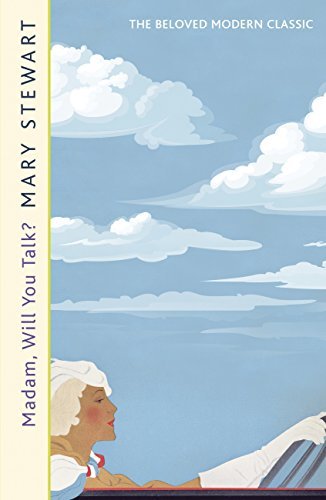
CBR14 Book 44: "Madam, Will You Talk?" by Mary Stewart

Page count: 264 pages
Rating: 3 stars

CBR14 Bingo: Question (the book's title is a question and there is a central murder mystery where the identity of the murderer is in question)

Young widow Charity Selborne is on holiday in the south of France with her friend Louise and they really have little planned except to enjoy the good food, nice drinks, beautiful scenery, and long drives. In Avignon, Charity befriends a young English boy who is also staying at the hotel, offering to take him with her on tours of the local tourist spots, as his stepmother doesn't seem inclined to do so. She certainly wouldn't have expected this act of friendship would get her embroiled in the final act of a complicated criminal conspiracy, involving attempted murder, actual murder, kidnapping, and more. 

Once Charity meets the boy's imperious and brooding father, who may very well be a psychotic murderer, she finds herself fleeing through multiple French towns to get away from the man, who is determinedly seeking the whereabouts of his son. Charity is worried for the safety of the boy and keeps trying to get away from the possible madman, who seems relentless in his pursuit of her. Once Charity gets sick of running and furiously confronts her pursuer instead, they actually sit down and talk and she realises just how much danger the boy and his arrogant father are in. Charity and the framed man begin to work together to find out exactly what the vast plot consists of, why someone tried to frame Richard Byron (the suspected murderer) for a crime he didn't commit and then when he was acquitted, murder him instead. Why are the conspirators now using Byron's son as bait to get him to come to France? Is Charity going to be their next victim, now that she's involuntarily gotten involved?

A while back, there were a ton of Mary Stewart's mystery novels on sale online. As any e-book under $2.99 that I haven't actively heard bad things about is more or less a must-buy for me, I now have a fairly large selection of her books. When I needed a book that fits into the Question square of this year's Bingo, it seemed like a good candidate. I hadn't realised that this was in fact Mary Stewart's debut novel, which has become somewhat of a classic and laid the groundwork for her long career as a mystery writer in the second half of the 20th Century.

For fear of spoiling a nearly 70-year-old book, the romance subplot in this book is absolutely bonkers. When Richard Byron first meets Charity Selborne and realises that she knows where his son is, he believes her to be part of the criminal conspiracy that has been plaguing him for ages. He manhandles her, threatens her, calls her a b*tch (so charming), and is in general very unpleasant. She outsmarts him, but their paths keep crossing until he literally chases her through the south of France for several days like some sort of post-World War Terminator. Charity, believing the rumours she's heard that Byron is most likely a psychotic murderer who got acquitted on a technicality, in France to possibly do his own son harm, has no intention of revealing his son's whereabouts to the lunatic. 

Charity is clever and plucky and drives like a fiend, so she escapes him several times until she gets fed up, stops being afraid, and gets angry instead. She yells at him for several minutes, then almost collapses with exhaustion, whereupon he apparently realises 1) that he's been an utter beast for chasing this woman for days and making her very afraid for her own safety and 2) that he totally and completely loves her. Remember, this is after three days of believing her to be part of a criminal plot against him and party in keeping his only child from him. How does her heroine react to his declarations of love? Does she slap him and tell him to get as far away from her as possible? Of course not, silly, she swoons in his arms and apparently returns the affections of a man she believed was an unhinged murderer until earlier the same day. So romantic. The 1950s, people, it was a different time. 

Another way in which it is clear that we have come a long way is how much the characters smoke. They pretty much chain-smoke their way through this story. I'm surprised the kid, David doesn't light up a cigarette when he's off gambolling with his dog. Seriously, when Byron first encounters Charity, and she's a bit out of sorts because of the hot afternoon and thinking about her dead husband (he was shot down during the War), he insists that she have a cigarette to feel better. Because obviously nicotine and tobacco are so healthful. There's mention of smoking with breakfast. At one point, there's a mention of an ashtray on the nightstand of a hotel bed. So glad this is not the norm anymore.

While the romance is preposterously insta-love (SPOILER! They get married less than two weeks after first meeting one another), the actual criminal conspiracy plot is pretty clever. I also really liked Stewart's writing style. David and his loyal pooch did smack quite a bit of plot moppetude, but the descriptions of the various Roman ruins and other interesting sites that Charity visits and the mention of the food were all great. My favourite thing about the novel was probably our heroine herself. Charity is an intelligent and capable woman. She mourns her husband, but not to an excessive degree. She's brave, clever, kind, and drives like an utter fiend. 

I also really liked her friendship with Louise, who accompanies her to France. The friendship between the two women reminded me a lot of myself and my BFF Lydia. Louise is described as plump and friendly, and while Charity is off in the sweltering heat of the French afternoons to explore Roman ruins and archeological sites, Louise prefers to stay back at the hotel, reading in the shade or relaxing by a river, painting. These are vacation goals I can get behind (although I wouldn't even bother with the painting. I would just laze about in a shady back garden, drinking iced grape juice and reading my books. Possibly while snacking on some sort of delicious French pastry). It's also highly likely that Lydia would drag me along with her when going off to visit ruins and other sites of note, exclaiming all the while about how much I'm enjoying myself (whether I am or not). 

I guess starting with the earliest of Mary Stewart's books is a good idea, I've been assured that a lot of her writing is very good, and with some reservations, I also enjoyed this one. So if her writing gets more polished and sophisticated as her career progresses, I suspect I will also enjoy the others of hers I now have waiting for me in my digital library. 

Judging a book by its cover: This very minimalist cover, where you barely even see the heroine (suitably seen behind the wheel of a car) appeals to me. The blue skies give a feeling of summer and I could do with some of that as each day gets progressively darker here up north. 

Crossposted on Cannonball Read

Tuesday, 8 November 2022

CBR14 Book 36: "Subtle Blood" by K.J. Charles

Page count: 290 pages
Rating: 5 stars

CBR14 Bingo: Scandal (the book features corruption, blackmail, kidnapping, and murder - not to mention gay people in the 1920s. Gasp!)

Spoiler warning! This is the third book in a trilogy. While you can absolutely read this book without the others, you will not get all the beautiful payoff from various earlier storylines that way. Also, this review will contain mild spoilers for earlier in the series. Start with Slippery Creatures

For the last few months, Lord Arthur "Kim" Secretan and Will Darling have actually been a couple, and nothing bad or dangerous has threatened them in any way. Kim has been helping Will get his bookshop in order, and seems to enjoy finding book treasures at estate sales, but it's clear that a part of him misses his cloak-and-dagger duties for the special service, and he still feels very guilty about how his engagement to Lady Phoebe dissolved. Obviously not because of anything romantic, but because revealing her father's crimes to the world and his subsequent death threw Phoebe's life into chaos. Off in Paris, launching Will's best friend Maisie's fashion line seems to be keeping her both happy and busy, though.

The peace was unlikely to last long, and when there's a brutal murder at Kim's former gentleman's club and it seems like Kim's older brother is the murderer, Kim feels obligated to try to clear his name. Kim would happily see his odious brute of an older brother hang, but if he dies, Kim would become his father's heir, and that's a fate so loathsome that he'd rather try to investigate and hopefully get his brother exonerated, even if it means having to spend time with his estranged brother and father. Obviously, the more time they spend among Kim's upper-class peers, the more out of place Will feels. Already insecure about their class differences, the murder investigation and its potential outcomes place a lot of strain on Kim and Will's relationship. Can they actually have a future together, when they come from such different worlds?

Obviously, in romances, there's supposed to be a HEA (happily ever after), yet because this is a trilogy, the previous two books in the series were more of a HFN (happy for now) conclusion. In this book, however, despite their increasingly challenging odds, Kim and Will actually get their happy ending. There's a lot of drama, intrigue, danger and near-death experiences before they get there though. 

Having now read the entire trilogy, I can fully admire how K.J. Charles has structured the story. In this final volume, so many of the plot strands left dangling are nicely tied off, and pretty much everything gets a satisfying conclusion eventually. Will obviously has no family left, his "family" such as it is consists of Kim and Maisie. Maisie is off in Paris becoming a famous fashion designer (but you can bet she and Lady Phoebe turn up when she hears of the difficulties Will and Kim are caught up in), but there have been ample hints about Kim's remaining family throughout the series. His younger brother obviously died on the battlefield during World War I, but his older brother Chingford is still very much alive and entirely oblivious to his privilege. In fact, he seems infuriated that anyone has dared accused him of a crime and has no intention of explaining himself or telling the truth about his connection to the dead man, making it seem even more likely that he's guilty. Kim's father is also an upper-class monster, although a smidge more sympathetic than his son and heir. It's very obvious why Kim has done his best to distance himself from them entirely. 

While there are a lot of uncertainties, at least on Will's side, about the future of their relationship, this book is also by far the most romantic of the trilogy. Will may be a bit intimidated by his feelings toward Kim, but the reverse is not the case. Kim loves Will and wants them to build a future together, which is why he needs to make sure he will never end up taking over his father's title and position. He may have been on the shifty and unreliable side earlier in the series, but in this story, he knows what he wants and he's not going to consider a life without Will. I was also very happy that while Maisie and Phoebe were off in France at the start of the book, they return and play a central part in the plot as well, as I love those ladies. If Charles wants to write a book about their future adventures, launching Maisie's career in Paris, I will happily buy and read the book.

I suspect, based on how much I loved this book, that I will enjoy the earlier book in the trilogy more as well. I've clearly been sleeping on Charles' authorship, despite having bought a bunch of them over the years. At least this means I can read more whenever I find the time. 

Judging a book by its cover: I keep getting distracted by the sideburns on the left-hand character, whom I assume is supposed to be Kim. Nice to see that the right-hand character, presumably Will, still has his trusty knife. 

Crossposted on Cannonball Read

Tuesday, 18 October 2022

CBR14 Book 28: "Svarte-Mathilda" (Black Mathilda) by Tor Arve RĂžssland

Page count: 154 pages
Rating: 3.5 stars

Twenty years after a teenage girl was brutally murdered in a small town near Bergen, Elizabeth moves into the long-empty flat with her mother. Elizabeth's parents are going through a divorce, and in a tragic accident a while back, Elizabeth's older brother died in a fire. She hates that they had to move away from her old home and her friends in Bergen, that her mother doesn't seem to want to talk to her at all, and she certainly doesn't like their new home. The flat never seems to get warm, even if they keep a fire on in the fireplace and turn the heating up to high. In addition, Elizabeth's phone doesn't seem to be holding its charge and has very spotty reception, so she can't call or message her friends.

In the first few days there, Elizabeth also experiences some really scary things. She's convinced the sees blood all over the bathroom floor at one point and gets locked in there while she feels long clawed fingers reaching for her. She also hears voices whispering and is getting very freaked out. Meanwhile, her mother hasn't noticed anything out of the ordinary, except the unusually cold temperature in the flat, and she thinks Elizabeth may have a delayed grief reaction and considers getting the girl a therapist.

When Elizabeth starts her new school, the teacher seems shocked when she announces where she lives, and one of the boys, Philip, claims that her flat is known as the "murder place". He recounts how twenty years earlier, Marie van Vleet was found locked in the bathroom, stabbed multiple times, with her face all scratched up. Philip's dad is a policeman and this was his first murder case, so it made an impression on him. Elizabeth is a bit skeptical, but at the same time, her new home being the location of an unsolved murder might explain some of the strange paranormal stuff she's been experiencing. When she gets home, after spending several hours at the local burger joint listening to Philip recounting grisly murder details, her mother is upset that she's late, but also happy she seems to be making a friend. Later, Elizabeth once again finds herself locked into a room, this time, it's her own bedroom and a voice seems to be whispering warnings to her. She feels something shoved into her hand and discovers that it's the library card of Marie van Vleet. 

Elizabeth convinces Philip to accompany her to the local library the next day, where they make up a story about Philip's bedridden aunt who really wants to find a book she borrowed over twenty years ago. The junior librarian, Viggo, helps them but is reprimanded once the senior librarian discovers what he has done, and whose book records he's shown the two nosy teenagers. She explains that Marie van Vleet is long dead, and the teenagers should stop lying and leave the library. Viggo, however, is quite intrigued and offers to help the kids do research. Marie was clearly doing some research of her own, having read a lot about local history and a lot about folklore and the supernatural. They find a picture of a dark-haired and dark-eyed young girl called Mathilda from the 1880s and Viggo remembers an urban legend of a "Bloody Mary" style ghost called Black Mathilda. Supposedly, if you go into a dark room with a mirror, holding a lit candle or a flashlight, and call her name seven times, she will appear. He claims it's all coincidence and superstition, but Elizabeth is not so sure. Viggo has also found what seems to be Marie's diary among the library archives, and gives it to Elizabeth, as it's not really library property.

When reading the diary, Elizabeth discovers that the ornate and creepy mirror in their bathroom, which seems very old and not at all in the style of the other bathroom fittings, was in fact put there by Marie, who found it in the attic along with some old paintings. She, like Elizabeth, was living with her mother after her parents split and seemed determined to do as much as possible to aggravate her Mum. Putting in an ancient mirror seems to have done the trick. Further reading of the diary seems to suggest that there might be a link between the 19th Century Mathilda and the mirror, and the urban legend might not be so fictional after all. When Philip suggests they test the theory by locking themselves in the bathroom with a flashlight and calling for Mathilda, Elizabeth reluctantly agrees, and unsurprisingly, some really creepy and very much supernatural stuff goes down.

Parallel with the story of Elizabeth, Philip, and their investigation of Marie's murder, the readers get the story of a young happy couple in the 1880s settling on a large, prosperous farm in the west of Norway, a few hours away from the town where Elizabeth now lives. The wife has a baby, whom they name Mathilda, but she dies while Mathilda is very young, and a persuasive and slightly scary governess is hired, who brings her own daughter with her to the farm. Mathilda befriends the girl, who is disabled and seems to be feared by the other local children. As the years go by, the governess comes to wield a lot of power in the household and keeps persuading the father, who is also the local magistrate, to spend more time away from the farm. Then one by one, the local children start disappearing and are found dead and mutilated in the woods. How does this sinister tale intersect with that of Elizabeth and Marie?

Svarte-Mathilda is the first book in a trilogy about Elizabeth and her scary experiences with Black Mathilda. In the first book, Elizabeth's friend Philip disappears without a trace after they foolishly perform the ritual. Elizabeth is left stabbed in the stomach with her mother convinced Philip attacked her and ran away. Elizabeth needs to figure out the connection between the scary mirror in her flat, her friend's disappearance, and the historical events she has read about, or the curse of Black Mathilda will end up with her dead. 

This is a really rather creepy ghost story, with the suspense gradually building and some really nice touches throughout. All three books in the series have apparently been bestsellers and very popular among teens, and nominated for "Uprisen", a national book award voted for by teenage readers throughout Norway. My colleagues and I who teach Norwegian are currently all reading a little bit of the book out loud to our Norwegian class each lesson, and I obviously had to read the book myself before teaching it in class. Since our second theme of the year (very suitably for autumn) is going to be Scary things, reading a horror mystery seemed fitting. Some of the kids have already read the book, but are very good about not spoiling things for the rest of the class. 

I can see why this book has remained popular among teens since it was released in 2010. At under 200 pages long, it's a quick read and it mixes historical fiction with a contemporary murder mystery and a ghost story really well. Some of the contemporary mystery stuff could easily have been the plot of a 'monster of the week' episode of Supernatural. 

While my TBR list for the coming months is pretty packed, I'm absolutely going to find the time to read the two sequels as well. I need to find out more about how Mathilda became a vengeful ghost and whether Elizabeth is successful in locating and saving her friend Philip.

Judging a book by its cover: While maybe a bit simple, the cover strikes a nice tone for a mystery, with the font being very old-fashioned, in keeping with the historical side of the story. The fancy frame of the mirror, complete with a creepy child and blood-red background seems like a very obvious choice. 

Crossposted on Cannonball Read

Sunday, 4 October 2020

#CBR12 Book 70: "The Seven Deaths of Evelyn Hardcastle" by Stuart Turton

Page count: 519 pages
Rating: 4 stars

Official book description:
"Gosford Park" meets "Groundhog Day" by way of Agatha Christie – the most inventive story you'll read this year.

Tonight, Evelyn Hardcastle will be killed... again.

It is meant to be a celebration but it ends in tragedy. As fireworks explode overhead, Evelyn Hardcastle, the young and beautiful daughter of the house, is killed.

But Evelyn will not die just once. Until Aiden – one of the guests summoned to Blackheath for the party – can solve her murder, the day will repeat itself, over and over again. Every time ending with the fateful pistol shot.

The only way to break this cycle is to identify the killer. But each time the day begins again, Aiden wakes in the body of a different guest. And someone is determined to prevent him ever escaping Blackheath...

This book, which was renamed The 7 1/2 Deaths of Evelyn Hardcastle when it was published in the USA (so it wouldn't be confused with The Seven Deaths of Evelyn Hugo) was the August selection in our fantasy/sci-fi book club. It very much mixes your traditional 1920s-1930s set house party cozy mystery at a country estate with a strange sci-fi element, where our protagonist wakes up in a new body every morning. The house party where Evelyn Hardcastle ends up murdered every night is set at a remote, rather worn down manor house surrounded by woods. Nearby is a graveyard, and the lake next to which one of the Hardcastle sons was brutally stabbed to death several decades ago. The house party is allegedly to celebrate Evelyn's betrothal, and there are a large number of posh guests convening to gossip, get drunk, hunt, and generally enjoy themselves at the Hardcastles' expense. All of these guests are also accompanied by servants, so there is no lack of murder suspects. 

Aiden, our protagonist, finds himself in a new host body every morning. Sometimes he's in the body of someone rich and influential, sometimes he's in the body of a servant. He inhabits each body from morning until evening but can switch back to an earlier body if his current host falls asleep or loses consciousness in a different way. He is deeply confused for quite a while (and the reader with him) until a mysterious figure dressed in an old plague doctor's costume explains to him that he has seven days to solve the murder of Evelyn Hardcastle. She dies at 11pm every evening, and if Aiden can figure out the name of the killer and give it to the plague doctor before the cycle is over, he is free to leave. If he fails, he will have his memory wiped and start the whole seven-day process over again. To further complicate matters, there are other individuals at the house party who are also trying to solve the murder, and it's not in their interest to co-operate with Aiden. Finally, to add a real slasher movie element to the proceedings - there's a psychopathic footman who is determined to kill all of Aiden's host bodies before he identifies the killer.

As well as being strongly influenced by Agatha Christie, there are elements of Black Mirror, Doctor Who, and Groundhog Day. When we discussed it during our book club meeting, we agreed that the book is very entertaining, even though very few of the characters we encounter in the book is especially likable and there is some truly egregious and very unfortunate fat-shaming in parts of the book (one of Aidan's host bodies is a very intelligent, but also very obese nobleman, and Aidan is clearly utterly disgusted to be "trapped" in that body). The book posits some interesting ideas on the nature of forgiveness and the efficacy of prisons as means of rehabilitation, but sadly doesn't really delve properly into them. The author seemed mostly concerned with his very high concept idea (Agatha Christie mystery meets Groundhog Day) and doesn't take a lot of time to really anything too deep or philosophical. 

Clever, unusual, and interesting as this book is, the fat-shaming aspect bothered most of the readers in my book club, and as far as I can see from online reviews has been enough of a problem to make it impossible for some readers to finish the book. Since I was pre-warned, so to speak, I forced myself to read, despite my intense discomfort, and I'm glad I continued because the central mystery of the book is cleverly structured, with just enough twists and turns that every time you think you've got an idea of what's happening, it turns out there's one final twist. 

This is the sort of book I would never have picked up on my own, so I'm glad I discovered it through my book club. This was Turton's debut novel and it won a bunch of awards. He has a new novel out any day now, which looks to be another unusual mystery. 

Judging a book by its cover: Not exactly the most exciting of covers, showing only the staircase in what seems to be an old house. The black and white floor tiles in the hall are a bit reminiscent of a chessboard, but the intricate game the characters in the book find themselves in is a lot more convoluted than a chess game. 

Crossposted on Cannonball Read